Retro Diffusion logo

Retro Diffusion

Retro Diffusion generates real pixel art for games, using models trained by working pixel artists on curated data.

Output is true low-resolution grids from 16 to 384 pixels with deliberate palettes and clean outlines, not upscaled blur. Three image models cover different jobs: RD Pro at $0.18 per image, RD Plus at $0.06, and RD Fast…

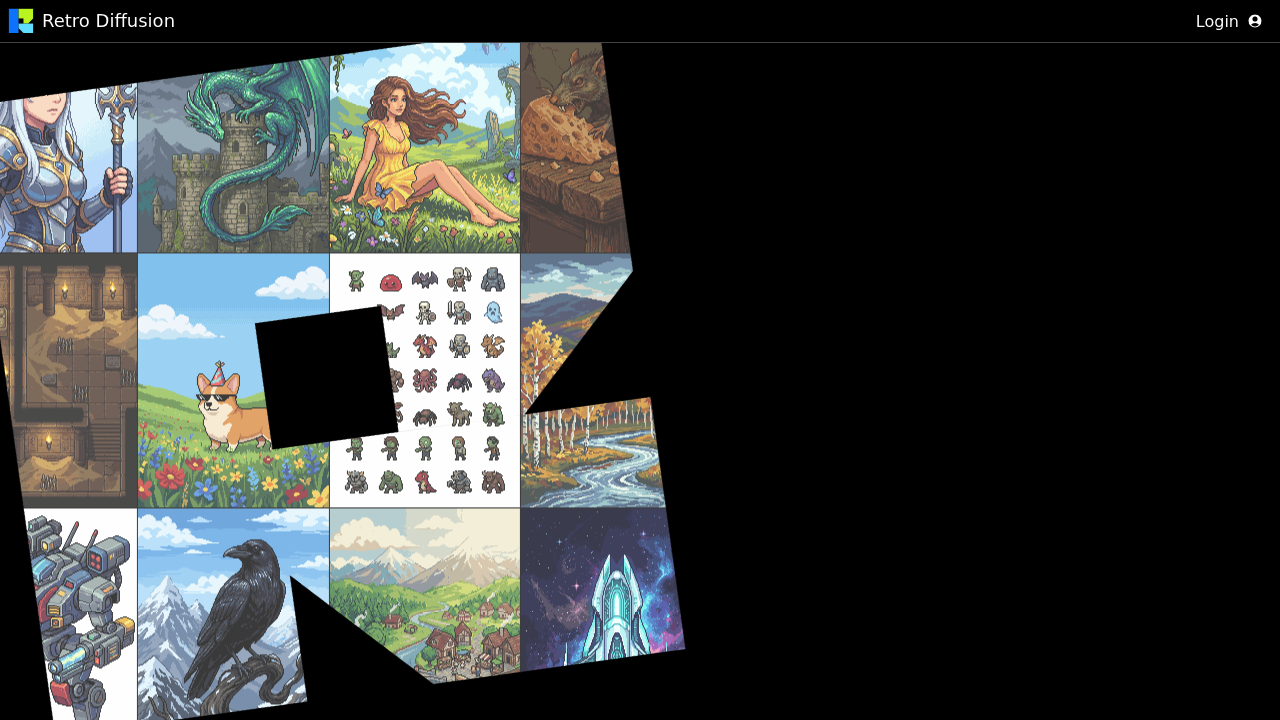
Retro Diffusion screenshot

Retro Diffusion generates real pixel art for games, using models trained by working pixel artists on curated data. Output is true low-resolution grids from 16 to 384 pixels with deliberate palettes and clean outlines, not upscaled blur. Three image models cover different jobs: RD Pro at $0.18 per image, RD Plus at $0.06, and RD Fast at $0.03. Animations start from $0.07 per clip, and a new Low-Poly model builds 3D models with hand-painted pixel textures. A free Pixel Art Fixer runs in the browser to snap off-grid art to real pixels.

Retro Diffusion serves indie game developers, pixel artists and studios that need sprites, tiles and effects in volume. Solo developers can draft cheaply with RD Fast and promote favorites to a larger model. Artists with an existing style can lock characters in place with up to nine reference images or train custom styles. Teams building tools can call the API, and the company lists studios and creative platforms among its production users. The price is shown before every generation and failed generations are refunded automatically.

A platformer developer can generate a character, then create walking, idle, jump and attack animations or an 8-direction rotation from the still image. A level designer can produce game-ready tilesets, hexagonal tiles and top-down maps. A UI artist can build item sheets and UI kits in one style. A modder can create Minecraft assets. A 3D hobbyist can describe a stone cottage and export the Low-Poly model to Godot, Unity, Unreal, Blender, Blockbench or Minecraft. A designer holding an AI image that only looks like pixel art can drop it into the Fixer.
Retro Diffusion alternatives

See all →

Frequently asked

6 questions
What does Retro Diffusion produce?
It produces real pixel art, including characters, portraits, scenes, tilesets, UI kits, item sheets and effects, plus animations from a prompt or an existing sprite. A Low-Poly model also builds 3D assets.
Who is Retro Diffusion for?
Game developers, pixel artists and studios who need engine-ready art. Teams can also use the API in their own tools.
How do I animate a pixel art character?
Upload a still image, yours or generated, and Advanced Animations produces walking, idle, jump, attack or custom motion. It can also rotate the art into all 8 directions.
How is Retro Diffusion priced?
Pricing is per use: RD Pro is $0.18 per image, RD Plus $0.06, RD Fast $0.03, and animations start from $0.07 per clip. The exact price shows before each generation, and failed generations are refunded.
What are the output size limits?
Models output pixel art from 16 to 384 pixels per side, which suits sprites and tiles rather than large illustrations. RD Plus generates batches of up to 16 images.
How can I get started or export my work?
Start creating for free from the home page, or use the Pixel Art Fixer, which needs no sign-up. The Low-Poly tool exports for Godot, Unity, Unreal, Blender, Blockbench or Minecraft, and an API is available.

Reviews (0)

Write review

No reviews yet. Be the first to share your experience.