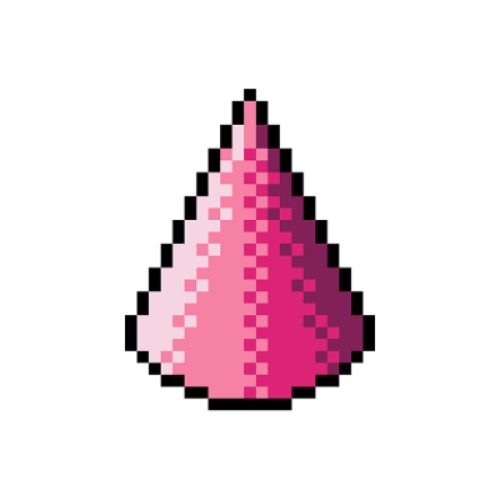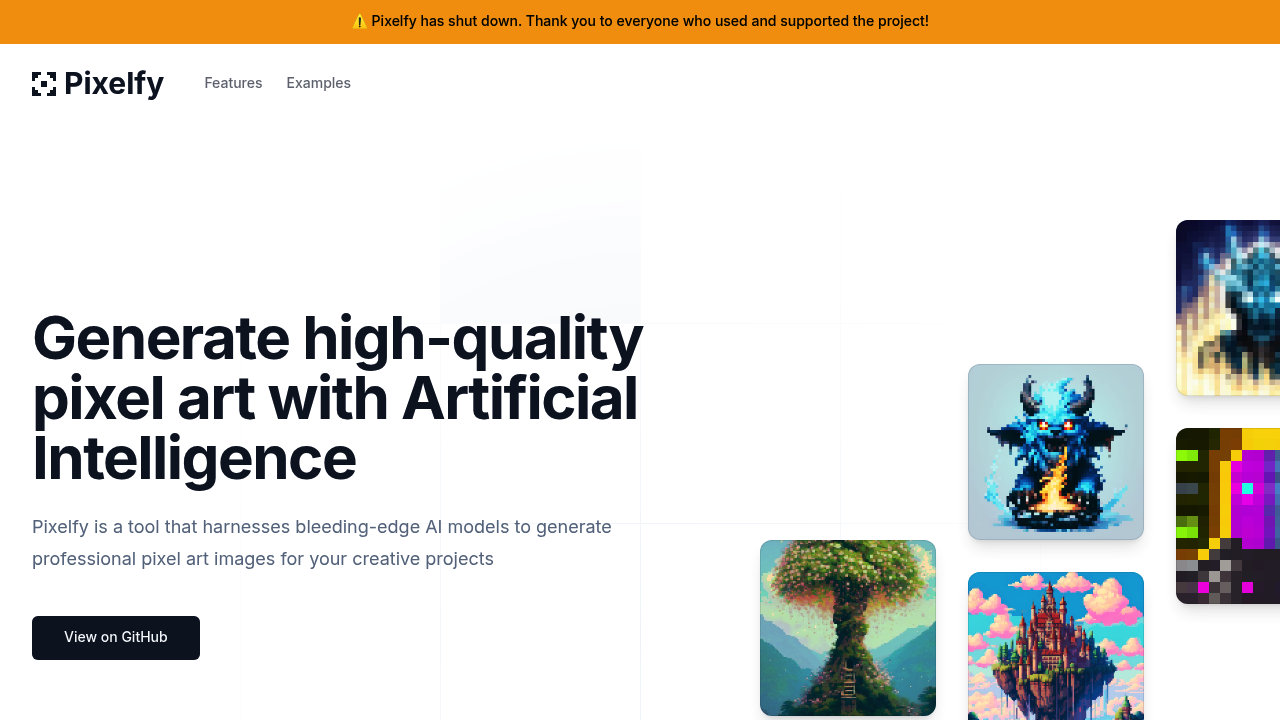
Pixelfy used to shut down your pixel art workflow with AI-generated images that actually looked professional. It cranked out retro-style graphics using specialized AI models trained specifically for pixel art creation.
You controlled the output with four grid size options. 16x16 pixels. 32x32 pixels. 64x64 pixels. Or 128x128 pixels. Upload reference images to guide the generation process. Color palette controls let you constrain results to specific color schemes — useful when you're matching existing art styles or brand guidelines.
Game developers prototyping mobile titles found the prompt builder helpful.
Say you needed enemy sprites for a platformer. Upload a rough sketch, set the grid to 32x32, adjust the sampling steps, and let Pixelfy generate variations. Background removal isolated subjects cleanly.
Advanced options included sampling step adjustments and prompt guidance controls. These gave you finer control over how closely the AI followed your text prompts versus the reference images you'd uploaded.
GitHub and Scenario integrations connected Pixelfy to existing developer workflows, though the specifics mattered less now. Pixelfy has shut down. Creators lost this particular option for AI-generated pixel art. That's a shame because the grid size flexibility and reference image system worked better than most generic AI art generators when you needed that authentic 8-bit aesthetic.