
Pipecat logo

Pipecat

Pipecat is an open-source Python framework for building voice and multimodal AI agents that talk in real time.

Developers compose a pipeline in which frames stream through speech recognition, language model and speech synthesis stages, so an agent can begin responding while the user is still speaking. It coordinates voice,…

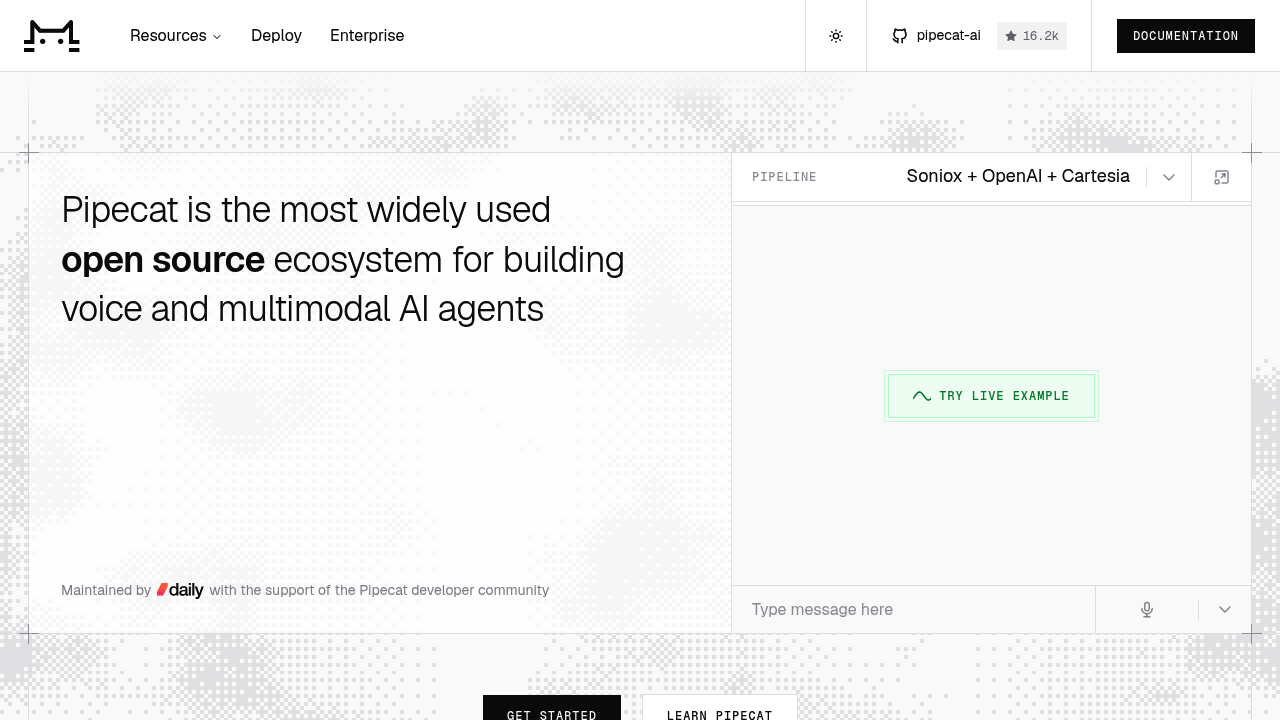
Pipecat screenshot

Pipecat is an open-source Python framework for building voice and multimodal AI agents that talk in real time. Developers compose a pipeline in which frames stream through speech recognition, language model and speech synthesis stages, so an agent can begin responding while the user is still speaking. It coordinates voice, video, text and images in one pipeline, handles interruptions and turn detection, and lets you swap any of more than 200 integrated providers, usually with one line of code. The framework is free and self-hostable, and it is maintained by Daily with support from its developer community.

Pipecat is for software engineers and AI teams who want control over how a voice agent is built rather than a closed no-code product. Startups prototype conversational bots with it, and enterprises use it for production agents, with Pipecat Cloud offering managed hosting and Pipecat Enterprise offering deployment in your own AWS, Azure or GCP environment with enterprise support. Teams new to the project can run the pipecat init command to scaffold a working project, which also connects a coding agent to current Pipecat documentation through an MCP server.

Typical projects include phone agents that connect over SIP or PSTN, browser-based voice assistants using WebRTC, and customer service bots that hand off to subagents for long-running tasks. Developers add tools so an agent can look up data or take actions, use Pipecat Flows to keep a conversation on a defined path, and run evals instead of manual test calls. Client SDKs and a UI kit help build front ends, while metrics, traces and OpenTelemetry support show what happened in every turn of a conversation.

Pipecat alternatives

See all →

Frequently asked

6 questions
What can be built with Pipecat?
Voice and multimodal AI agents that converse in real time over web, phone or video. Pipelines combine speech, language and vision services with interruption handling and turn detection.
Who should use Pipecat?
It targets developers and engineering teams comfortable with Python who want control over their agent architecture. Enterprises can add Pipecat Cloud or Pipecat Enterprise for managed hosting and support.
Can Pipecat power a phone agent?
Agents can connect over WebRTC, SIP and PSTN transports, which covers browser and telephony deployments. Tools can be added so the agent looks up information or takes actions during a call.
Is Pipecat free to use?
The framework is open source and runs wherever Python runs, so self-hosting costs nothing in licensing. Pipecat Cloud and Pipecat Enterprise are separate managed offerings.
What skills does Pipecat require?
Pipecat is a code-first framework, so building an agent calls for programming in Python. It is not a drag-and-drop builder for non-developers.
How do I start a Pipecat project?
Install the package with uv add pipecat-ai and run the pipecat init command. The CLI scaffolds a runnable project and registers an MCP server so a coding agent can use current Pipecat APIs.

Reviews (0)

Write review

No reviews yet. Be the first to share your experience.