
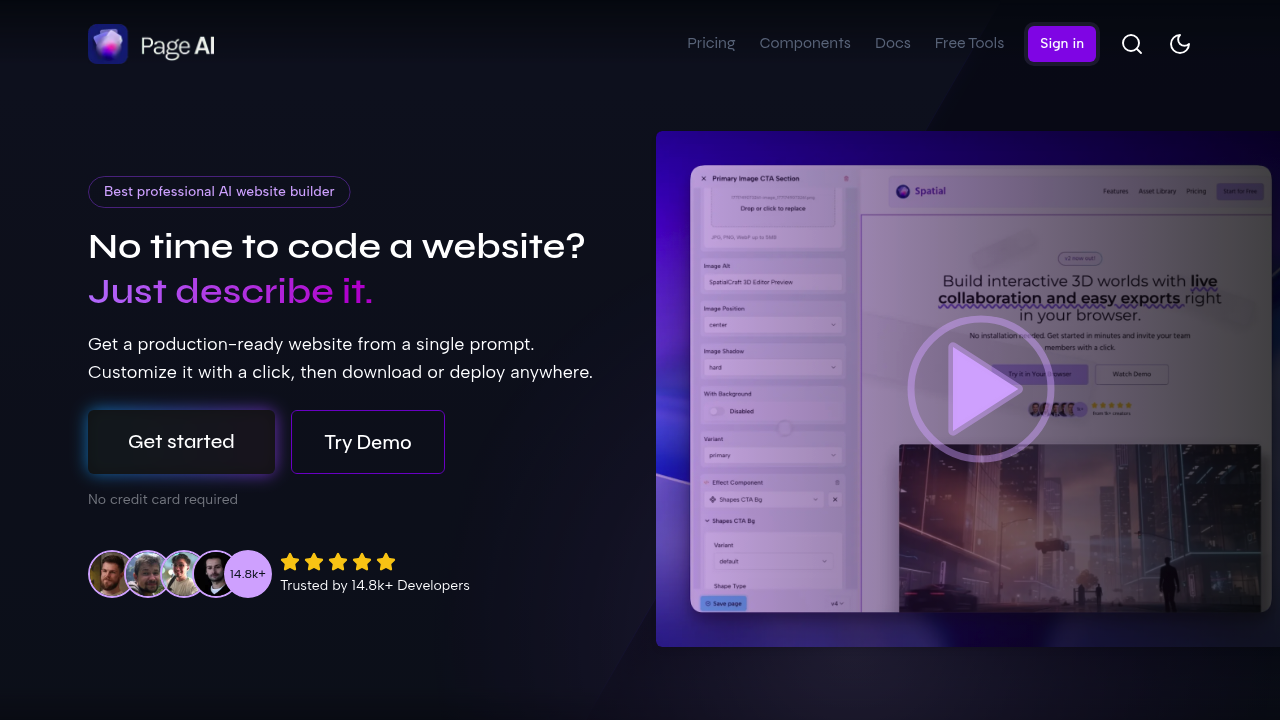
You type a description of what you want into a single text field. Something like "a portfolio site for a freelance photographer" or "a SaaS landing page with pricing tiers." PageAI takes that prompt and runs it through five phases without asking for more input. First it analyzes what you wrote and plans the site structure. Then it generates wireframes and a visual design. After that comes professional copy for all the pages, followed by actual code using open source components. The whole process delivers a complete website you can see in a live preview.
The output is not a locked template. There's a drag-and-drop editor where you can move sections around, swap components, and adjust the layout. Theme controls let you change colors and styling across the entire site at once. The code itself is clean and maintainable, built for developers who might want to customize it further. you are not stuck in a proprietary system.
What makes this different from typical website builders is production-ready infrastructure that comes with every site. SEO gets handled automatically with meta tags, JSON-LD structured data, and canonical URLs already configured. Social media sharing works out of the box with dynamically generated open graph images. There's a full MDX blog system with tagging, RSS feeds, and built-in search functionality. Even the small stuff like favicons, sitemaps, and terms of service pages generate automatically. PageAI claims this saves developers anywhere from a few hours to several days compared to building these features manually.
The component library includes documentation and templates you can pull from while customizing. Everything works together without breaking the site's structure. Over 14,800 developers have used it so far.
Deployment happens with one click to Vercel. That's currently the only hosting option, though more platforms are apparently coming. Once deployed, you can download the full codebase. You own it completely. There's no subscription requirement to keep the site running, no hidden fees, and you're not locked into PageAI after launch.
The main friction point is that single deployment option. If you don't use Vercel or want to host elsewhere, you'll need to handle that setup yourself after downloading the code. PageAI also assumes you want a fairly standard website structure. Highly custom or unusual site architectures might require more manual work after the initial generation.