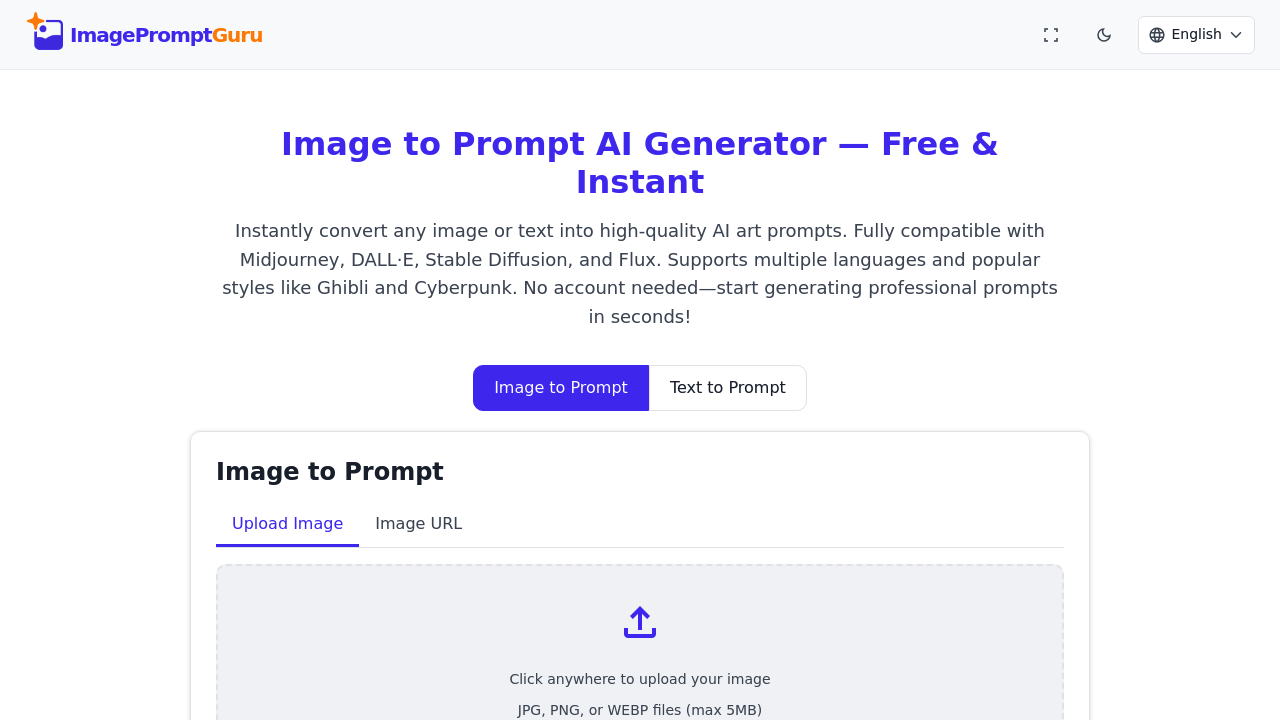
ImagePromptGuru converts images and text into optimized prompts for AI art generators through a straightforward pipeline. Upload an image file or paste a URL, and the system analyzes the visual content to generate a descriptive prompt that works with major image generation models. The technical approach differs from simple image captioning. It extracts compositional elements, lighting conditions, artistic style markers, and subject matter details, then reconstructs these into prompt syntax that AI art models understand.
The conversion process happens client-side in real-time. When you upload an image, the system processes it immediately and deletes it from memory. Nothing gets stored on servers. This architectural choice means there's no database of user images and no training data collection happening in the background. Your prompt history lives in your browser's local storage only.
Text to prompt enhancement works differently. Input a basic description and this platform restructures it using AI art best practices. It adds technical qualifiers, style descriptors, and formatting that tends to produce better results in image generators. The system knows the syntax preferences of different models, so you can optimize output specifically for Midjourney, DALL-E, Stable Diffusion, Flux, or keep it general purpose.
Model-specific optimization matters technically. Midjourney responds well to certain parameter structures and style keywords. Stable Diffusion has different prompt weighting syntax. DALL-E prefers natural language descriptions over technical jargon. This platform adapts its output format based on which target model you select. This isn't just template switching. The underlying prompt construction changes.
Eight scene and style presets provide starting points for different aesthetic directions. Select Photorealistic and the system emphasizes lighting terms, camera specifications, and realistic rendering cues. Choose Ghibli and it shifts toward Studio Ghibli's characteristic visual language. Cyberpunk, Fantasy, Anime, Watercolor, Oil Painting, and Steampunk each reshape the prompt structure around genre-specific terminology.
Language support covers 18 input languages but outputs prompts in English. This makes sense technically since most AI art generators train primarily on English descriptions. You can describe what you want in your native language and get back English prompts optimized for the models.
File handling has clear constraints. Images cap at 5MB and must be JPG, PNG, or WEBP format. These limitations keep processing fast and client-side feasible. URL uploads work if you're pulling reference images from the web instead of local files.
This platform is completely free with no subscription model, no watermarked outputs, and no account requirement. Full feature access doesn't gate behind payment tiers. This includes all model optimizations, language support, and both image and text conversion modes. Commercial use is allowed.
Technical limitations center on the local-only architecture. Since prompt history lives in browser storage, clear your cache and you lose your saved prompts. There's no cloud sync or account system to preserve work across devices. The 5MB file size limit also restricts high-resolution reference images, though most photos compress fine within that boundary.
The instant deletion policy has privacy benefits but means you can't retrieve uploaded images later. Once processed, they're gone. This architectural decision prioritizes data minimization over convenience features like image libraries or revision history.
Integration compatibility comes through prompt formatting rather than direct API connections. This platform generates text that you copy into Midjourney, DALL-E, Stable Diffusion, or Flux manually. It doesn't automate the actual image generation step.