
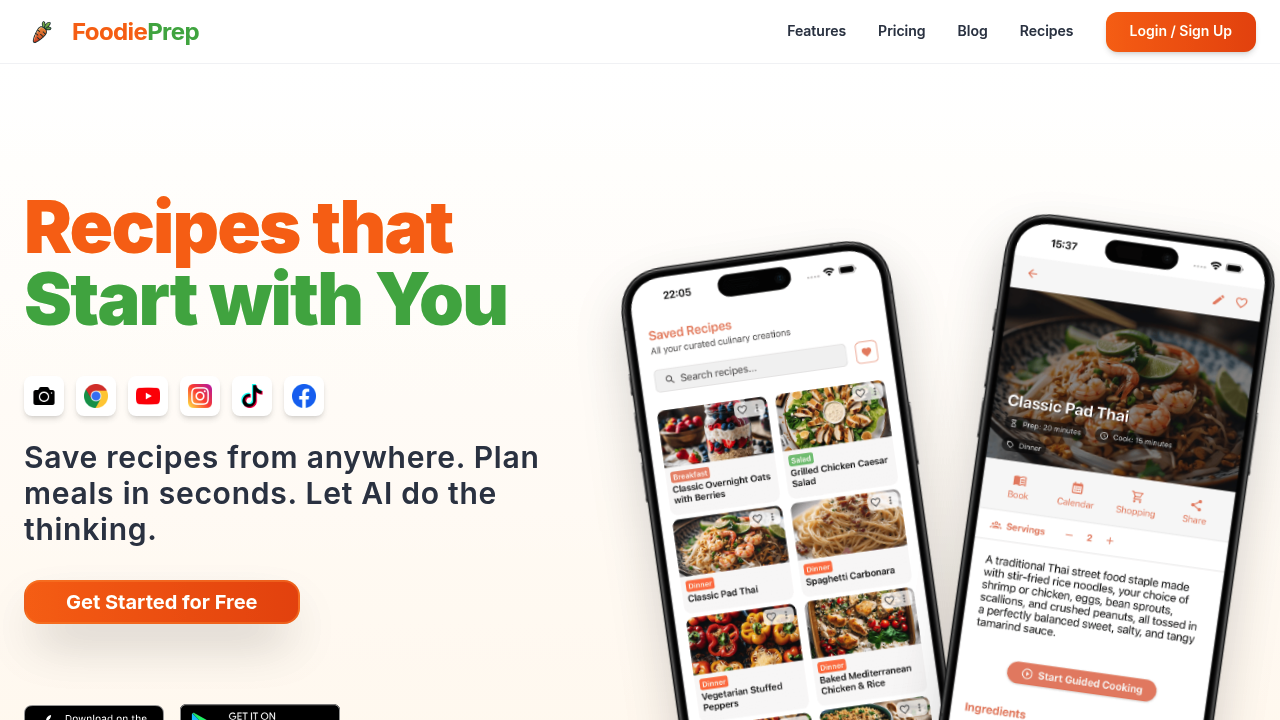
A parent finds a viral TikTok recipe at lunch, screenshots a meal from Instagram at dinner, and pulls out an old handwritten recipe card from their grandmother's collection. All three become organized, searchable recipes with full ingredient lists and nutritional breakdowns through FoodiePrep's multi-source import system. This tool pulls recipes from websites, social videos, Facebook posts, and even photos of cookbook pages.
The Chef Foodie AI assistant sits at the center. It generates weekly meal plans based on dietary preferences, answers cooking questions mid-recipe, and suggests substitutions when ingredients run low. A fitness enthusiast tracking macros gets meal plans optimized for protein targets. A busy parent managing picky eaters receives suggestions that work around food restrictions while using pantry staples already at home.
Pantry management connects to meal planning. Users log what they've got on hand, and the system builds plans around existing ingredients before adding new ones. Shopping lists generate automatically from selected meals, with direct ordering through Walmart, Kroger, Albertsons, Publix, Target, or Whole Foods Market. The workflow goes from inspiration to ingredients without switching apps.
Recipe books organize collections by theme, occasion, or dietary pattern. Nutritional tracking covers protein, carbs, fat, and fiber across meals. Step-by-step guidance walks through cooking processes with the AI available for real-time questions about technique or timing.
The social media import proves particularly useful. Many platforms let you save recipe URLs, but extracting complete ingredient lists and instructions from video content on TikTok or Instagram reels requires different processing. Photo recognition for handwritten recipes connects digital planning with analog cookbooks.
Where it stumbles: The system works best for people cooking at home regularly. Someone eating out most nights won't need pantry tracking or weekly meal plans. The grocery integrations cover major chains but skip regional stores and specialty markets. Recipe imports depend on clear source formatting—messy blog posts or videos without written ingredients might not parse cleanly.
The mobile app offers access anywhere, useful when grocery shopping or cooking in the kitchen. But there is no browser extension for quick recipe saves while browsing on desktop.
This fits home cooks building regular meal routines, parents managing family nutrition, and anyone tired of scattered recipes across bookmarks, screenshots, and paper cards. It does not fit casual cooks who prefer spontaneous meals, people following strict meal delivery services, or anyone cooking commercially rather than at home. The value comes from consolidating the full cycle—finding, planning, shopping, cooking—in one system.