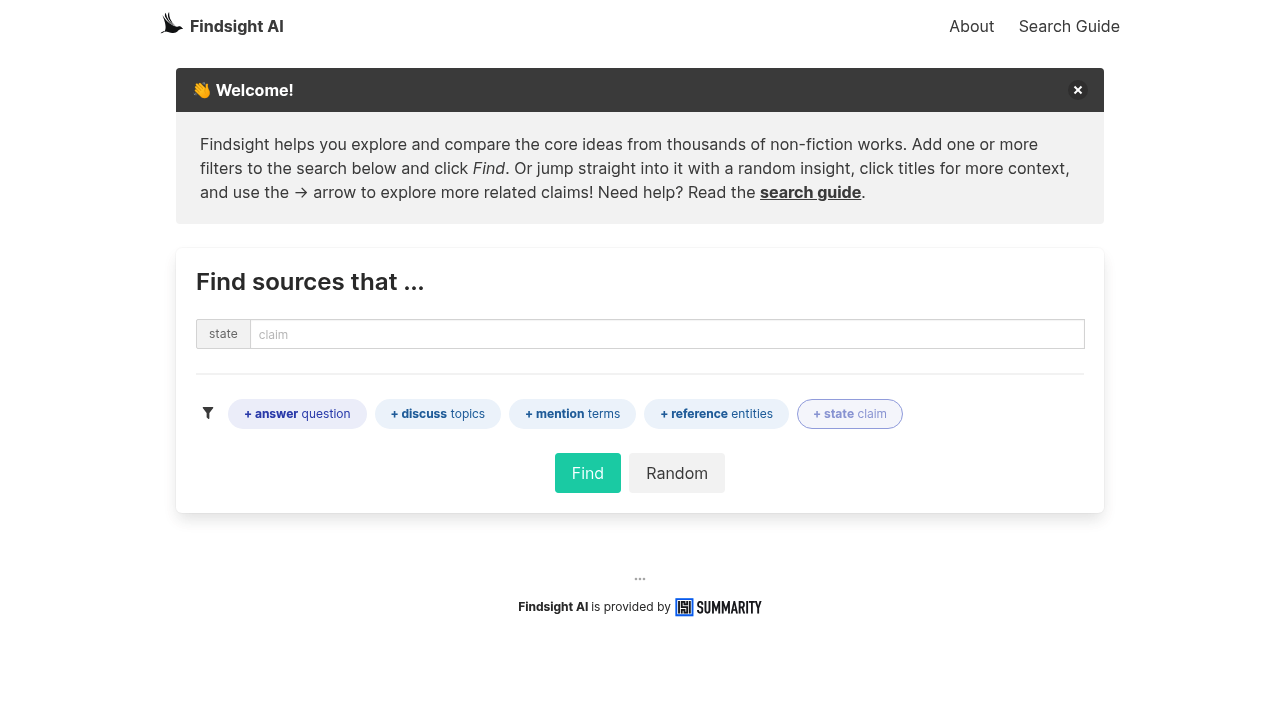
Claim-based search makes Findsight different. You hunt for specific arguments authors make. Not just keywords. Findsight indexes thousands of non-fiction works and lets you compare how different writers approach the same topic through what they call syntopical reading.
Basic filters work like you'd expect. The mention filter functions similar to Google search. References filter suggests Wikipedia-linked sources. The discuss filter narrows results by topic. Two AI-powered filters called "state" and "answer" handle more complex queries — though you're capped at 50 AI searches daily.
Random insight exploration might sound gimmicky but actually works. You can jump between related claims and build your own learning path. Links take you back to original sources when you want the full context.
A graduate student researching climate policy could search for claims about carbon taxation, then navigate to related arguments about economic impacts or regulatory approaches. Different authors' perspectives appear side by side.
The mention filter lacks precision sometimes. Search "running" and you'll get results about jogging, business operations, and government-run systems mixed together. That 50-search daily limit on AI filters feels restrictive if you're doing serious research.
Findsight works best for people who want to trace ideas across multiple sources rather than find specific facts. Think comparative analysis rather than quick answers.