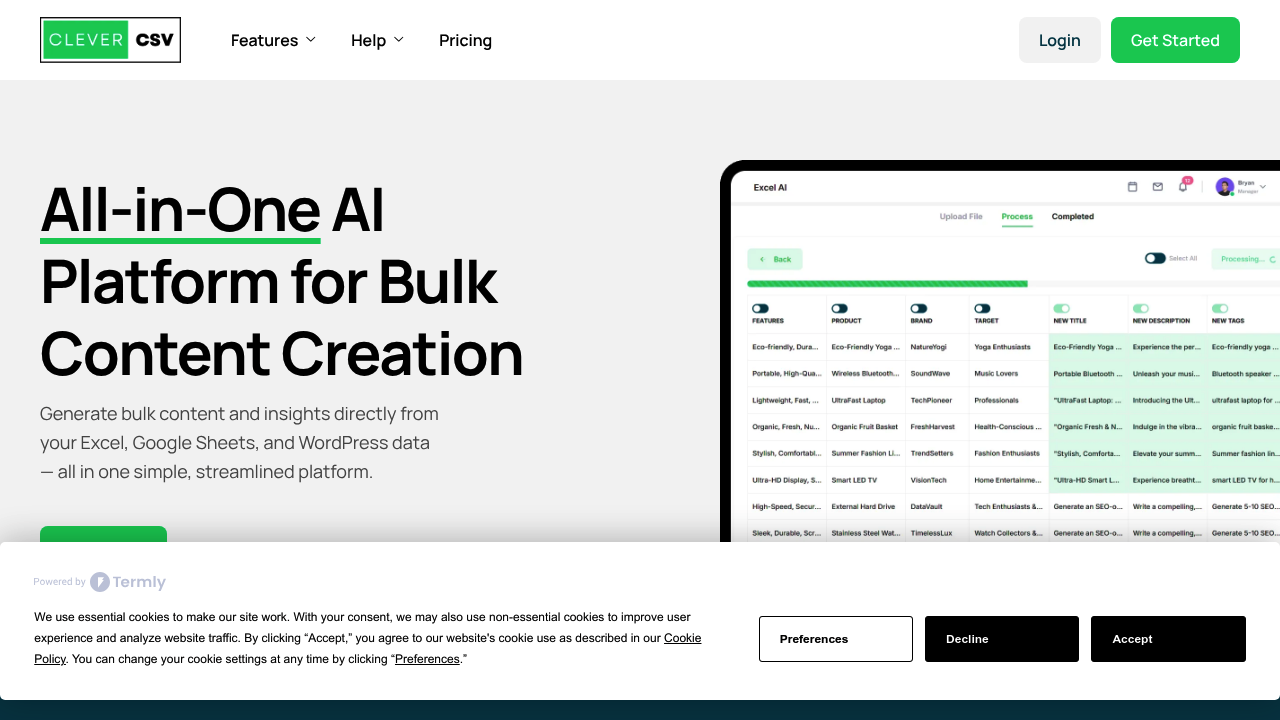
You connect your Excel file, Google Sheets, or WordPress account and immediately get access to AI-powered automation tools built to handle repetitive content and data tasks. This system centers around three main workflows that let you process information in bulk rather than one item at a time.
Excel workflow pulls data from your spreadsheets and uses it to generate content at scale. You can feed in product lists, customer data, or any structured information and have the AI create written content based on that data. The same concept applies to Google Sheets, where you're working directly inside your existing spreadsheets rather than jumping between tools.
WordPress integration works differently. It reads your existing articles and transforms them into social media posts automatically. You're not manually copying text and reformatting for different platforms. This software analyzes your long-form content and generates shorter versions suited for social channels. This addresses a real pain point for content teams who publish blog posts but struggle to maintain consistent social media presence without duplicating effort.
Data cleaning features handle the messy work of standardizing information across spreadsheets. Inconsistent formatting, duplicate entries, and irregular data structures get processed in bulk. Data entry automation takes this further by filling in fields based on patterns or existing information, though the exact mechanics of how you set this up aren't clear from available details.
This system positions itself for businesses juggling content creation and data management simultaneously. You're not just analyzing numbers or just writing posts. You're doing both. The value proposition assumes you've got WordPress content that needs social distribution and spreadsheets that need to become something more useful.
Where things get fuzzy is in the actual user interface and setup process. It's unclear how much manual configuration each workflow requires before automation kicks in. The initial adjustment period for connecting these different systems and defining what you want the AI to do with your data isn't documented. You might spend considerable time setting up templates or rules before seeing productivity gains.
This software also assumes you're already using Excel, Google Sheets, and WordPress in your workflow. If you're on different platforms or need different integrations, you're out of luck. The three-platform focus is both a strength for users already in that ecosystem and a limitation for everyone else.
Content quality control becomes an issue when you're generating things in bulk. There's no mention of review workflows or approval steps.