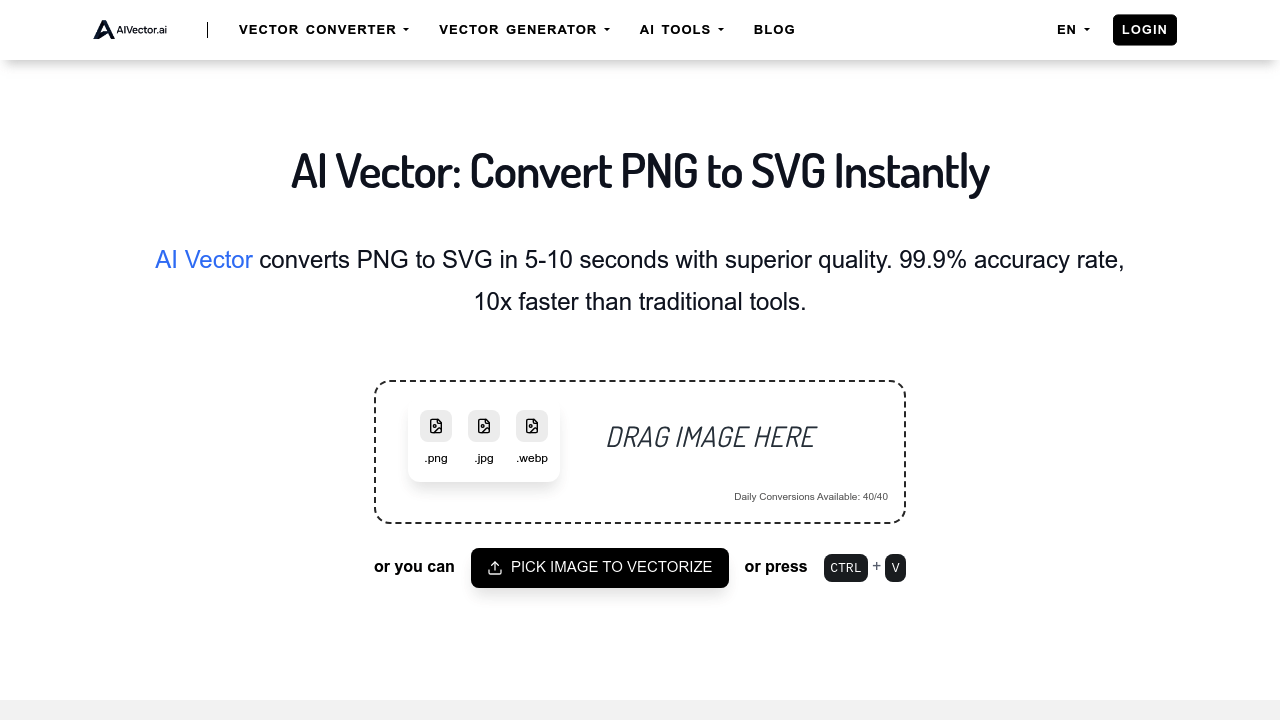
Converting raster images to scalable vectors typically takes designers 2-5 minutes per file using traditional tools. AIVector compresses that timeline to 5-10 seconds through AI analysis that examines shapes, colors, and patterns in uploaded images. This platform processes PNG, JPG, and WEBP files without requiring user accounts or leaving behind watermarks on the finished SVG files.
The conversion process works through drag-and-drop uploads or Ctrl+V pasting. Files get analyzed in real-time, with the AI reconstructing vector paths that the company claims achieve 99.9% accuracy compared to the source image. This speed advantage puts AIVector at roughly 10x faster than conventional vectorization methods, with output quality that reportedly matches expensive desktop software despite the browser-based interface.
File requirements impose specific boundaries while maximum upload size caps at 5MB. Dimensions must fall between 256 pixels and 4096 pixels on both axes, excluding extremely small icons or massive print files from processing. The system supports three common web formats but won't handle less common image types like TIFF or BMP files.
Privacy architecture centers on immediate processing without storage. Uploaded files don't get saved to AIVector's servers or shared with third parties, addressing concerns designers face when working with client materials or proprietary brand assets. No registration requirement means users can start converting immediately without creating accounts or providing email addresses.
The free plan provides 40 conversions daily. That's it for pricing tiers. The daily limit resets automatically, giving consistent access without payment requirements. Commercial use gets explicitly allowed under this free structure, meaning designers can use converted files in client work, merchandise, or paid projects without licensing restrictions.
This conversion limit creates the primary operational constraint. Designers working through large batches of legacy raster logos or extensive icon sets will hit the 40-conversion ceiling quickly. A branding project requiring 60 logo variations would need splitting across two days. The limit tracks per user session, though the exact mechanism remains unspecified given the no-registration model.
Target users span anyone needing scalable graphics. Designers preparing files for print benefit from resolution independence. Marketers creating responsive web assets get files that scale cleanly across device sizes. Students working on portfolio pieces avoid expensive software subscriptions. Content creators building social media templates gain editing flexibility that raster formats can't provide. The speed factor particularly serves professionals billing hourly, where traditional vectorization represents pure time cost without creative value.