
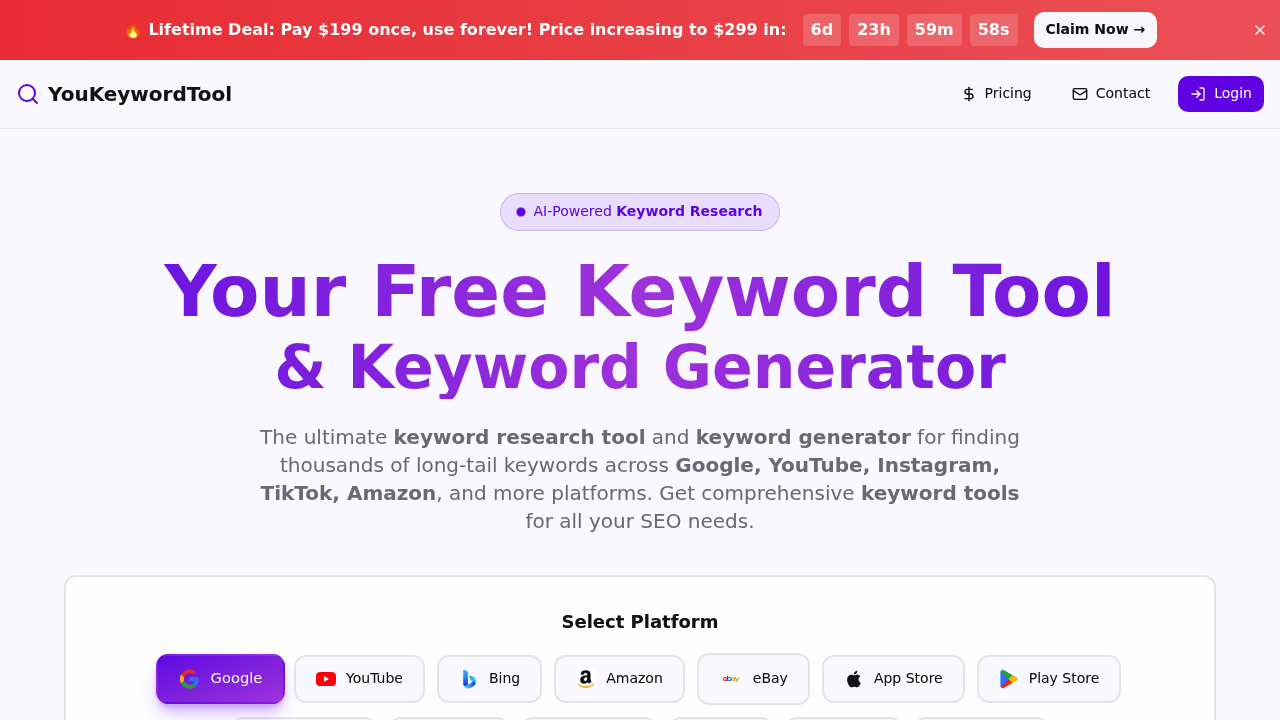
YouKeywordTool.com pulls long-tail keyword suggestions from autocomplete data across thirteen platforms, including Google, YouTube, TikTok, Amazon, Instagram, Bing, and the App Store. It generates thousands of keyword variations based on what people actually type into search bars, helping users discover question-based queries and niche phrases that might not surface in traditional research tools. The system supports fifteen languages and allows location and language targeting to refine results by region or audience. Pricing starts at $9 per month for the Basic plan with 100 searches, $20 per month for Pro with unlimited searches, or a one-time $199 Lifetime Deal that removes search limits permanently and includes all future updates. All paid tiers come with CSV export and a 30-day money-back guarantee.
This tool serves SEO specialists managing clients across different verticals, content marketers building editorial calendars around search demand, and agencies juggling keyword research for e-commerce, video, and social media campaigns. It fits teams that need to pivot quickly between platforms—researching Amazon product keywords one day and YouTube video topics the next—without switching between separate tools. The multi-language support makes it practical for international campaigns or brands targeting non-English markets, while the unlimited search option on higher tiers suits power users running high-volume research sprints.
E-commerce teams use it to uncover Amazon and eBay search terms for product listings, while YouTube creators identify video topics by analyzing autocomplete suggestions in their niche. Social media managers pull TikTok and Instagram keywords to align hashtag strategies with trending searches, and app developers mine App Store and Play Store data to optimize metadata. The question-based keyword discovery helps content teams build FAQ sections or blog posts that match user intent, and the CSV export lets researchers feed data into broader SEO workflows or share findings with clients. Because it taps into real autocomplete behavior rather than estimated volumes, it surfaces the specific phrasing people use when they're ready to search, buy, or engage.