
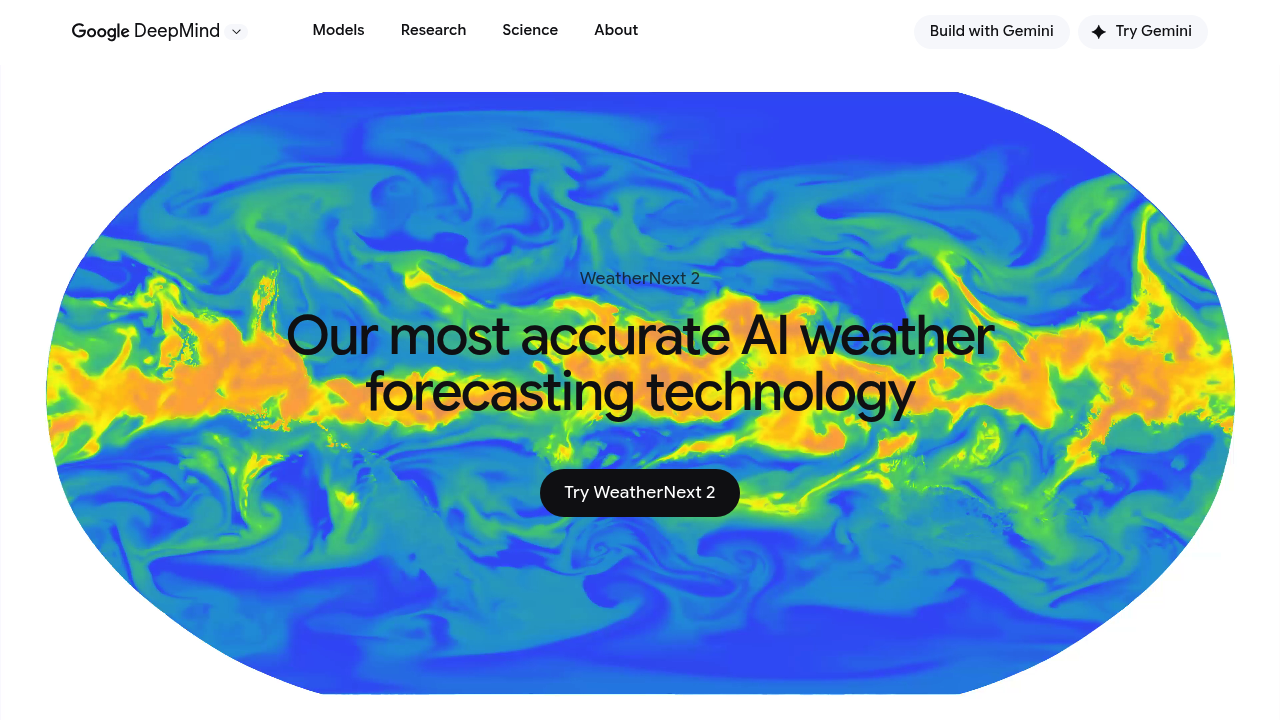
Weather predictions arrive faster than traditional forecasting models—and they don't sacrifice accuracy. WeatherNext comes from Google DeepMind's research team. It exists alongside their other climate projects (AlphaEarth Foundations and Weather Lab).
Atmospheric data gets handled differently here than in conventional numerical weather prediction. Older systems burn hours of supercomputer time. This AI approach spits out forecasts in minutes. Meteorologists working on time-sensitive warnings could benefit most from that speed.
Here's the catch. WeatherNext remains primarily a research initiative—not a consumer product you can sign up for tomorrow. It's part of DeepMind's broader sustainability work. Access isn't straightforward for individual users or small weather services.
Global weather patterns get processed. Predictions generate across multiple timescales. Emergency management teams need rapid updates during extreme weather events. Agricultural consultants require quick turnaround on regional forecasts. Speed matters in those scenarios.
Solo forecasters won't find a typical software interface. There's no dashboard to log into. Teams at research institutions or large organizations might explore collaboration opportunities with DeepMind—but that involves reaching out directly. You're not downloading an app.
The project demonstrates how AI can accelerate climate science. It hasn't transformed into a widely available forecasting tool yet. You're looking at research that might eventually influence the weather apps on your phone. It's not replacing them today.