
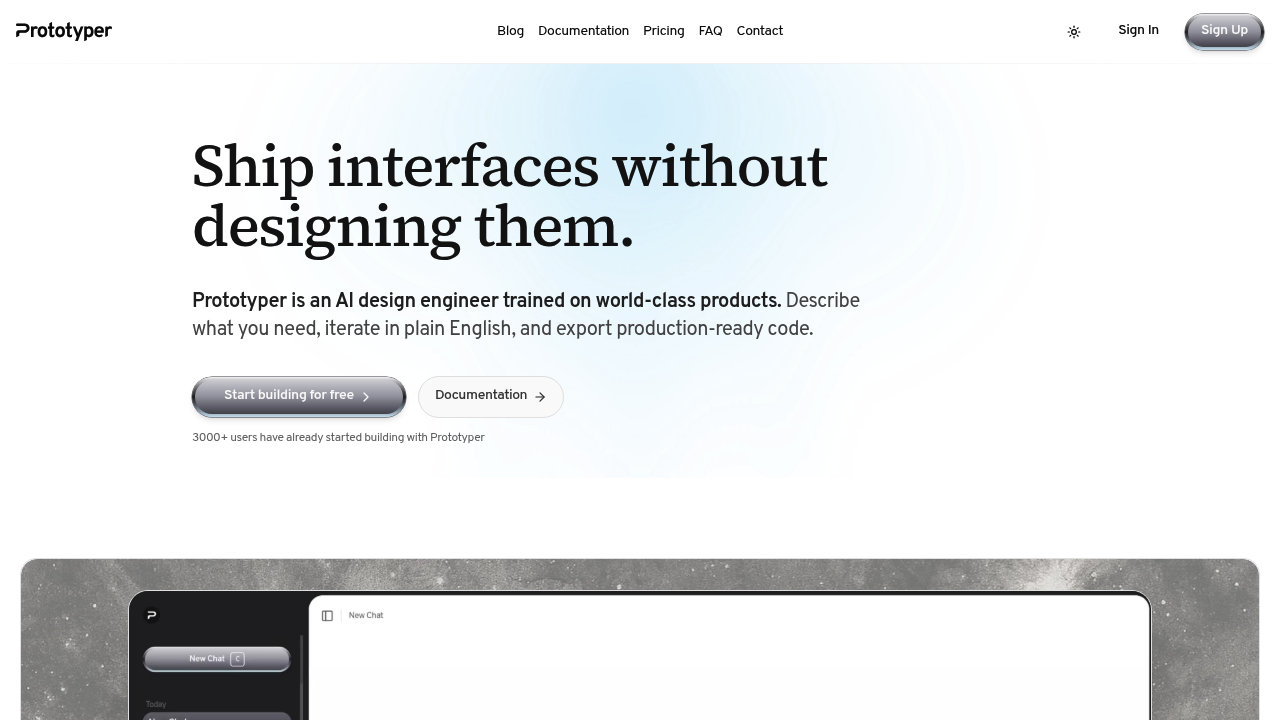
You describe what you want and Prototyper spits out React components with Tailwind styling. No dragging boxes around a canvas with no wrestling with design tokens. Just plain English that becomes working code you can actually ship.
Prototyper keeps design and code in perfect sync through what it calls a single token and component graph. Change something in the visual preview and the code updates. Tweak the code and the design follows. It's truly lossless both ways, which solves the typical handoff nightmare between designers and developers. The AI was trained on real product interfaces from established design systems, so the output tends to look like actual software rather than generic wireframes.
Does it actually work for production use? The React and Tailwind generation is solid enough that over 3000 users are building with it. You get version history, real-time collaboration with presence indicators and comments, and the ability to hook up APIs for simple workflows. Export is straightforward. You can embed previews in docs or presentations, share publicly, or lock things down with passwords.
The free tier exists but it's pretty limited. You can prototype but you'll hit walls quickly since export and collaboration both require upgrading. That's a problem if you're trying to evaluate whether this fits your workflow. The $25 Starter plan only gives you public sharing, which will not work for most commercial projects. You really need the $59 Pro plan to get unlimited projects, collaboration features, and version history. Enterprise pricing is custom but adds SSO, audit logs, and security reviews.
No mobile app. No browser extension. The facts don't mention any integrations with other tools, which is surprising for something positioning itself as a production workflow component. You're working entirely within Prototyper's environment.
This makes sense for small teams shipping web apps who want to collapse the design-to-development timeline. Frontend engineers who hate traditional design tools will find this faster. Product managers who can describe interfaces but can't code them will actually produce working prototypes. It's less useful if you need pixel-perfect custom designs or work across multiple platforms beyond web. The deterministic generation means you won't get wildly different results each time you iterate, which matters when you're actually building something real rather than just exploring concepts.