
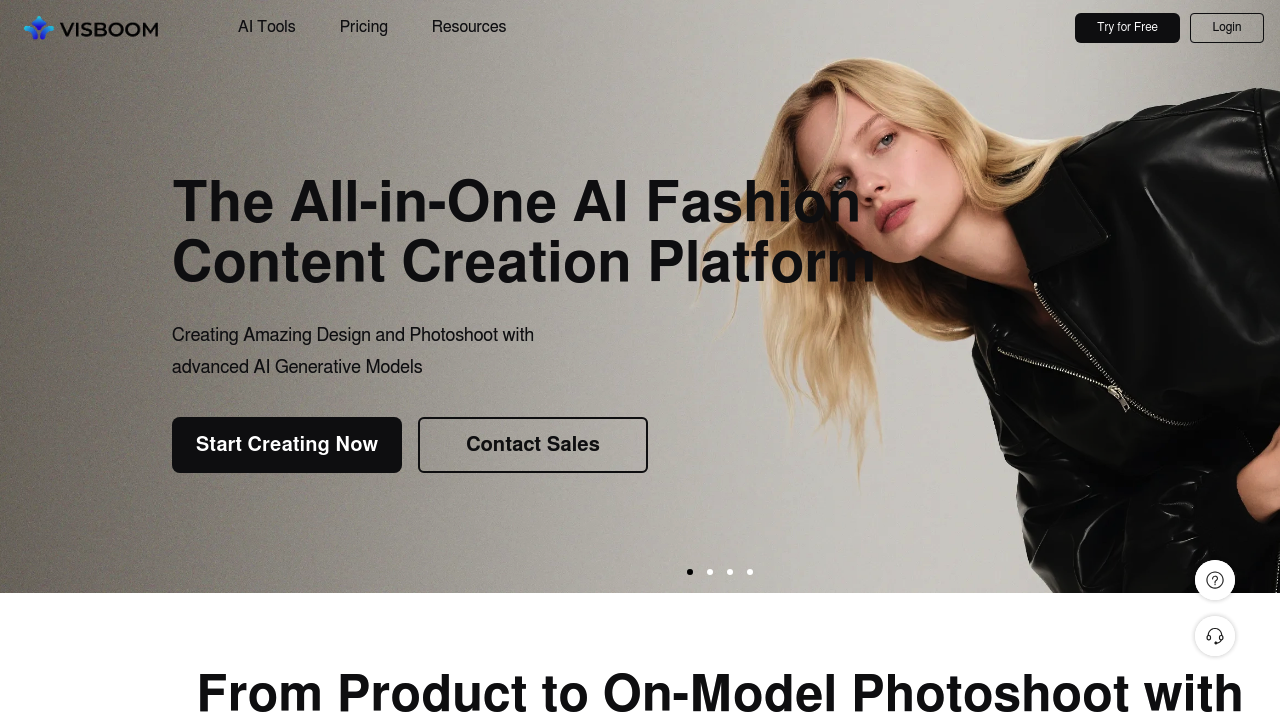
A fashion e-commerce manager at a mid-sized apparel brand needs to photograph 200 new items for the spring collection. Traditional shoots mean hiring models, booking photographers, renting studio space, and weeks of scheduling. Visboom generates professional model photoshoots from flat-lay product images or existing photos. The manager uploads garment photos and selects from over 10,000 trending models in Visboom's library. Within seconds, she's got high-resolution images showing different models wearing each piece across multiple poses and backgrounds.
The virtual try-on tech works for both clothing and footwear. A shoe brand founder photographs his new sneaker line on white backgrounds. He uses the shoe try-on feature to create full-body shots and detailed close-ups showing the footwear on models in various settings. The AI background changer adds indoor boutique scenes or outdoor urban environments. No model contracts needed. No location fees.
Visboom cuts visual asset creation costs by 92% according to their reported data. Time to market drops by 15x compared to traditional shoots. Brands using Visboom report 16% higher purchase conversion rates and 38% higher click-through rates on product pages.
The pose swap feature creates variations. One product photo becomes multiple poses without additional uploads. The model swap feature transforms standard model photos into celebrity-style images using either the built-in database or custom models you provide. All generated images come with full image rights, eliminating licensing headaches.
What it doesn't handle well isn't clear from available information. Visboom targets fashion-specific content, so it won't help with general product photography outside apparel and footwear. There's no mention of batch processing capabilities or integration with e-commerce platforms, which larger retailers might expect.
Small fashion retailers launching their first online store benefit most. Global fashion professionals managing multiple product lines see the speed advantage. Fashion photographers could use it for quick client mockups before committing to full shoots.
It's not built for brands that need highly specialized product photography requiring specific lighting conditions or texture detail that only physical shoots capture. Companies with strict brand guidelines around model representation might find the AI-generated models limiting. Luxury brands positioning themselves on authenticity over efficiency probably won't want AI-generated campaign imagery.
Visboom assumes you've got decent source images to start with. Garbage in, garbage out applies. Really poor quality product photos won't magically become high-end content.