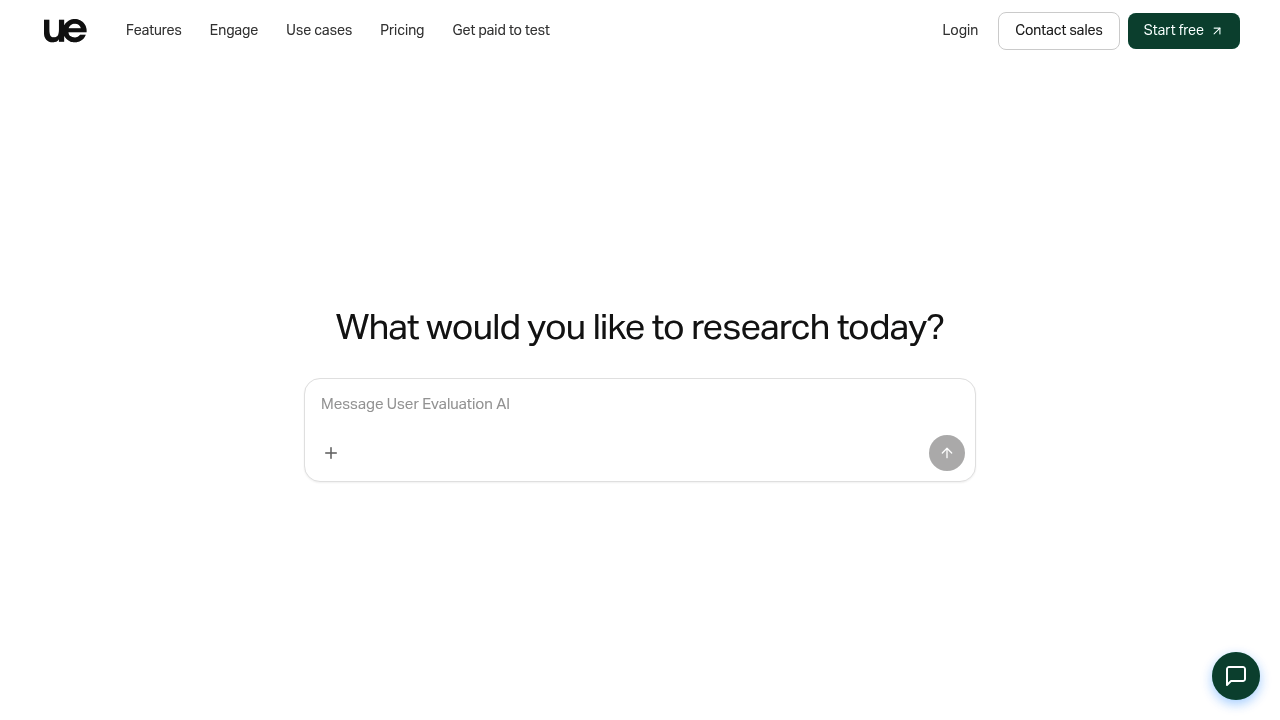
User Evaluation handles the full arc of qualitative research: recruiting participants from its built-in pool, running interviews and surveys, transcribing audio and video in 57 languages, and producing cited reports and presentation decks. An AI agent with 14 tools analyzes uploads—audio, video, text, PDF, CSV—and surfaces pain points, delighters, and themes while citing every claim back to the source material. This tool offers AI-Curated Interviews where an agent calls participants directly, Live Interviews with recording and invites, and adaptive AI-Curated Surveys that follow up like a conversation. It transcribes with speaker labels and custom vocabulary, generates charts on demand, exports reports as PDF or DOCX, and builds presentation decks up to 15 slides with native PPTX export. Plans start at a free tier with three projects and three transcription hours, then $19 per month for Basic, $49 for Standard, and $99 for Plus with white-labeling and API access.
More than 500 research teams use User Evaluation, including product designers, UX researchers, and qualitative research departments inside startups and enterprises. It fits researchers who need to turn raw interview footage into shareable deliverables quickly, teams running recurring studies with participant pools filtered by demographic or qualification, and designers who want tagged insights organized in Kanban collections. The free plan suits solo researchers testing the workflow, while paid tiers serve teams managing multiple concurrent projects, higher transcription volumes, and collaboration with stakeholders who need read-only access to findings.
The Meeting Notetaker joins Google Meet, Teams, and Zoom calls to capture sessions without manual recording, while the Deep Research feature digs into uploaded data sets for cross-project patterns. Researchers use it to redact PII before sharing clips saved as MP4, build discussion guides for moderated sessions, and take live notes during interviews that sync with transcripts. User Evaluation connects to over 5,000 apps through Zapier and offers a REST API with webhooks on the Plus plan for custom workflows. Organizations report a 94 percent reduction in time from raw interview to cited report, saving an average of 5.4 hours per week per researcher—potentially $48,000 annually per seat. ISO 42001 certification documents its AI governance framework, and it never trains models on customer data.