
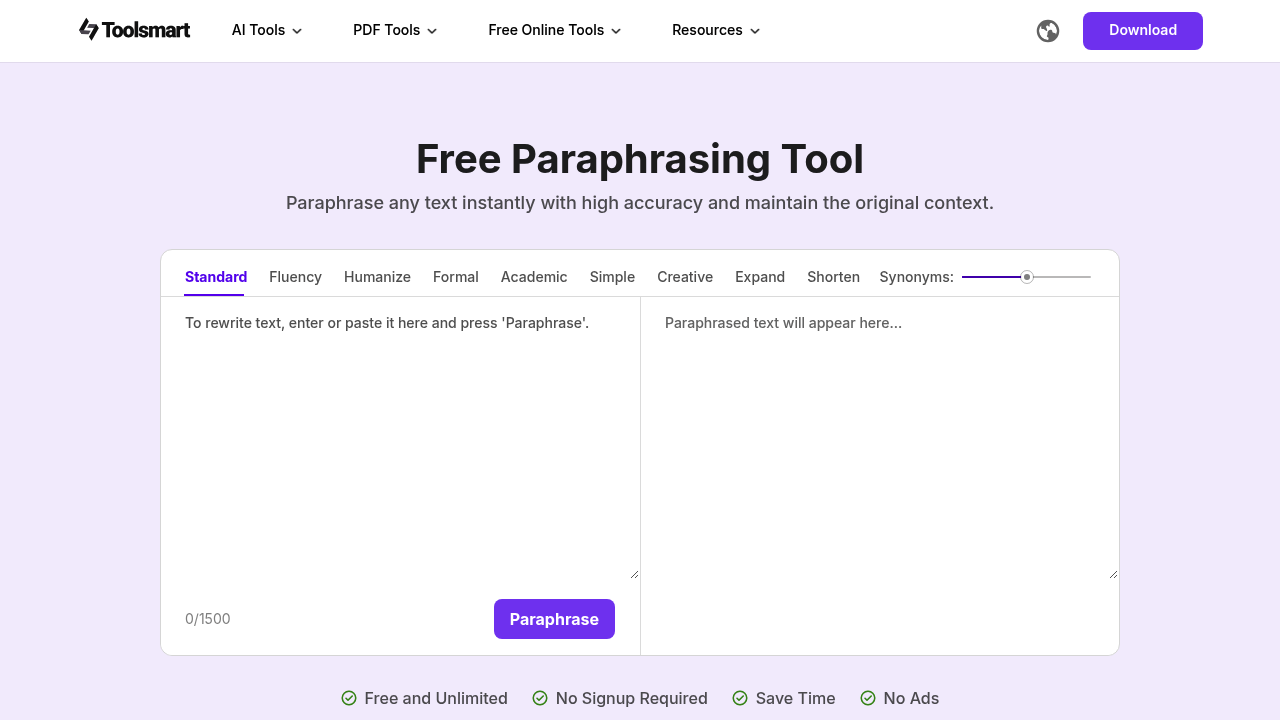
This paraphrasing tool processes text through nine distinct rewriting modes, each applying different transformation rules to the input. The Standard mode makes general improvements while preserving structure. Fluency focuses on readability and flow. Humanize adjusts tone to sound less mechanical. Formal refines language for professional contexts. Academic applies scholarly conventions. Simple reduces complexity. Creative introduces fresh expressions. Expand adds detail and length. Shorten condenses without losing meaning.
The technical architecture accepts up to 1,500 words per processing session. Users paste text into the interface, select a mode, and adjust a word variation control that determines transformation intensity. Low settings produce minor tweaks for clarity. High settings generate complete rewrites. The system analyzes sentence structure, identifies replaceable phrases, and substitutes alternatives while maintaining semantic consistency with the original context.
Output quality depends on mode selection and variation settings. This application aims to preserve the source meaning while changing enough surface-level language to avoid repetition. It's designed for content writers drafting blog posts, students working on essays and reports, marketers creating product descriptions, and professionals refining documents. Each mode applies specific linguistic rules. Academic mode might favor passive constructions and formal vocabulary. Creative mode introduces figurative language and unconventional phrasing.
This application integrates with WPS Office, an alternative office suite compatible with Microsoft Office formats including Word, Excel, PowerPoint, and PDF. This lets users paraphrase within their existing document workflow rather than switching between applications.
The service requires no signup while no ads interrupt usage. There's no limit on how many paraphrasing sessions you can run, though each individual session caps at 1,500 words. For longer documents, you'll need to break content into chunks and process them separately.
The 1,500-word session limit is the primary technical constraint. If you are working on a 5,000-word article, you'll run three separate sessions. This application doesn't store previous sessions or maintain context across multiple runs, so processing a long document in pieces means each chunk gets paraphrased independently. This can create inconsistencies in terminology or style across sections.
The word variation control provides granular adjustment, but it's unclear exactly how the underlying algorithm interprets different settings. Small adjustments might still change technical terms you wanted preserved. Complete rewrites might occasionally drift from the original meaning despite the system's semantic preservation goals. The nine modes offer flexibility, but choosing the right one requires understanding how each applies its transformation rules to your specific content type.