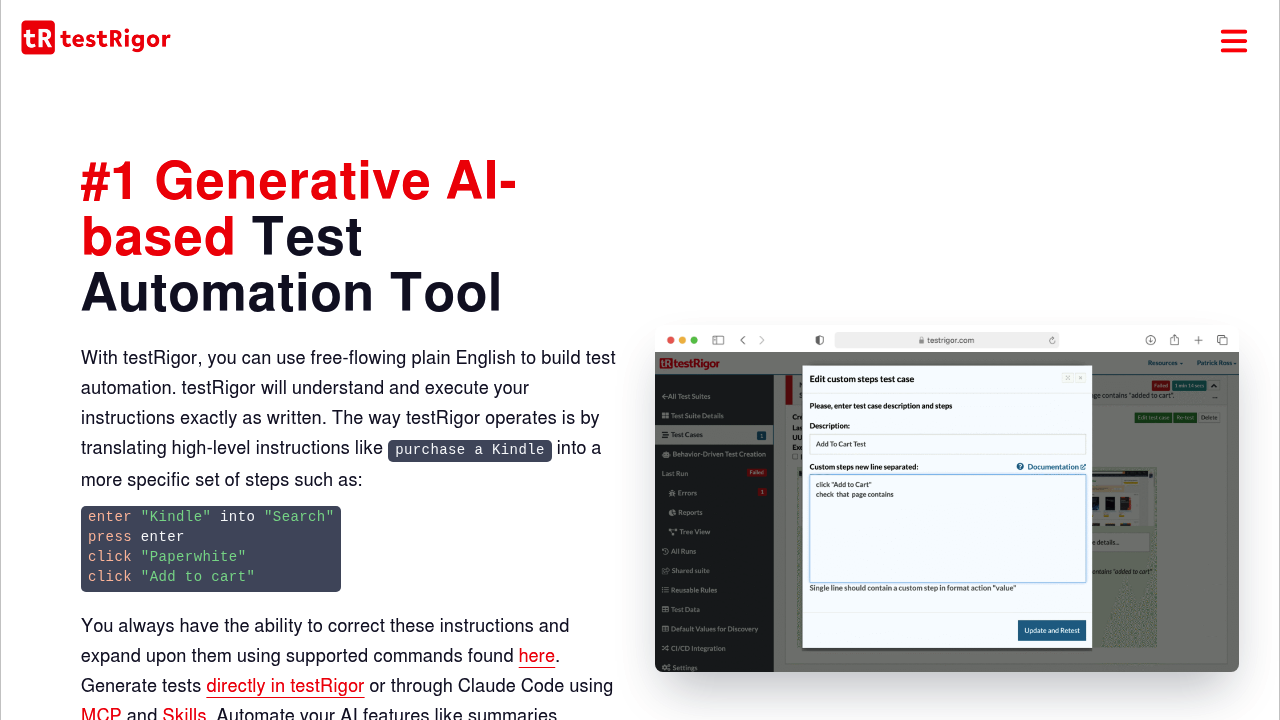
testRigor is a generative-AI test automation tool that lets teams write end-to-end tests in plain English. Instructions such as purchase a Kindle are translated into concrete steps like searching, clicking and adding to cart, and users can correct or extend them with supported commands. Tests can be generated inside testRigor or through an AI coding assistant using MCP and Skills, and existing manual test cases can be pasted or imported. The company says more than 90,000 companies use it for QA.
It is built for QA engineers, manual testers and engineering teams who spend most of their time maintaining brittle Selenium or Appium scripts. Because tests read as plain language, manual QA staff can create and maintain automation without writing code, which lets QA engineers and manual testers work on one platform. Teams that ship AI features such as chatbots, generated summaries and charts also get dedicated capabilities for testing those outputs. Engineering leads who want regression coverage without a large automation team are another natural fit.
Coverage spans web tests across browsers and platforms, native and hybrid mobile apps on iOS and Android with LambdaTest or BrowserStack for extra devices, desktop apps on Windows, and API calls that validate return codes. It can also send and verify emails, make and check phone calls and SMS through Twilio, handle two-factor logins with authenticator apps, SMS or email, and test mainframe applications. Teams can run a full regression suite in parallel, and developers can write a plain-English test first, then let a coding assistant produce code until the test passes.