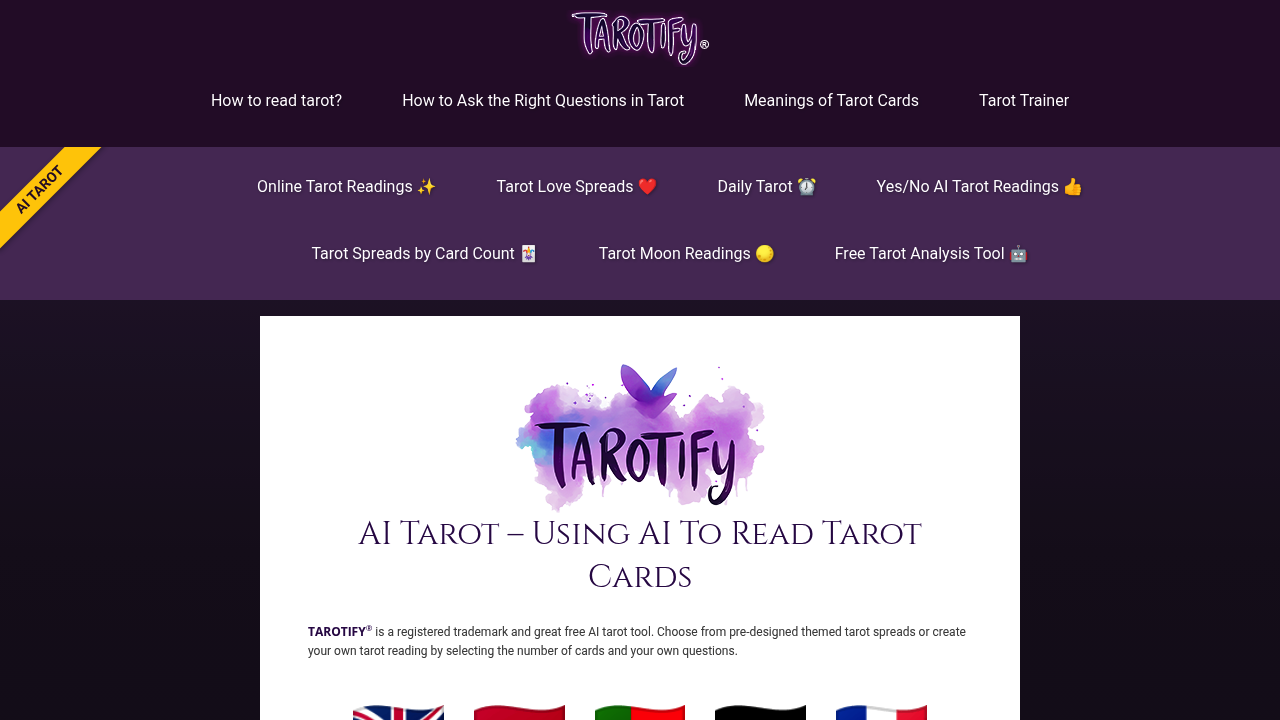
AI tarot reading sounds gimmicky until you see what Tarotify actually does. This application interprets all 78 traditional tarot cards using AI that accounts for both upright and reversed positions. You pick from themed spreads or build custom readings by choosing card count and writing your own questions. The AI then analyzes each card based on established tarot symbolism.
Tarotify covers the full deck — 22 major arcana and 56 minor arcana cards across four suits. Daily readings arrive if you want them. There's a yes/no reading mode for quick questions, plus specialized spreads for love and moon readings. A card scanner lets you upload physical cards for interpretation. The trainer mode teaches you card meanings, while knowledge tests check what you've learned across major arcana, minor arcana, and individual suits.
Everything runs in a browser. No app download needed. Works on phones and desktops equally. Support for 41+ languages means you can get readings in English, Spanish, Portuguese, German, French, Arabic, Japanese, Korean, and dozens more.
Here's what does not work while you need internet constantly. No offline readings. The AI interpretation quality isn't testable from the facts provided. Traditional tarot readers might find AI analysis misses the intuitive element that comes from human interpretation. Tarotify treats tarot like a system with fixed meanings rather than something fluid and personal.
The language support impresses but raises questions about interpretation accuracy across cultures. Tarot symbolism carries Western esoteric traditions. How well do those concepts translate to 41 languages? The facts don't say.
The card scanner feature sounds useful for people with physical decks, but there's no detail on accuracy. Does it recognize every deck style? What happens with non-traditional artwork?
The trainer and knowledge tests sit oddly next to AI readings. If you're learning traditional meanings, why rely on AI interpretation? The combination suggests Tarotify wants to serve both learners and people who just want quick digital readings. Those feel like different audiences.
Everything's free. Full access to readings, trainer, interpretation guides, and tests costs nothing. That's unusual for AI tools. Either the business model isn't clear or monetization comes later. Free access means low barrier to trying it, but raises sustainability questions.
Best for people curious about tarot who want a digital experience. Works for beginners learning card meanings. Less convincing for serious practitioners who value human intuition over algorithmic interpretation. The 41 language support matters if you want readings in your native language, though translation quality remains unknown.