
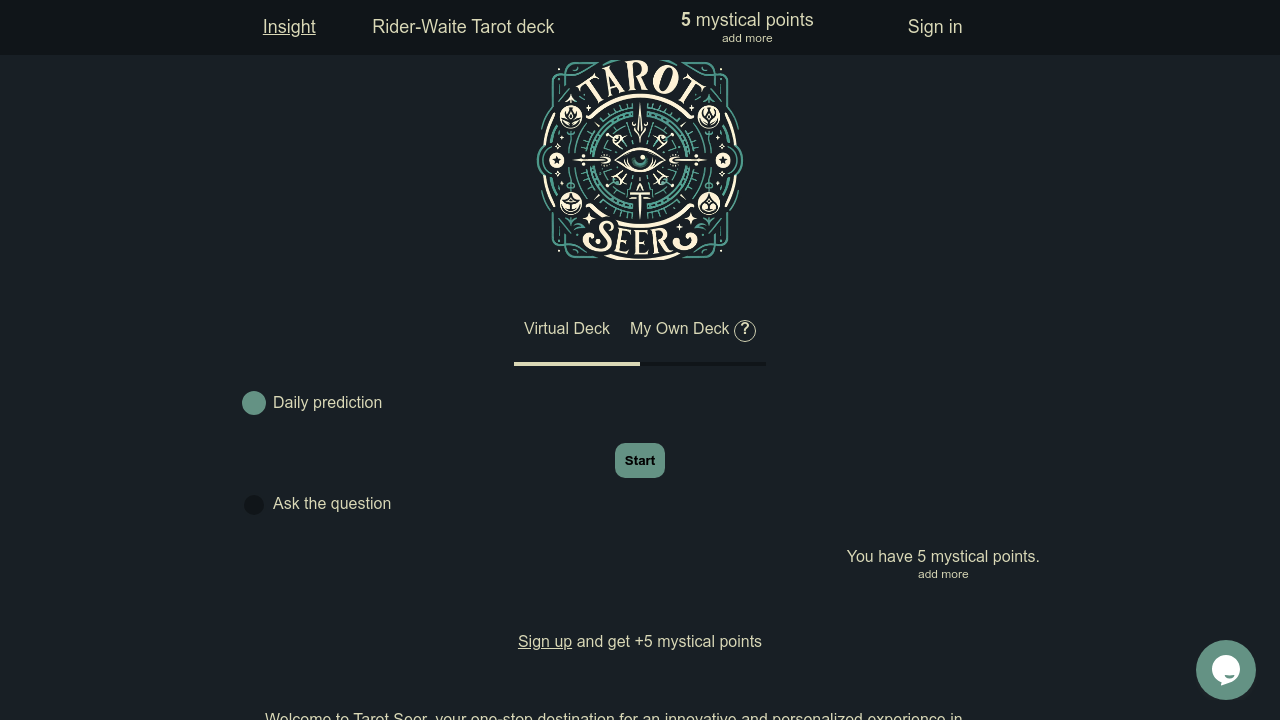
Opening Tarot Seer lands you in a mystical interface where you can either draw cards from a virtual deck or input results from your own physical Rider-Waite Tarot cards. The dual approach feels unusual for an AI tool, most would force you into one experience, but this one lets you choose based on what you've got at home.
Drawing cards happens quickly. Click to select your spread type, then watch as cards flip over on screen. The visuals aren't fancy, just functional representations of the traditional Rider-Waite imagery. Once you've drawn, you can pose a specific question to the AI or just ask for a general reading based on what came up.
The AI processes your cards and spits out interpretations that blend traditional tarot meanings with generated insights. Readings touch on future predictions, current situations, and guidance depending on what you asked. The system tries to weave the cards together into a cohesive narrative rather than just listing what each card means individually.
Things get interesting with the physical deck option. You draw your own cards, input which ones you pulled, and the AI reads those instead. It's a bridge between old-school tarot practice and digital interpretation. Some people prefer keeping the tactile ritual while getting AI analysis.
Every action costs mystical points. You start with 5 and get another 5 for signing up, but after that you're stuck unless you add more. The point system creates constant friction. Want another reading? Need points. Different spread? Points again. It interrupts the flow when you're exploring what this application can do.
The sharing feature generates a unique URL for each reading so you can send it through social or email. Whether anyone actually wants to share their tarot readings is questionable, but the option exists.
The customizable spreads let you pick different layouts beyond basic three-card draws. Celtic Cross, relationship spreads, career guidance — standard tarot configurations are available. But you're still locked into the Rider-Waite system exclusively, which limits anyone familiar with other deck traditions.
Daily predictions appear if you want routine readings without diving into specific questions. Draw your cards, get your forecast, move on with your day.
This application works fine for both experienced tarot readers wanting a second opinion and complete beginners curious about card meanings. But the mystical points gate feels built to push users toward adding more, which cheapens the mystical aesthetic the site tries to maintain. You'll run out fast if you're actually exploring what it can do.