
#5 in Humanizer AI SuperHumanizer logo

SuperHumanizer

A content marketer at a SaaS company drafts blog posts using AI writing tools, then faces a problem

The company's editorial guidelines require human-sounding content, and their SEO consultant warns that search engines might penalize obviously synthetic text. She pastes her 3,000-word draft into SuperHumanizer, picks…

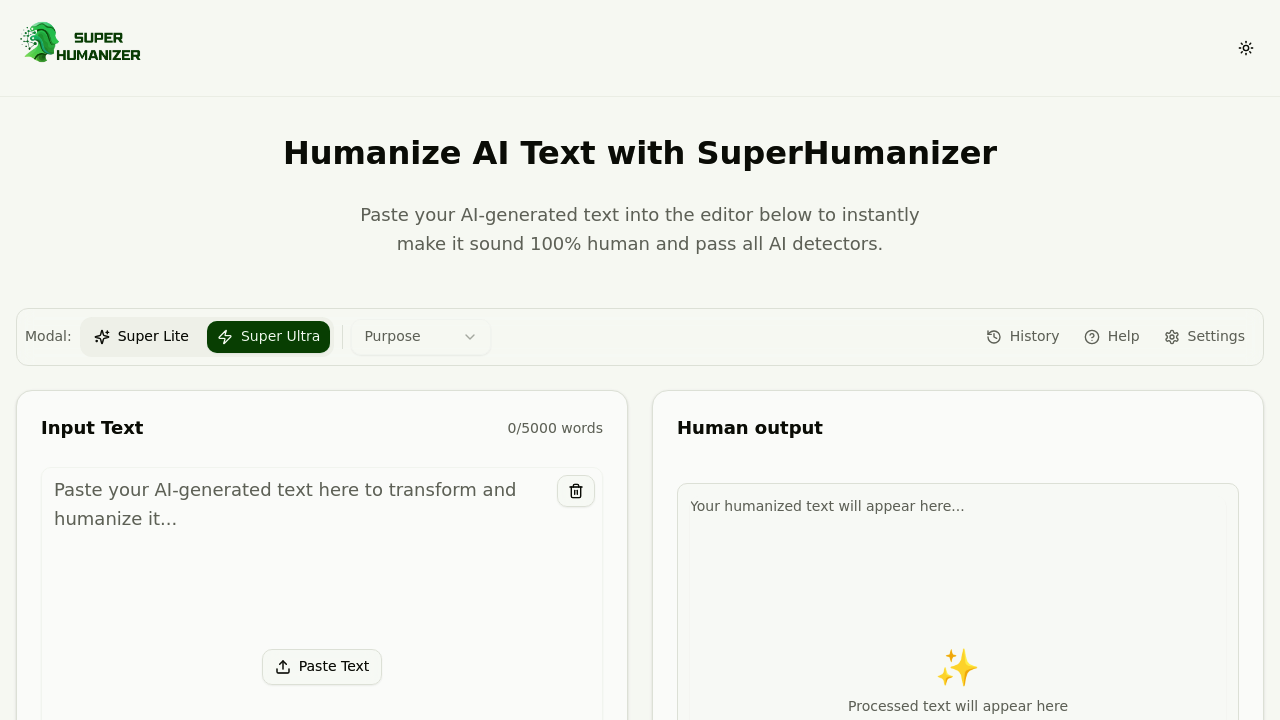
SuperHumanizer screenshot

A content marketer at a SaaS company drafts blog posts using AI writing tools, then faces a problem. The company's editorial guidelines require human-sounding content, and their SEO consultant warns that search engines might penalize obviously synthetic text. She pastes her 3,000-word draft into SuperHumanizer, picks the Super Ultra mode for thorough rewriting, and gets back text that breaks the repetitive patterns and robotic phrasing her AI tool produced. The built-in detector confirms the rewrite passes AI detection checks.

A freelance writer churns out articles for multiple clients who've started running submissions through detection tools like Turnitin and GPTZero. He generates first drafts with AI to meet tight deadlines, but needs those drafts to read authentically. SuperHumanizer processes up to 5,000 words at once, varies sentence length to avoid the monotonous rhythm that flags AI writing, and strips out filler phrases. He uses Super Lite mode when he needs quick turnarounds on shorter pieces, switching to Super Ultra when clients specifically mention detection concerns.

A college student writes papers with AI assistance but knows her university scans submissions through originality checkers. She runs her essay through SuperHumanizer to reshape sentence structures and replace overly formal vocabulary with simpler words. The system fixes spacing issues and removes unnecessary repetition. Results come back in seconds. No signup required.

SuperHumanizer handles the technical cleanup work well. It smooths sentence flow, clears hidden spaces, and adjusts pacing. The detector was trained on millions of samples, giving users immediate feedback on whether their rewrite will likely pass common detection systems. Two modes let users choose between speed and depth. Works across all browsers and devices.

Where it doesn't help: writers who need to process more than 5,000 words have to split their work into chunks. There's no API for automated workflows, no team features for agencies managing multiple writers, and no integrations with content management systems or writing platforms. SuperHumanizer does one thing and stops there.

The free plan covers unlimited uses with the full 5,000-word capacity and both humanizing modes. No hidden tiers or trial periods. The privacy approach means no data gets shared with third parties, though writers working with truly sensitive material might still want to review what gets processed through any online service.

Academic users should consider their institution's policies on AI assistance. Marketing teams needing bulk processing will hit the word limit quickly. Writers who want the humanization step baked into their existing workflow won't find that here.


SuperHumanizer alternatives

See all →

Frequently asked

7 questions
Can SuperHumanizer bypass Turnitin and GPTZero?
A graduate student submitting a thesis runs her AI-assisted draft through SuperHumanizer's Super Ultra mode, which breaks repetitive patterns and reshapes sentence structures that detection tools flag. The built-in detector, trained on millions of samples, shows whether the rewrite will likely pass systems like Turnitin, GPTZero, and Originality.ai. A freelance journalist uses it before submitting articles to clients who've started scanning for AI content, finding that the varied sentence lengths and simplified vocabulary help clear detection checks. The tool specifically targets the markers these systems look for, though results depend on how heavily AI-generated the original text was.
Is SuperHumanizer really free with no limits?
A content writer can humanize up to 5,000 words per run with unlimited uses, no signup required, and access to both Super Lite and Super Ultra modes. The built-in AI detector comes included in the free plan, and there's no trial period that expires or hidden paid tiers. A marketing coordinator processing three 2,000-word blog posts per week never hits a usage cap or paywall. The 5,000-word maximum per run is the only constraint, so longer documents need splitting into chunks.
What's the difference between Super Lite and Super Ultra modes?
A blogger needing quick edits on a 1,500-word post uses Super Lite for fast humanization that smooths basic AI patterns and improves readability in seconds. A copywriter whose client specifically mentioned AI detection concerns switches to Super Ultra mode, which does deeper rewriting by breaking complex structural patterns, varying sentence rhythm more aggressively, and removing subtler robotic phrasing. Both modes process the same 5,000-word maximum and work instantly, but Super Ultra takes more aggressive steps to reshape how the text reads. Writers typically try Super Lite first, then move to Super Ultra if detection tools still flag the content.
Can I use SuperHumanizer for academic papers?
A college student using AI to draft an economics essay runs it through SuperHumanizer to reshape sentence structures and replace formal vocabulary before submission, knowing her university scans through Turnitin. The tool removes repetitive patterns and varies sentence length to avoid the monotonous rhythm that flags AI writing. Students should check their institution's specific policies on AI assistance, since some schools prohibit any AI use while others allow it for brainstorming or initial drafts. SuperHumanizer handles the technical rewriting, but the responsibility for following academic integrity rules sits with the student.
Does SuperHumanizer work for long articles over 5,000 words?
A content agency producing 10,000-word white papers has to split documents into two chunks since SuperHumanizer maxes out at 5,000 words per run. The writer pastes the first half, processes it through Super Ultra mode, then repeats with the second half. There's no API to automate this splitting or batch processing for teams handling multiple long-form pieces simultaneously. Writers working on book chapters or extensive reports will spend time dividing their work, though each chunk still processes in seconds and the unlimited free uses mean no cost barrier.
Will SuperHumanizer change the meaning of my content?
A technical writer for a software company needs AI-generated documentation to sound natural without losing accuracy about product specifications. SuperHumanizer uses context-based rewriting that preserves the original meaning while breaking AI patterns and replacing robotic language with simpler vocabulary. A marketing manager finds that product descriptions keep their core messaging while gaining better sentence flow and varied pacing. The tool focuses on how something's said rather than what's said, though writers should review output for any shifts in technical details or specific claims.
Can I integrate SuperHumanizer with my content workflow?
A content team using WordPress, Google Docs, and project management tools won't find any integrations or API access with SuperHumanizer. Writers have to manually copy text from their drafting environment, paste into SuperHumanizer's interface, process it, then copy the results back. An agency managing five writers across multiple clients can't build automated workflows or team features into their production process. The tool works entirely as a standalone web interface across all browsers and devices, which suits individual writers but creates friction for teams needing streamlined operations.

Traffic

Estimated monthly website visits · last 8 months

1.2M visits/mo
Monthly visits
1.2M
↓ 14.1% MoM
Global rank
#61,022
US #42,549
Category rank
#5
Humanizer AI
1.4M 1.1M 703.2K 352.8K 2.5K Dec 2025: 2.5K visits Dec 2025 Jan 2026: 4.2K visits Jan 2026 Feb 2026: 37.6K visits Feb 2026 Mar 2026: 162.1K visits Mar 2026 Apr 2026: 710.9K visits Apr 2026 May 2026: 1.4M visits May 2026 Jun 2026: 1.4M visits Jun 2026 Jul 2026: 1.2M visits Jul 2026

Reviews (0)

Write review

No reviews yet. Be the first to share your experience.