
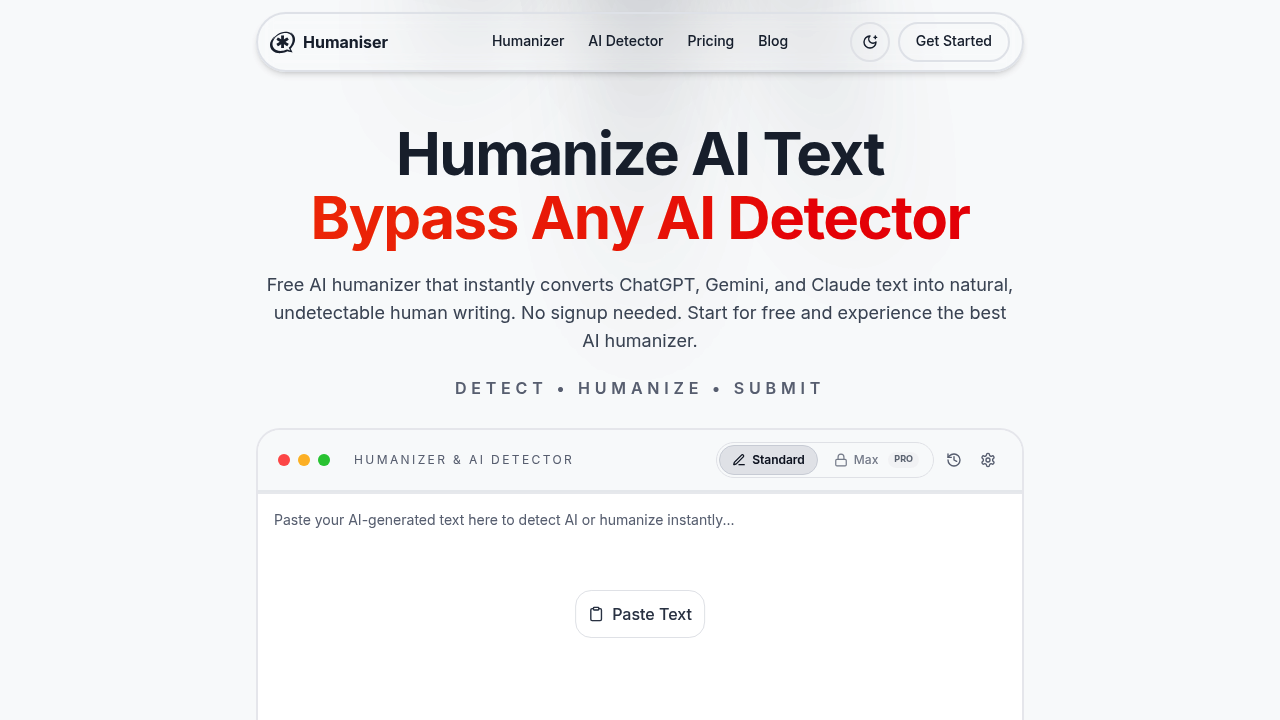
Humaniser processes AI-generated text through pattern analysis and linguistic transformation to make it appear human-written. This system accepts content from major language models and runs it through detection algorithms first to identify AI signatures, then applies rewriting techniques that alter sentence structure, vocabulary patterns, and stylistic markers that AI detectors typically flag.
The system offers three processing models with different transformation depths. The Standard model applies basic rewrites suitable for casual content. The Max model performs more aggressive restructuring. The PRO model uses the most sophisticated transformations for content requiring the highest detection bypass rates. Each model preserves the original meaning while changing the linguistic fingerprint that detection tools look for.
The detection bypass works by targeting specific patterns that tools like GPTZero and Turnitin use to identify machine-generated text. According to the company's metrics, the system achieves a 99.8% bypass rate across major detection platforms. This happens through sentence restructuring that mimics human writing inconsistencies, vocabulary variation that avoids AI-typical word choices, and rhythm changes that break the predictable cadence of generated content.
Language support spans 50+ options including English, Spanish, French, German, Chinese, and Arabic. The processing pipeline handles multilingual input by applying language-specific transformation rules rather than translating, which maintains cultural context and idiomatic accuracy. However, the free tier restricts users to English only, limiting testing across languages without a paid subscription.
The workflow requires no account creation for basic use. Users paste AI-generated text, select a processing model if available on their tier, and receive humanized output in seconds. The system processes up to 10 million words monthly across its user base of 100,000+ active accounts. That volume suggests the backend handles concurrent requests efficiently, though specific infrastructure details are not disclosed.
Output quality depends heavily on the selected model and input length. The Standard model produces acceptable rewrites for informal content but may leave detectable patterns in longer pieces. The Max model handles academic and professional writing better. Input limits constrain what you can process in a single pass, with the free tier capping at 250 words, Basic at 500, Pro at 1,000, and Max offering unlimited length.
Daily usage limits create workflow bottlenecks. Five uses per day on the free plan means you'll hit the ceiling quickly if processing multiple drafts. Basic jumps to 25 daily uses, Pro to 100, while Max removes the restriction entirely. These aren't rolling limits, they reset at fixed intervals.
The free plan costs nothing and doesn't expire, making it accessible for occasional use. Basic runs $5 monthly when billed annually at $60 with a 50% promotional discount. Pro costs $10 monthly at $120 annually with the same discount structure. Max sits at $20 monthly or $240 annually. Enterprise pricing requires direct contact for custom arrangements. The company offers a money-back guarantee if output gets flagged as AI-generated, though claim processes aren't detailed.
Technical limitations center on input constraints and model access. Free users cannot test multilingual support or advanced models. The 250-word cap prevents full document processing. Even paid tiers impose daily limits except at the Max level, which could bottleneck agencies or teams producing high volumes. No API access appears available for automated workflows or integration into existing content pipelines. Team features exist but their technical implementation isn't specified.