SparrowGenie logo

SparrowGenie

SparrowGenie automates administrative work for sales teams through a system that generates sales materials from customer conversations and handles proposal creation

The core technical approach centers on processing discovery call data and converting it into multiple sales assets simultaneously. The system's architecture splits into several distinct automation pipelines. The Sales…

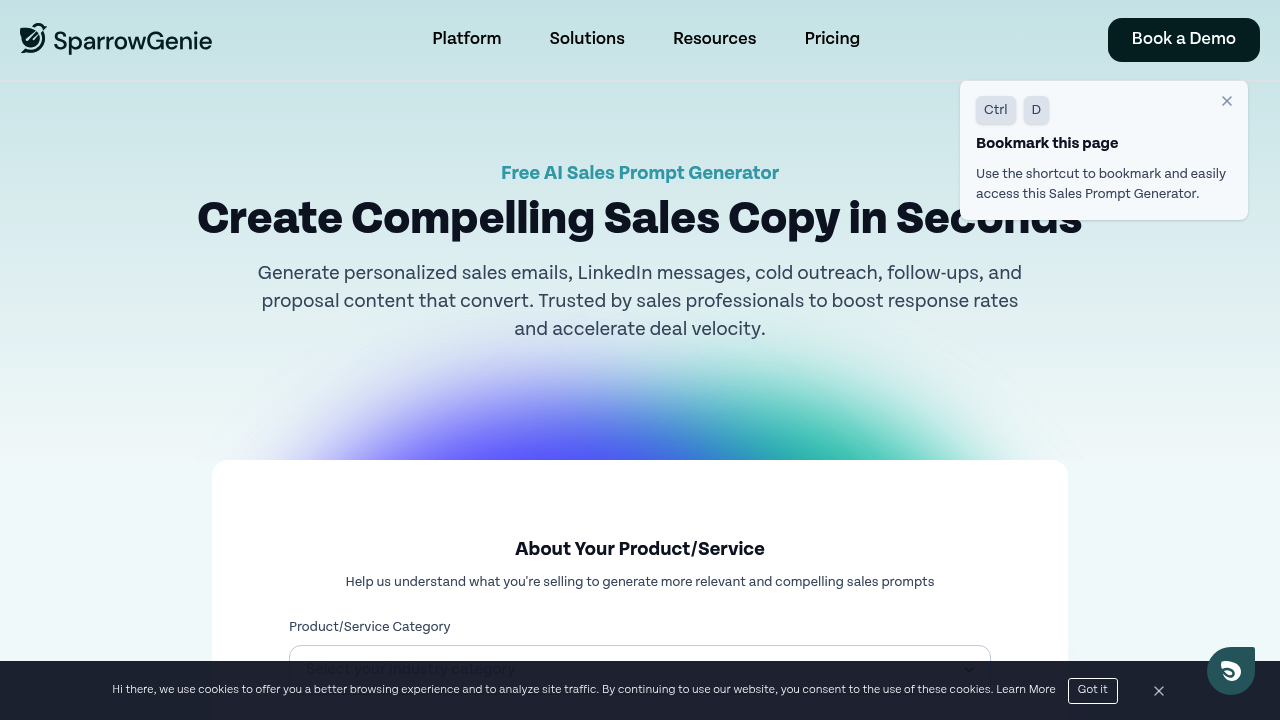
SparrowGenie screenshot

SparrowGenie automates administrative work for sales teams through a system that generates sales materials from customer conversations and handles proposal creation. The core technical approach centers on processing discovery call data and converting it into multiple sales assets simultaneously.

The system's architecture splits into several distinct automation pipelines. The Sales Dossier Generation system takes input from customer conversations and outputs proposals, pitch decks, battle cards, brochures, and one-pagers. This runs on a batch processing model where a single discovery call feeds multiple document generators that work in parallel. The RFP Management module handles complex request-for-proposal documents by parsing requirements and matching them against stored product information and historical responses.

The Sales Co-Pilot component provides real-time data retrieval during calls. It pulls from structured databases containing product specifications, pricing tables, competitor analysis, and historical deal data. This works as a query system that surfaces relevant information based on conversation context, though the exact mechanism for context detection isn't specified.

The free AI Sales Prompt Generator operates as a separate tool that creates text templates for sales communications. Users select from six communication styles, including Professional, Friendly, Concise, Empathetic, and Persuasive. The generator takes inputs around product category, sales role, scenario type, and prospect context to produce customized prompts. These outputs work as starting points for AI platforms rather than finished messages. You'd copy the generated prompt into another AI tool to create the actual sales content.

The system connects with major AI platforms for prompt execution. The integration layer doesn't involve API connections or automated data transfer. Instead, it generates prompts formatted for manual use in those external tools.

From a data handling perspective, the software processes customer conversation transcripts and stores product knowledge, competitor intelligence, and historical deal information. The security implementation for this data isn't detailed beyond mentioning secure automation.

Technical constraints include the manual handoff required between the prompt generator and AI platforms. There's no native content generation within SparrowGenie itself for the free tool. The service claims to automate sixty-five percent of non-selling activities, but this metric depends heavily on how sales teams currently structure their workflows.

The free tier provides unlimited prompt generation with full access to communication style options and industry customization. No paid tier details exist. Team features are available, suggesting some collaboration or sharing capabilities, though the implementation specifics aren't documented.


SparrowGenie alternatives

See all →

Frequently asked

6 questions
How does SparrowGenie generate sales proposals from discovery calls?
SparrowGenie processes discovery call data through a batch system that feeds multiple document generators running in parallel. The system takes conversation transcripts as input and routes them to specialized generators for proposals, pitch decks, battle cards, brochures, and one-pagers. Each generator pulls from stored product information and formats the output according to document type. The entire sales dossier gets created simultaneously rather than sequentially, which speeds up the process but means you're limited to the document types the system supports.
Does SparrowGenie actually write the sales emails or just create prompts?
The free AI Sales Prompt Generator creates prompt templates, not finished sales emails. You select communication style, sales scenario, and prospect context, then SparrowGenie generates a structured prompt. You'd copy that prompt into ChatGPT or Claude to generate the actual email content. There's no direct API connection or automated handoff, so it's a two-step process requiring manual copying between platforms.
Can SparrowGenie access my CRM data during sales calls?
SparrowGenie's Sales Co-Pilot retrieves data from its own internal databases containing product specs, pricing, competitor analysis, and historical deals. The system surfaces relevant information based on conversation context, but the documentation doesn't specify how it detects that context or whether it integrates with external CRM platforms. You'd need to ensure your sales data exists within SparrowGenie's system for the Co-Pilot to access it during calls.
Is SparrowGenie completely free or does it have paid plans?
The AI Sales Prompt Generator is completely free with unlimited prompt generation and access to all communication styles and customization options. No paid plan information exists in the available documentation, though team features are mentioned as available. The free tier doesn't appear to have restrictions on usage volume or feature access for the prompt generation tool.
What sales activities does SparrowGenie automate for account executives?
SparrowGenie handles proposal creation, RFP response writing, and sales collateral generation from discovery call inputs. The platform claims to automate sixty-five percent of non-selling administrative work, which covers document production and information retrieval during calls. Account executives would still conduct the actual conversations and close deals, but the system removes the manual work of creating follow-up materials and researching product details mid-call.
How does SparrowGenie's RFP automation actually work?
The RFP Management module parses incoming request-for-proposal documents to extract requirements, then matches those requirements against stored product information and historical RFP responses. The system automates the response generation by pulling relevant content from its knowledge base. The specific parsing methodology and matching algorithms aren't documented, and complex RFPs with unusual requirements might still need manual review since the system relies on having comparable historical data.

Traffic

Estimated monthly website visits · last 8 months

4.7K visits/mo
Monthly visits
4.7K
↓ 2.9% MoM
Global rank
#3,692,922
US #3,028,789
Category rank
#28
AI Sales
14.5K 12K 9.5K 7K 4.5K Dec 2025: 14.4K visits Dec 2025 Jan 2026: 5.4K visits Jan 2026 Feb 2026: 4.5K visits Feb 2026 Mar 2026: 5.8K visits Mar 2026 Apr 2026: 14.5K visits Apr 2026 May 2026: 7.6K visits May 2026 Jun 2026: 4.8K visits Jun 2026 Jul 2026: 4.7K visits Jul 2026

Reviews (0)

Write review

No reviews yet. Be the first to share your experience.