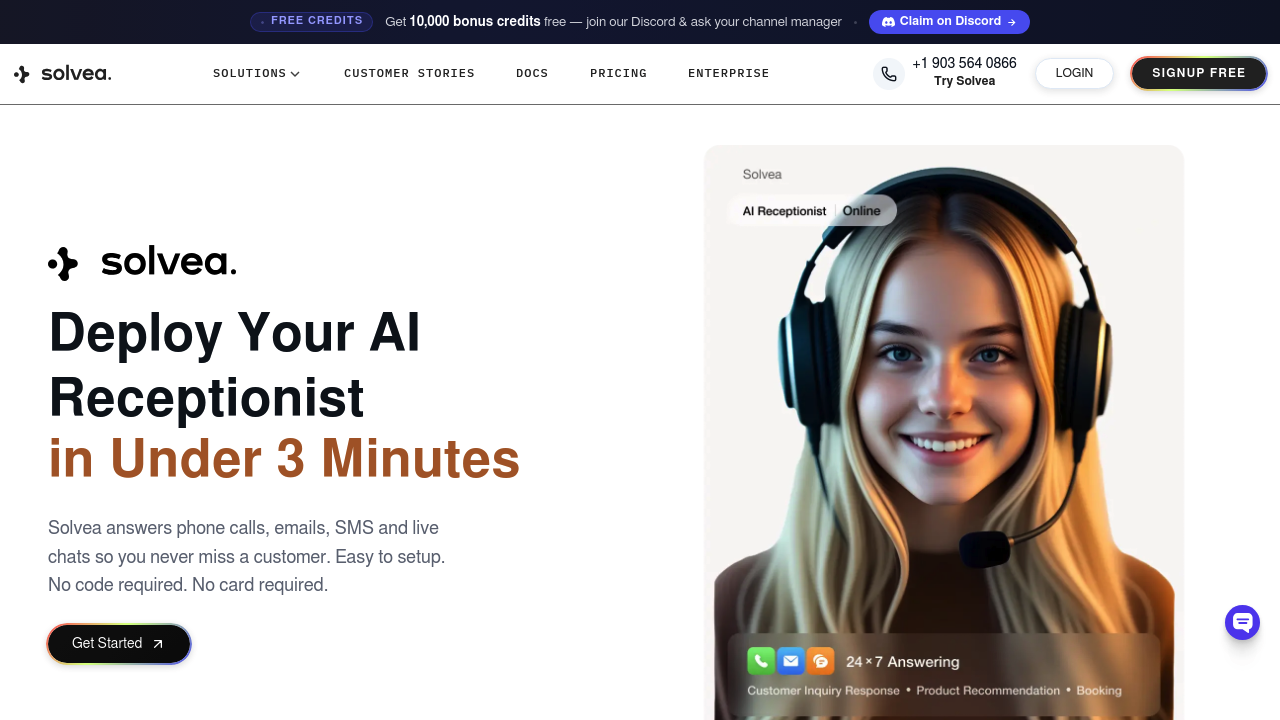
A customer service rep at a mid-sized online furniture store answers the same shipping questions fifty times per day while trying to handle complex returns cases. Calls stack up during lunch hours. Emails sit unanswered overnight. Cart abandonment climbs because shoppers can't get quick answers about delivery times. Solvea steps in as an AI receptionist that picks up phone calls, responds to emails and SMS, and handles live chat simultaneously. The furniture retailer loads product specs, shipping policies, and return procedures into the system's knowledge base. When a customer calls asking about delivery for a sectional sofa, Solvea checks order status, provides tracking details, and explains the white glove delivery process without transferring to a human. A shopper texting about whether a coffee table fits through a standard doorway gets dimensions and assembly notes instantly.
The system handles order tracking, delivery updates, returns processing, and product recommendations across all channels. A hotel front desk manager sets up an agent to answer booking inquiries, explain amenities, and schedule check-ins through both phone and text. The cross-channel memory feature means if someone starts a conversation via email and follows up by phone, Solvea remembers the context. The no-code setup lets the manager describe agent behavior in plain language rather than writing scripts. Templates exist for retail, real estate, restaurants, medspas, and law firms to speed up configuration.
Resolution rate hits 80% according to their metrics. Anker reports 70% of customer service work now runs automated. The system qualifies leads, books appointments through Google Calendar integration, and syncs data to Google Sheets. Shopify stores connect directly so the AI accesses inventory, order history, and product catalogs. When it can't resolve something, it routes to humans with full conversation history.
Credit limits create real friction. Free accounts get 1,000 credits monthly with three agents and a 50MB knowledge base. A growing ecommerce shop burns through credits fast during peak seasons. The Basic plan at $30 monthly offers 30,000 credits and ten agents with 500MB storage, but high-volume operations need Enterprise pricing for unlimited usage and marketplace integrations like Amazon, eBay, and Walmart. Knowledge base size constraints matter too. Retailers with extensive product catalogs hit storage ceilings quickly.
The system works best for businesses drowning in repetitive inquiries. A real estate agency fielding constant calls about property availability, showing schedules, and neighborhood details offloads that volume while agents focus on closings. A barber shop automates appointment booking and service questions. Software companies handle tier-one support tickets automatically. It breaks down when conversations require genuine judgment calls, emotional nuance, or case-by-case policy exceptions. Complex B2B negotiations don't fit. Highly technical troubleshooting that needs screen sharing and diagnostic tools exceeds what voice and text can accomplish.
The free plan works for solo freelancers and very small operations testing the waters. Growing businesses likely need the Basic tier. Enterprise makes sense for retailers doing serious volume across multiple sales channels. Companies with simple processes benefit most. Those dealing with complex custom orders, complicated service scenarios, or industries requiring licensed professionals to handle communications shouldn't rely on full automation. This software replaces routine conversations effectively but won't handle situations where human discretion actually matters.