
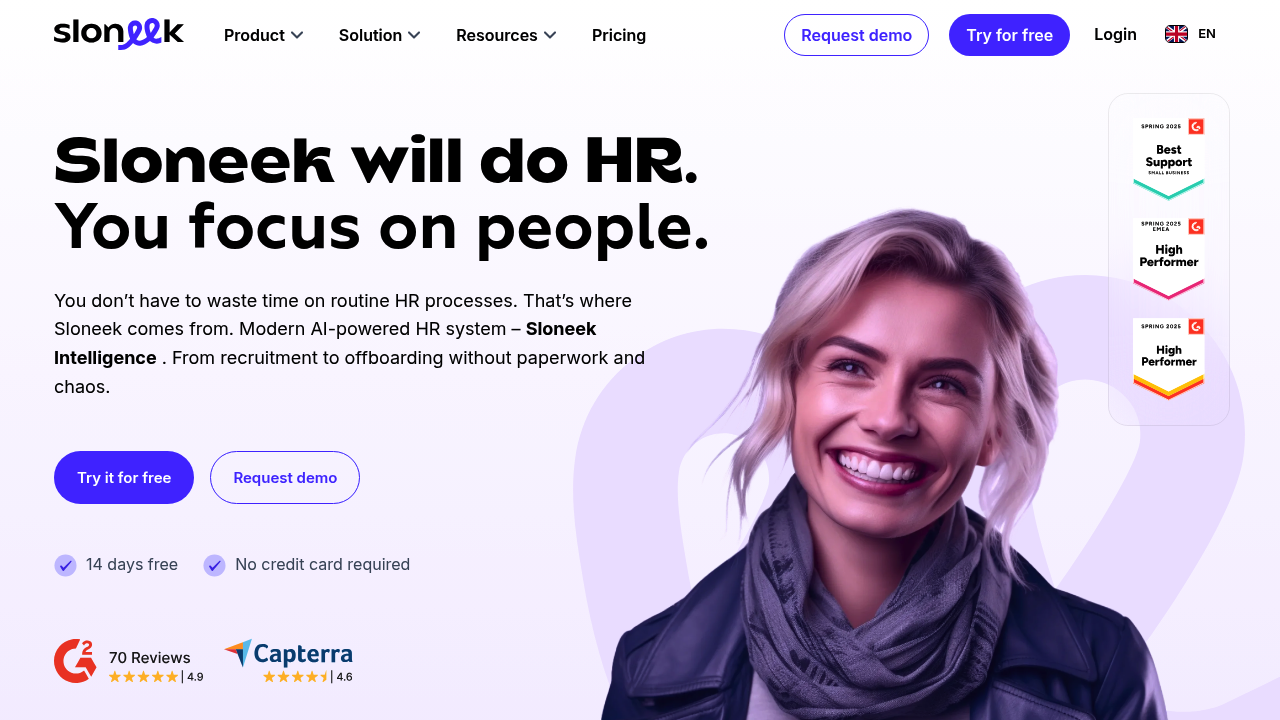
Opening Sloneek drops you into a conversational interface where you talk to an AI agent instead of clicking through menus. You can ask it to pull up someone's time-off balance, schedule a performance review, or find hiring documents without hunting through folders. The system responds in whatever language you're using and stays available around the clock.
The interface consolidates everything HR teams typically juggle across spreadsheets and separate tools. Employee records live alongside time tracking, performance reviews sit next to payroll data, and hiring workflows connect to onboarding checklists. When you need to see who's on leave next week or track business trip expenses, you type the question rather than navigating nested pages.
People analytics surfaces through charts showing turnover trends, headcount changes, and department comparisons. The system generates recommendations for decisions like promotion timing or workload distribution, though you'll need to judge whether its suggestions fit your company culture. Performance review cycles run through Sloneek with customizable templates and automatic reminders when someone's review window is closing.
Time management works through requests and approvals. It keeps records clean. Employees submit time off, managers approve or decline, and the system updates balances automatically. Document storage handles contracts, policy files, and onboarding paperwork with search that actually finds things when you need them weeks later.
The friction shows up when you want workflows that don't match what the system expects. If your company has unusual approval chains or non-standard leave types, you're adapting your process to fit Sloneek rather than the other way around. The AI agent handles routine questions well but stumbles on edge cases or company-specific policies it hasn't learned yet.
Integration happens through an open API that connects external systems, though setting this up requires developer time if you're linking payroll software or specialized tools. The native A2A integration exists but details on what specifically connects remain vague.
Data security gets emphasis with promises about leak prevention, though the technical implementation behind that guarantee isn't visible to users. The 14-day trial permits you test with real employee data before committing, which matters since migrating HR systems is a massive lift. You'll know pretty quickly if the conversational approach saves time or just adds another interface to learn.