
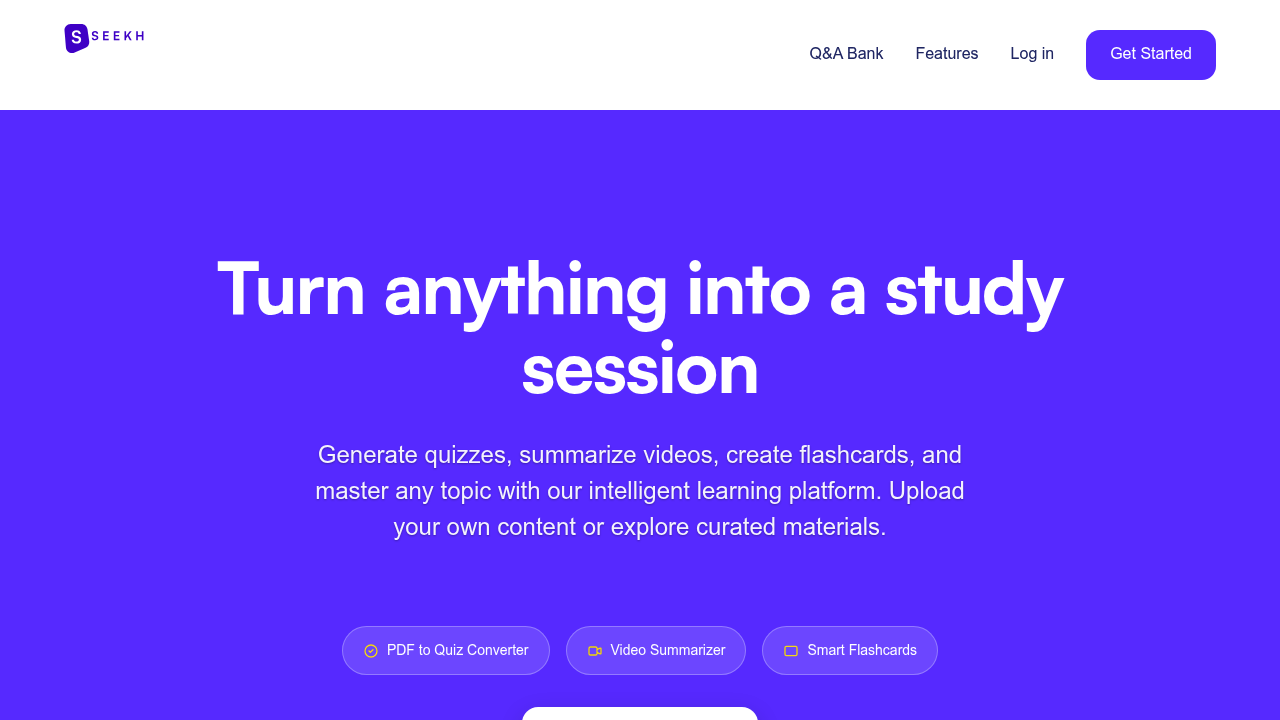
Studying becomes more efficient when passive content transforms into active learning tools. Seekh.co converts PDFs, videos, and documents into interactive study materials including quizzes, flashcards, summaries, and practice questions. This service processes YouTube URLs directly, generating summaries with adjustable length and quizzes with customizable difficulty levels. Users can choose learning styles—visual, audio, or reading—and access adaptive learning paths that adjust to their progress. The free plan provides three uploads per week, two quizzes daily, and summaries up to 1,000 words, while the Pro plan at $6.99 per month removes these limits and adds study history tracking, priority processing speed, and up to 40 questions per upload.
Seekh.co targets students across educational levels who need to process large volumes of material quickly. College students preparing for exams benefit from the ability to turn lecture recordings and textbook chapters into practice questions. High school learners working through video tutorials can generate flashcards for memorization-heavy subjects. Adult learners taking online courses use this application to condense lengthy documentation into digestible summaries. The performance insights and progress tracking appeal to self-directed learners who want data on their retention rates and weak areas. The university leaderboard feature creates accountability for competitive students who thrive on benchmarking their progress against peers.
Daily study routines change when Seekh.co handles content conversion automatically. A medical student uploads a 50-page anatomy PDF and receives custom quizzes targeting specific systems. A language learner pastes YouTube lesson URLs and gets flashcards with key vocabulary and grammar points. Business students processing case studies generate question sets that mirror exam formats. The question-of-the-day feature provides consistent review without requiring setup, while the review quiz function resurfaces previously studied material using active recall principles. Community-created study materials expand the content library beyond personal uploads. Users building exam prep schedules rely on the study history feature to track which materials they've covered and identify gaps in their preparation across multiple subjects or courses.