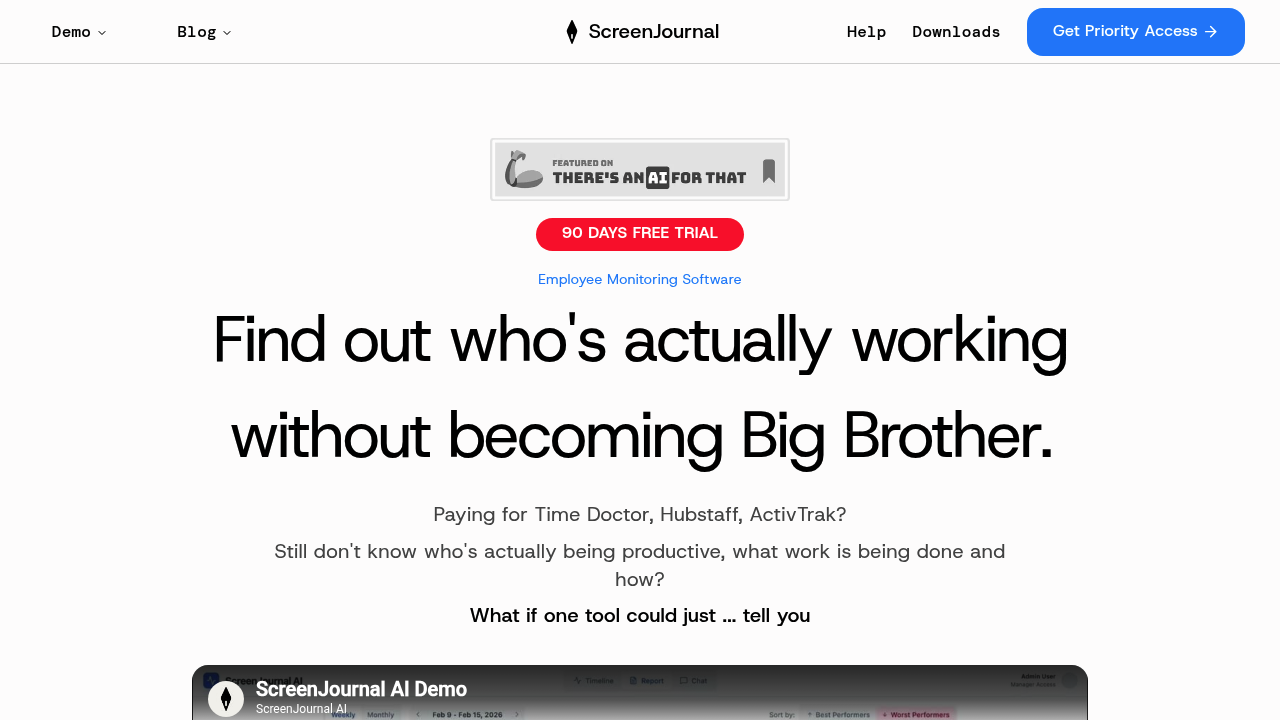
ScreenJournal AI watches screen recordings and audio instead of forcing managers to check dashboards or parse spreadsheets. Weekly and monthly reports arrive automatically via email—specific insights about each team member included. The AI spots patterns you'd miss. Employee rankings by productivity metrics? You'll get those. Plus exact recommendations for handling low performers or burnout risks.
Everything happening on employee screens gets monitored. Active windows, app switches, audio—all tracked. Sentiment analysis runs continuously. Work gets categorized as focused or distracted. You'll see effort scores, focus ratios, context switches. Late-night work patterns get flagged. Early departures too. Sarah switched apps 45 times per hour (three times the team average). Another employee logged 58 hours last week with declining sentiment scores. Managers see this level of detail.
ScreenJournal AI positions itself as the anti-surveillance alternative to Time Doctor or Hubstaff. No screenshots stored anywhere—just AI analysis producing actionable recommendations. A Q&A interface answers natural language questions about team members.
Here's reality: monitoring feels pretty invasive despite "no surveillance" branding. Audio recording and screen analysis track more than traditional time trackers ever did. The difference? Packaging. Automated insights versus raw data you interpret yourself.
Teams get a 90-day free trial. First 50 teams receive half off the paid plan. Solo managers can use it—but comparative metrics and rankings make more sense when overseeing multiple people.