
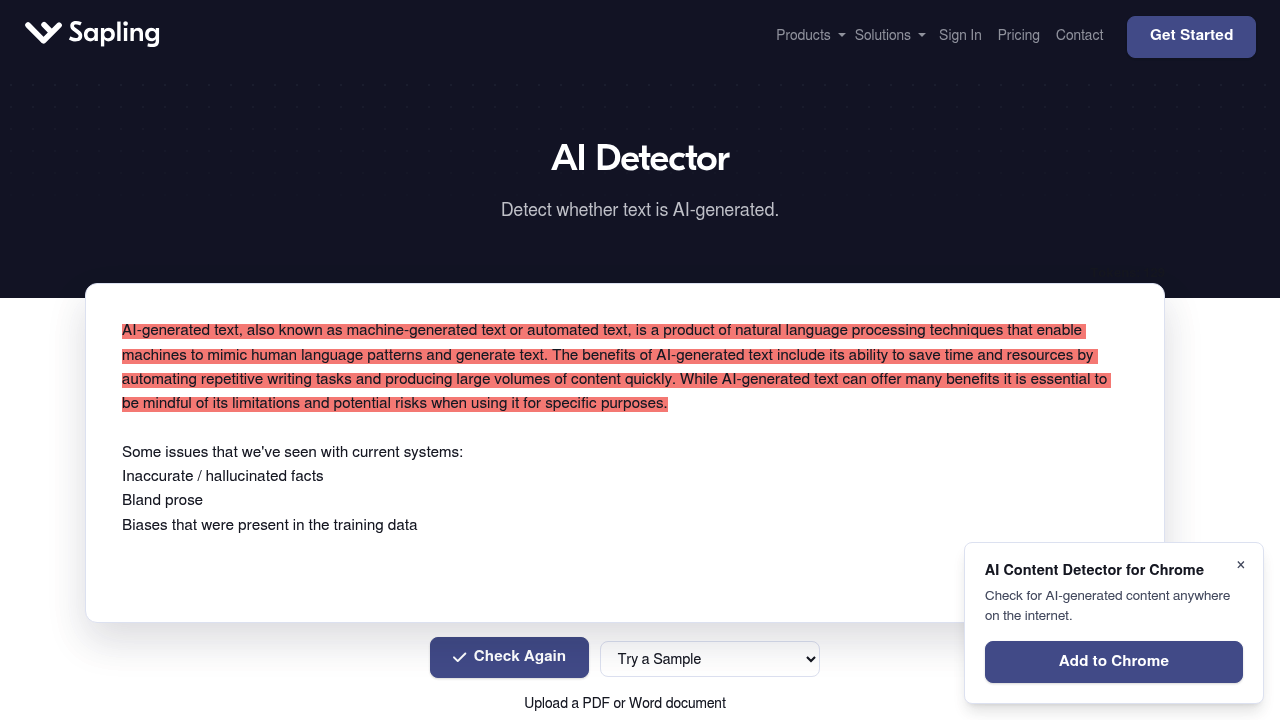
Sapling AI Detector scores pasted text or uploaded PDF and Word files for the probability that a model wrote it. Results show an overall score plus a per-sentence breakdown, with highlights on passages that look machine-generated. The free plan checks up to 2,000 characters at a time, while Pro at $25 per month ($12 per month billed annually) raises the limit to 100,000 characters and batches of 10 files. Enterprise starts at 10 seats at $15 per seat per month, and a separate usage-based API with a $5 one-time minimum is available for developers.
Teachers and professors use it as a screening step on student submissions, and editors and SEO teams run it over freelance articles before publishing. Trust and safety staff can check user-generated content for machine-written spam, and recruiters can screen applications or resumes. Developers who need detection inside their own products can call the API. Because Sapling also makes a writing assistant, individuals who want grammar suggestions and detection in one account can use both. Larger organizations can add domain administration, single sign-on and team analytics through the Enterprise tier.
A typical workflow is pasting an essay into the checker, reading the overall score, then scanning the sentence scores to see which passages drive it. Editors can upload a batch of documents at once and share an expiring report link with a colleague. Content agencies add the Chrome extension to check selected text on any web page, and platform teams wire the API into moderation queues. Sapling advises treating scores as one signal rather than proof, since false positives and negatives occur and the detector becomes much more accurate after roughly 50 words.