
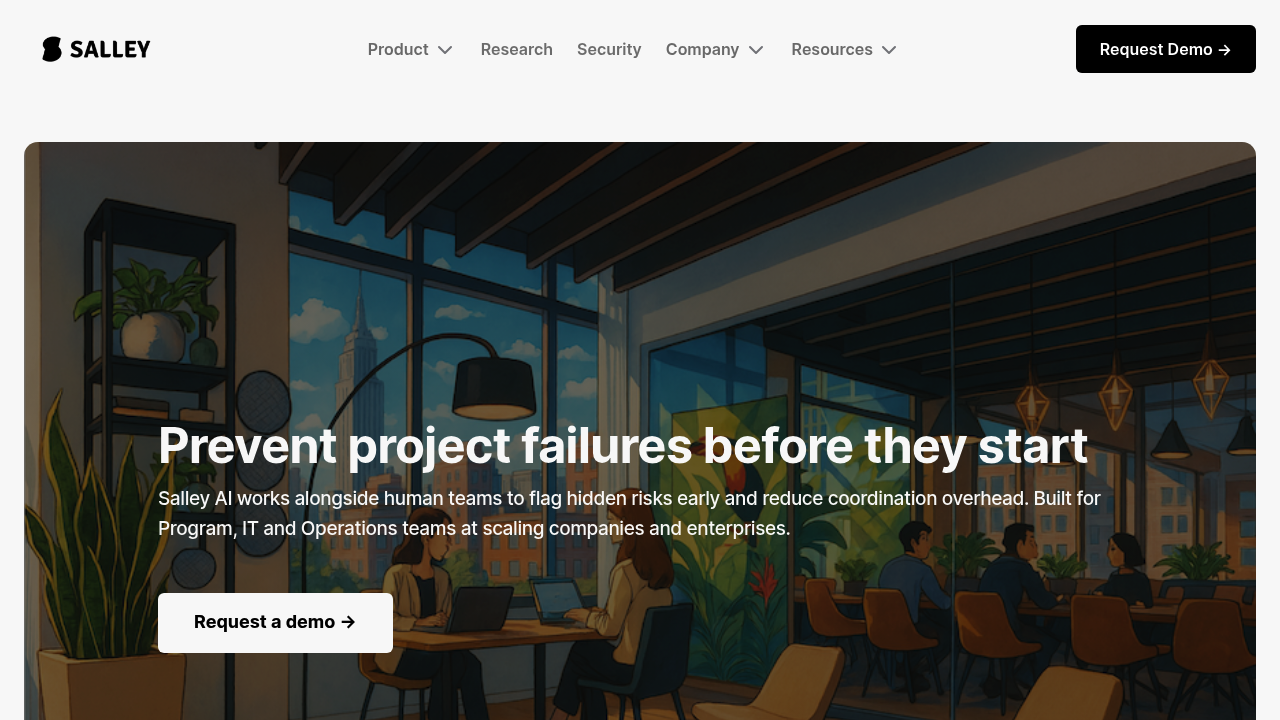
Salley AI is an enterprise software product that works to prevent critical programs from failing. Its AI learns how a company's complex initiatives actually run, then autonomously looks for silent risks that tend to cause delays, cost overruns and rework before anyone notices them. The company describes it as a behavior-aware layer of execution assurance, meant to keep teams aligned and surface problems earlier than usual status reporting would. Security is a major part of the offer: data stays in the customer's own environment, is encrypted in transit and at rest with zero data retention, and every action is recorded in immutable audit logs behind role-based access controls. Salley is SOC 2 Type 2 compliant.
Salley is built for large organizations and the leaders accountable for results: transformation officers, program and portfolio managers, heads of delivery, operations executives and risk owners at regulated enterprises. The security architecture and the Fortune 100 positioning point to companies with strict compliance requirements, such as financial institutions, healthcare organizations and large industrial groups. It is less relevant for small teams managing a simple task list, because the focus is on high-stakes, multi-team programs where a slipped milestone is expensive and where leadership needs earlier warning than weekly reports provide. Access starts with a demo conversation rather than a self-serve signup.
Typical situations include a multi-year digital transformation where dependencies across departments quietly drift, a large system migration that risks missing its budget, or a complex operational rollout where rework keeps appearing late. Salley monitors how these programs behave and flags the risks that nobody has raised, so leaders can step in before work slips, stalls or exceeds budget. Security and compliance teams can review the audit trail of every AI action, while executives get a view of execution health. The company also publishes research and a trust center for buyers who need to review its security posture before deployment.