
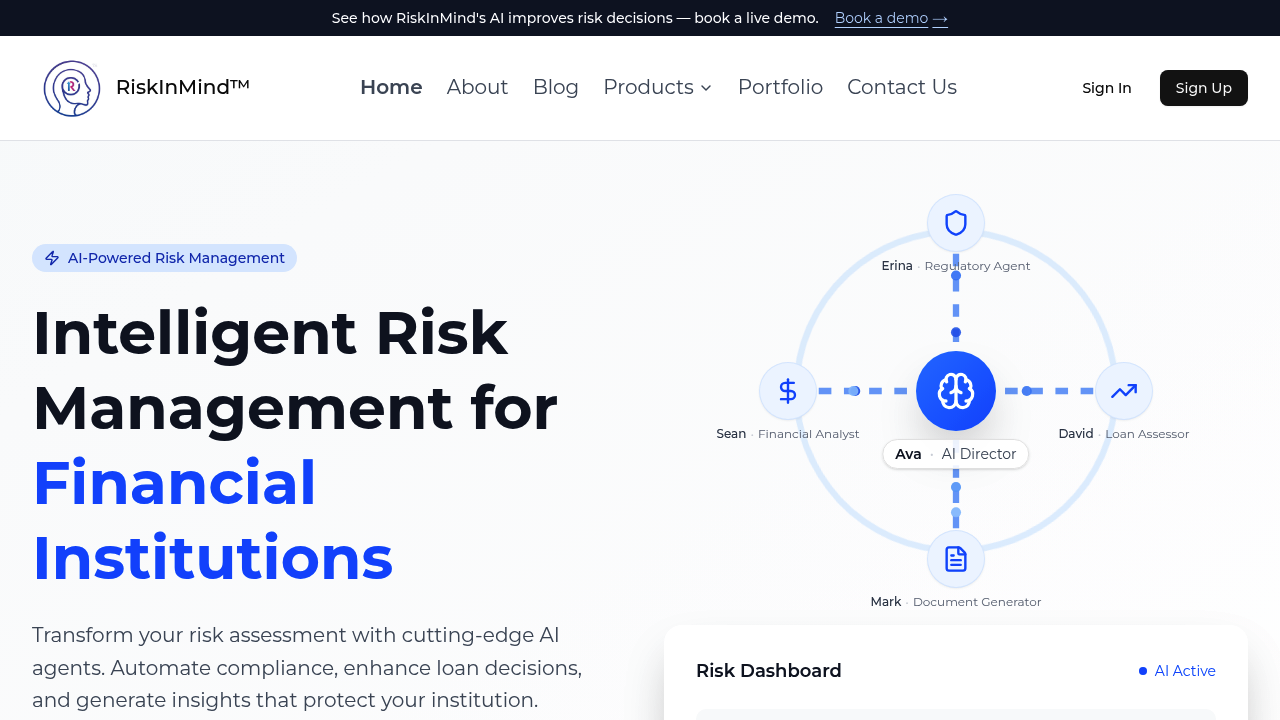
Financial institutions open RiskInMind AI to a dashboard where Ava, the director agent, acts as the central hub. You type a request like "analyze this loan application" or "generate our quarterly compliance report" and Ava routes it to whichever specialized agent handles that task. It's not one monolithic AI trying to do everything.
When a loan comes in, David takes over the assessment. The system pulls alternative data sources beyond traditional credit scores, runs the information through neural networks trained on financial datasets, and returns a risk assessment in 0.3 seconds. The credit scoring happens automatically, fed by machine learning models that claim 98.2% confidence. Banks can customize how aggressive or conservative the underwriting parameters are, though adjusting these settings requires understanding what you're changing.
Erina monitors regulatory compliance constantly. This system tracks regulation changes in real time and scans existing processes against new requirements. When something doesn't align, alerts fire immediately. The system maintains a 98.5% compliance rate across the institutions using it, catching issues before they become violations. For actual filings, Mark generates the documents using templates you can customize. It processes 2.3k documents daily across all users.
Sean handles the financial analysis side. Portfolio optimization, market trend analysis, predictive modeling for various scenarios. The risk detection accuracy sits at 99.7%, which matters when you're trying to spot problems in large loan portfolios before they cascade.
The mobile app gives access to risk dashboards and pushes alerts when something urgent surfaces. You're not stuck at a desk to see critical updates. Everything runs on end-to-end encryption with continuous monitoring in the background.
Where it gets tricky is getting up to speed. You're dealing with multiple AI agents, each with different specialties, and understanding which one to direct your request to takes time. Ava helps, but if you phrase something ambiguously, you might get routed wrong. The system also requires your institution to have data in formats these models can ingest. Clean, structured financial data. If your records are messy, the accuracy claims won't hold.
The latest update improved regulatory compliance detection by 15%, which suggests the models keep evolving. Uptime runs at 99.9%, so access interruptions are rare. This isn't a tool for individual financial advisors. It's built for institutions with volume, where automating compliance monitoring and loan assessments at scale actually saves meaningful time and reduces human error in risk evaluation.