
Polymer Runtime Data Security logo
AI Developer Tools PAID from $95/mo

Polymer Runtime Data Security

Polymer operates as a runtime security platform that monitors and protects data the moment it's generated or accessed, whether by employees or AI systems

It scans millions of data assets daily across SaaS and AI ecosystems, identifying security risks as they emerge rather than after files move or get downloaded. This approach differs from traditional data loss prevention…

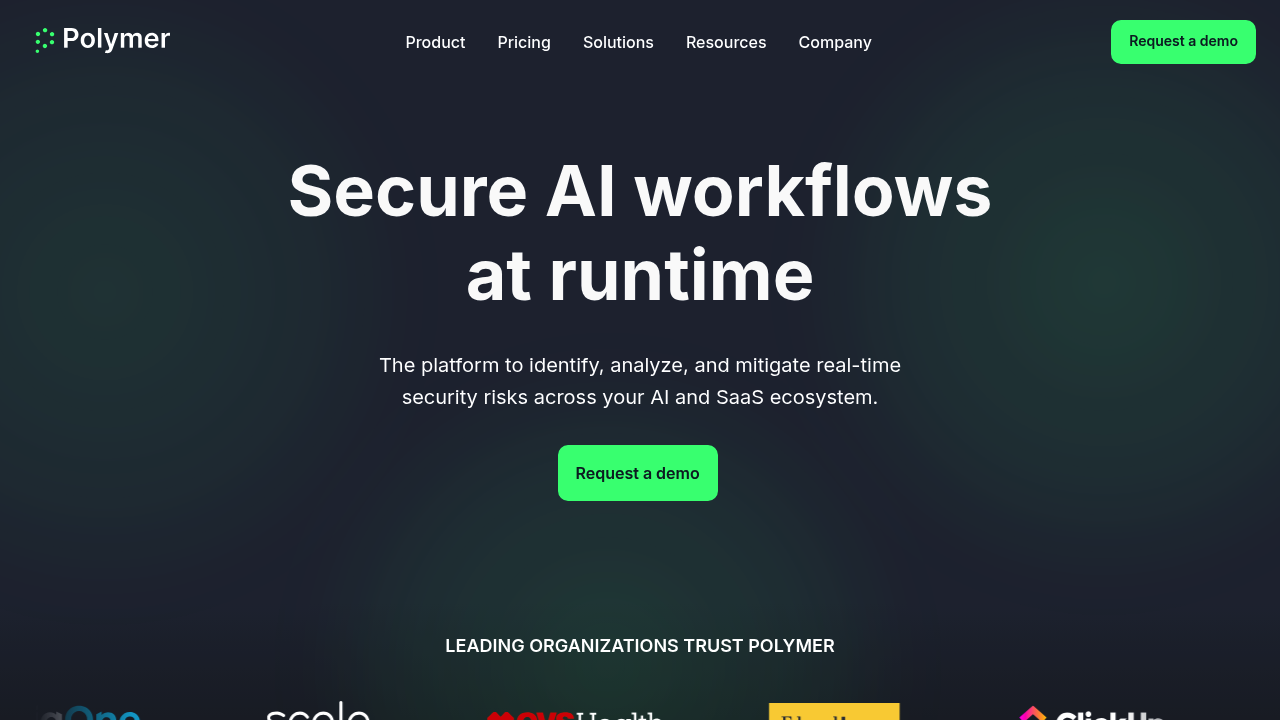
Polymer Runtime Data Security screenshot

Polymer operates as a runtime security platform that monitors and protects data the moment it's generated or accessed, whether by employees or AI systems. It scans millions of data assets daily across SaaS and AI ecosystems, identifying security risks as they emerge rather than after files move or get downloaded. This approach differs from traditional data loss prevention tools that focus on file movement — Polymer secures the actual information itself, regardless of where it lives or travels.

Its identity-aware detection system treats human users and AI agents as unified entities within security policies. Organizations can group both types of identities together, applying consistent access controls and monitoring across all actors touching sensitive data. This matters increasingly as AI tools expand within enterprises, creating non-human identities that traditional security frameworks weren't built to manage.

Polymer continuously detects, classifies, and labels data both in motion and at rest. The system achieves 99% accuracy in finding sensitive data across SaaS environments. Once classified, it automates policy enforcement at runtime without requiring human review. Actions include redacting sensitive information before it reaches unauthorized users, revoking file access instantly when violations occur, and triggering custom workflows based on specific risk scenarios. One customer reduced alert management time from 8 hours per week to zero after implementing Polymer's automated response capabilities.

The risk quantification engine generates reports and scores that expose shadow AI usage — instances where employees use unauthorized AI tools with company data. It also identifies insider threats and system misconfigurations that create vulnerabilities. These reports map directly to compliance frameworks including HIPAA, SOC 2, CCPA, and GDPR, with audit logs structured to meet regulatory requirements. Polymer itself maintains SOC 2 Type II compliance.

Organizations can deploy Polymer in the cloud or through self-hosted single tenant installations. Role-based access controls determine which team members can view specific security data and configure policies. The insider threat module provides specialized monitoring for internal risk patterns. SIEM connectivity allows security teams to funnel Polymer's findings into existing security information and event management systems.

Real-time training prompts educate employees when they attempt actions that violate policies, turning security moments into learning opportunities. Advanced reporting features provide granular visibility into who accessed what data and when. Monthly risk reports summarize trends and highlight areas requiring attention.

The Lite plan costs $95 monthly and includes one policy, one integration, training and enforcement capabilities, audit functionality, and monthly risk reports. Standard pricing runs $5 per user per integration monthly, adding multiple policies with customization options, unlimited entities and rules, single tenancy hosting, activity monitoring, and advanced reporting. The Enterprise tier costs $33,000 annually and builds on Standard with advanced processing, the insider threat module, SIEM connectivity, business associate agreements for HIPAA compliance, multiple installation options, and AI integrations.

Polymer targets enterprise organizations where CISOs, CTOs, and security operations teams manage complex AI and SaaS environments. Compliance teams needing to demonstrate adherence to healthcare, privacy, and data protection regulations find the mapped audit logs particularly valuable. Polymer addresses the security gap created when traditional tools can't track or control how AI agents interact with sensitive company data across dozens of integrated services.

Polymer Runtime Data Security alternatives

See all →

Frequently asked

7 questions
How does Polymer detect sensitive data in real-time across SaaS applications?
Polymer scans millions of data assets daily across connected SaaS and AI ecosystems, identifying and classifying sensitive information both in motion and at rest with 99% accuracy. The platform monitors data the moment it's generated or accessed rather than waiting for file transfers or downloads to trigger alerts. This runtime approach means Polymer catches security risks as they emerge, whether an employee pastes customer data into an unauthorized AI tool or an AI agent accesses protected health information. The continuous classification system applies labels automatically, enabling immediate policy enforcement without human review of each incident.
Can Polymer block AI tools from accessing company data automatically?
Polymer automates policy enforcement at runtime, which includes revoking access, redacting sensitive data, and triggering custom workflows when violations occur. The system treats AI agents as non-human identities alongside employee accounts, applying unified security policies to both. Organizations can configure rules that automatically redact sensitive information before it reaches unauthorized AI tools or revoke file access instantly when an AI agent attempts to process protected data. This automated response capability reduced one customer's alert management workload from 8 hours per week to zero, eliminating the need for security teams to manually review and respond to every incident.
Does Polymer offer a free trial or free plan?
Polymer doesn't provide a free trial or free tier. The entry point is the Lite plan at $95 monthly, which includes one policy, one integration, training and enforcement capabilities, audit functionality, and monthly risk reports. Standard pricing runs $5 per user per integration monthly with expanded policy options and activity monitoring. Enterprise customers pay $33,000 annually for advanced features including the insider threat module, SIEM connectivity, and AI integrations with business associate agreements for HIPAA compliance.
What's the difference between Polymer and traditional DLP tools?
Traditional data loss prevention tools function as file loss prevention, monitoring when files move, get downloaded, or leave the network perimeter. Polymer secures the actual information itself regardless of location, protecting data at runtime as it's generated or accessed by humans or AI systems. This distinction matters because sensitive information can be exposed through copy-paste actions, API calls, or AI tool interactions without any file movement occurring. Polymer's runtime approach catches these scenarios by monitoring data continuously in motion and at rest across SaaS ecosystems, while traditional DLP might miss exposures that don't involve file transfers.
How does Polymer help with HIPAA and GDPR compliance?
Polymer generates audit logs automatically mapped to HIPAA, SOC 2, CCPA, and GDPR requirements, documenting who accessed what data and when across all monitored systems. The platform maintains its own SOC 2 Type II compliance while providing business associate agreements for healthcare organizations needing HIPAA coverage. Real-time policy enforcement ensures protected health information and personal data get redacted or blocked before unauthorized access occurs, creating a preventive compliance posture rather than reactive incident response. Monthly risk reports and advanced reporting features provide the documentation compliance teams need during audits, with activity monitoring that tracks both human and AI agent interactions with regulated data.
What limitations does Polymer have for small businesses or startups?
Polymer's pricing structure targets enterprise organizations, with the lowest entry point at $95 monthly for a single policy and integration through the Lite plan. Standard pricing at $5 per user per integration monthly means costs scale with team size and the number of SaaS tools requiring protection, potentially becoming expensive for smaller operations with limited budgets. The Enterprise tier at $33,000 annually puts advanced features like the insider threat module and SIEM connectivity out of reach for most startups. The platform's focus on managing complex AI and SaaS ecosystems with both human and non-human identities suggests it's designed for organizations already dealing with sophisticated security challenges rather than companies just establishing basic data protection.
Can Polymer detect when employees use unauthorized AI tools with company data?
Polymer's risk quantification engine specifically identifies shadow AI usage, which occurs when employees use unauthorized AI tools with company data outside approved channels. The system monitors data flows across the SaaS ecosystem, detecting when sensitive information moves to AI services that aren't sanctioned by the organization. Risk scores and reports expose these patterns, showing which AI tools employees are accessing and what data they're sharing. This visibility extends beyond simple blocking — the real-time training feature educates employees when they attempt to use unauthorized AI services, explaining the security risk while offering approved alternatives for accomplishing their tasks.

Traffic

Estimated monthly website visits · last 8 months

4.4K visits/mo
Monthly visits
4.4K
↓ 29.8% MoM
Global rank
#4,046,239
US #1,653,565
Category rank
#61
AI Developer Tools
10.5K 8.8K 7K 5.3K 3.6K Dec 2025: 7.9K visits Dec 2025 Jan 2026: 10.5K visits Jan 2026 Feb 2026: 7.5K visits Feb 2026 Mar 2026: 4.1K visits Mar 2026 Apr 2026: 3.6K visits Apr 2026 May 2026: 4.5K visits May 2026 Jun 2026: 6.2K visits Jun 2026 Jul 2026: 4.4K visits Jul 2026

Reviews (0)

Write review

No reviews yet. Be the first to share your experience.