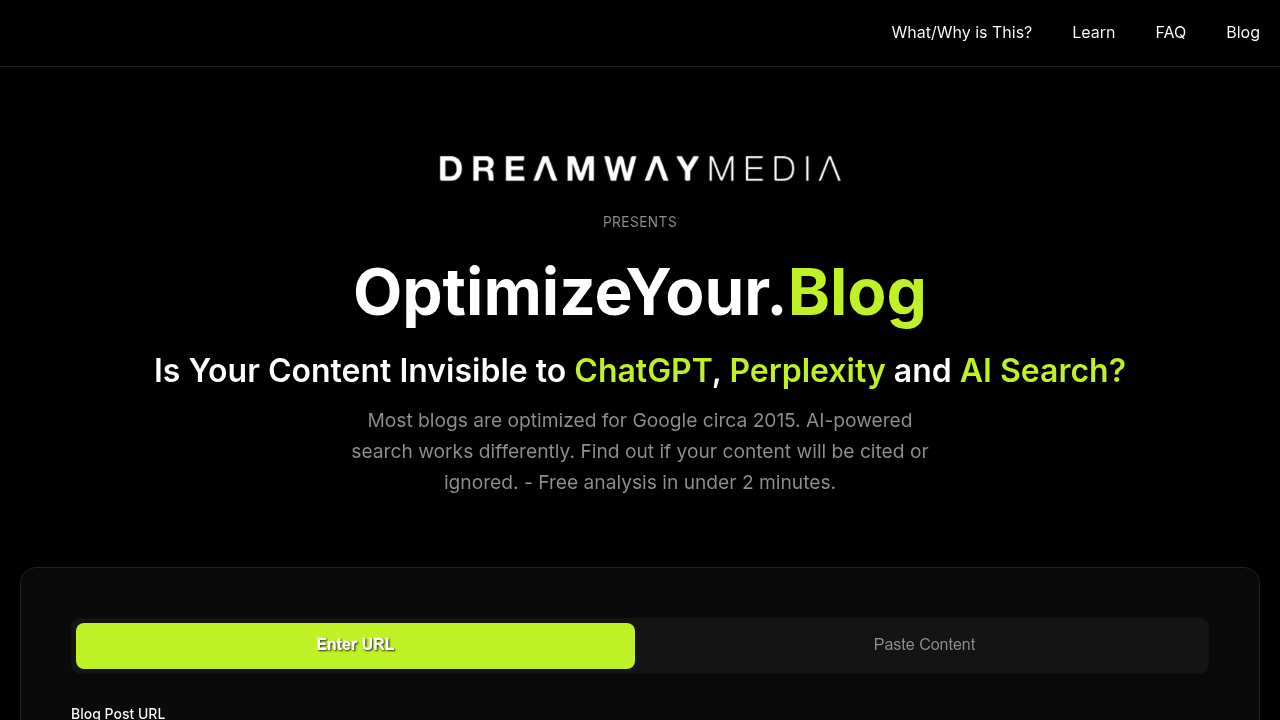
Search engines evolved. Most blogs didn't. While writers still optimize for Google's traditional algorithms, AI-powered search platforms now answer questions directly without sending users to websites. OptimizeYour.Blog Analyzer tackles both worlds at once, scanning content for what works in conventional search results and what makes AI engines cite your work as a source.
This analyzer runs ten distinct analysis sections on any blog post. You can drop in a URL for published content or paste draft text before hitting publish. Either way, the system evaluates keyword strategy, meta optimization, content structure, AI discoverability, citation signals, schema recommendations, readability scoring, engagement elements, and technical SEO factors. The tenth section delivers a prioritized action plan ranking fixes by impact.
Two scoring systems run simultaneously. Traditional SEO analysis measures how well content performs for Google's ranking factors. AI Optimization scoring evaluates whether modern AI search platforms would reference the content when answering user queries. Each score includes current performance metrics and improvement potential calculations. The citation-worthiness evaluation specifically assesses whether AI platforms would trust the content enough to cite it.
Analysis completes in under two minutes for most posts. Longer content pushes that timeline to around three minutes. Reports include recommended rewrites and specific fixes rather than vague suggestions. You can customize target keywords, define your audience, and specify content goals before running the scan.
The security model processes content during analysis then clears it immediately. Nothing gets stored permanently. Your first analysis runs without requiring an email address. Verify your email and you'll get three full analyses per day, each delivering the complete ten-section report.
Most optimization tools pick a lane. They focus exclusively on traditional SEO or exclusively on newer answer engine optimization tactics. This analyzer connects Google's established ranking algorithms and today's AI-powered search reality. That matters because traffic sources diversified. Some readers still click through traditional search results. Others never leave the AI interface that answered their question.
Content marketers managing multiple blogs benefit from the daily analysis limit. SEO professionals can audit client posts before publication. Bloggers depending on organic traffic get actionable intelligence about why their posts aren't ranking or getting cited. Businesses writing educational content learn whether they're visible in the places potential customers actually search.
The three-analyses-per-day cap affects heavy users. Teams analyzing dozens of posts daily hit that ceiling fast. Long-form content takes the full three minutes rather than two. No team collaboration features exist and no integrations connect this system to content management systems or SEO platforms.