
Musico logo
AI Midi Generator PAID from $6/mo

Musico

Music creation usually means licensing fees, copyright headaches, or hiring composers

Musico cuts through that mess. It generates copyright-free music that responds to real-time inputs — gestures, movement, code, sound. The engine blends traditional algorithms with machine learning. Endless music streams…

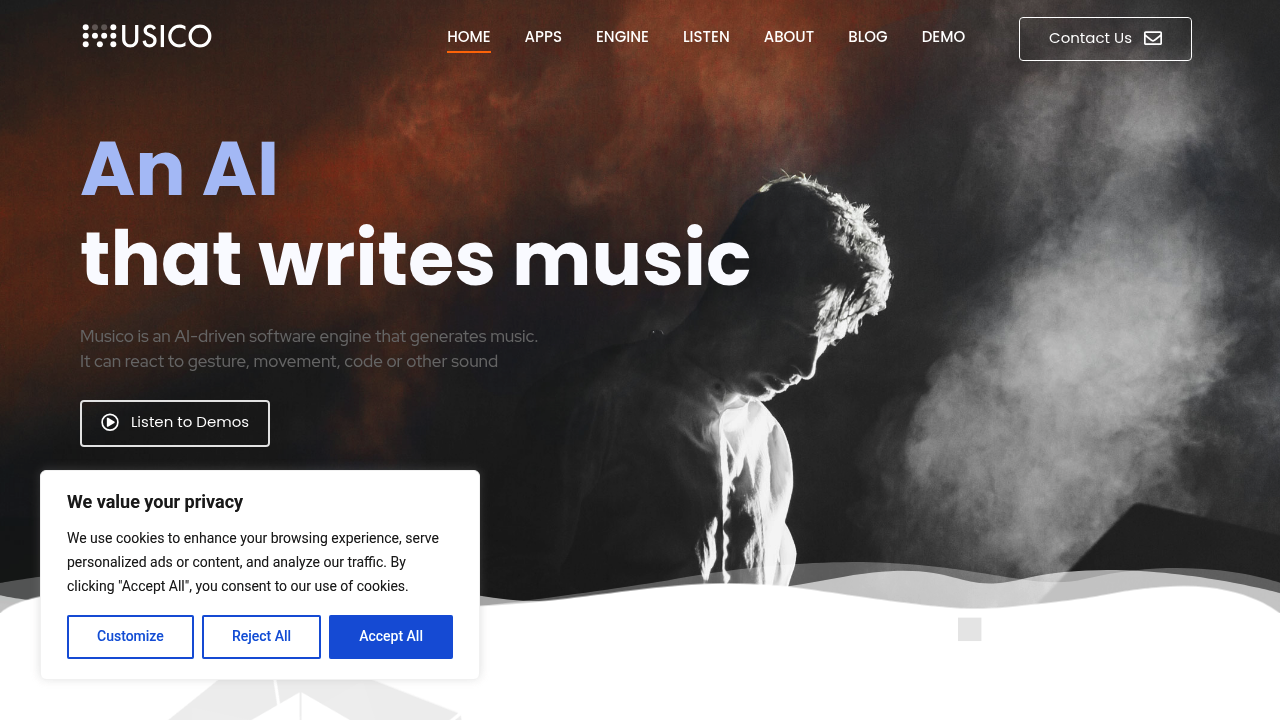
Musico screenshot

Music creation usually means licensing fees, copyright headaches, or hiring composers. Musico cuts through that mess. It generates copyright-free music that responds to real-time inputs — gestures, movement, code, sound.

The engine blends traditional algorithms with machine learning. Endless music streams across various styles. You can go semi-assisted or fully automatic depending on what you need. A choreographer working on an interactive dance piece could have Musico generate music that literally moves with the dancers. Creates synchronized performances impossible with pre-recorded tracks.

Musico targets music professionals and non-musicians alike.

It responds to multiple input types beyond code or prompts. Gesture recognition means you could conduct virtual orchestras. Movement sensors trigger musical changes during live performances. Other sounds influence the composition as it plays. Real-time adaptation happens automatically.

The tech isn't perfect though. Musico admits AI-generated music needs dedicated human supervision for consistent, valuable results. You can't set it and forget it if you want professional-quality output.

This combinatory approach sets Musico apart from typical AI music generators that rely solely on text prompts. Simple parameters won't cut it here. Real-time reactivity opens possibilities for interactive installations. Responsive video game soundtracks. Adaptive background music that changes based on audience behavior.


Musico alternatives

See all →

Frequently asked

6 questions
How does Musico's gesture recognition actually work during live performances?
Musico uses sensors and cameras to track your movements -- then it translates them into music in real-time. A simple hand gesture might change the tempo. Larger body movements could shift the entire harmonic structure. The system actually learns from how you move, so it gets better at responding intuitively over time.
Can I use Musico-generated music commercially without paying royalties?
Yes, Musico creates copyright-free music that you own outright. There aren't any licensing fees or royalty payments down the line. This makes it super useful for content creators, game developers, and businesses who need original music without the legal headaches.
What's the difference between semi-assisted and fully automatic modes in Musico?
Semi-assisted mode lets you guide the composition. You can adjust parameters, choose styles, or give it input cues while Musico generates the music. Fully automatic mode runs independently -- it just uses your initial settings and any real-time inputs like movement or sound. Most pros prefer semi-assisted for better creative control.
Does Musico require technical coding skills to set up interactive music installations?
Not necessarily, though coding knowledge helps for complex setups. Musico accepts various input types (gesture recognition, movement sensors) that don't require programming. However, if you want to integrate it with custom hardware or create complex interactive rules, you'll need some technical expertise -- or a developer's help.
Why does Musico say its AI music needs human supervision for professional results?
AI-generated music can be inconsistent in quality. It may not maintain the emotional arc or structural coherence that professional projects demand. Human oversight helps ensure the output matches your creative vision and maintains appropriate dynamics throughout longer pieces. It's not a limitation unique to Musico -- it affects most AI music generators.
How does Musico handle multiple simultaneous inputs like sound and movement together?
Musico processes different input streams simultaneously and weighs their influence based on your configuration. For example, a dancer's movements might control the rhythm while ambient sound levels adjust the volume or intensity. You can set priority levels so certain inputs have more influence than others during conflicting signals.

Traffic

Estimated monthly website visits · last 0 months

170 visits/mo
Monthly visits
170

Not enough historical data for a chart yet.

Reviews (0)

Write review

No reviews yet. Be the first to share your experience.