
#10 in AI Document Extraction Kolena AI for Insurance logo

Kolena AI for Insurance

Insurance underwriters typically spend weeks reviewing loss runs, policy documents, and risk factors before making coverage decisions

Kolena AI compresses that timeline to minutes by automating the document analysis, data extraction, and risk assessment steps that consume most underwriting hours. This system tackles loss run analysis by ingesting…

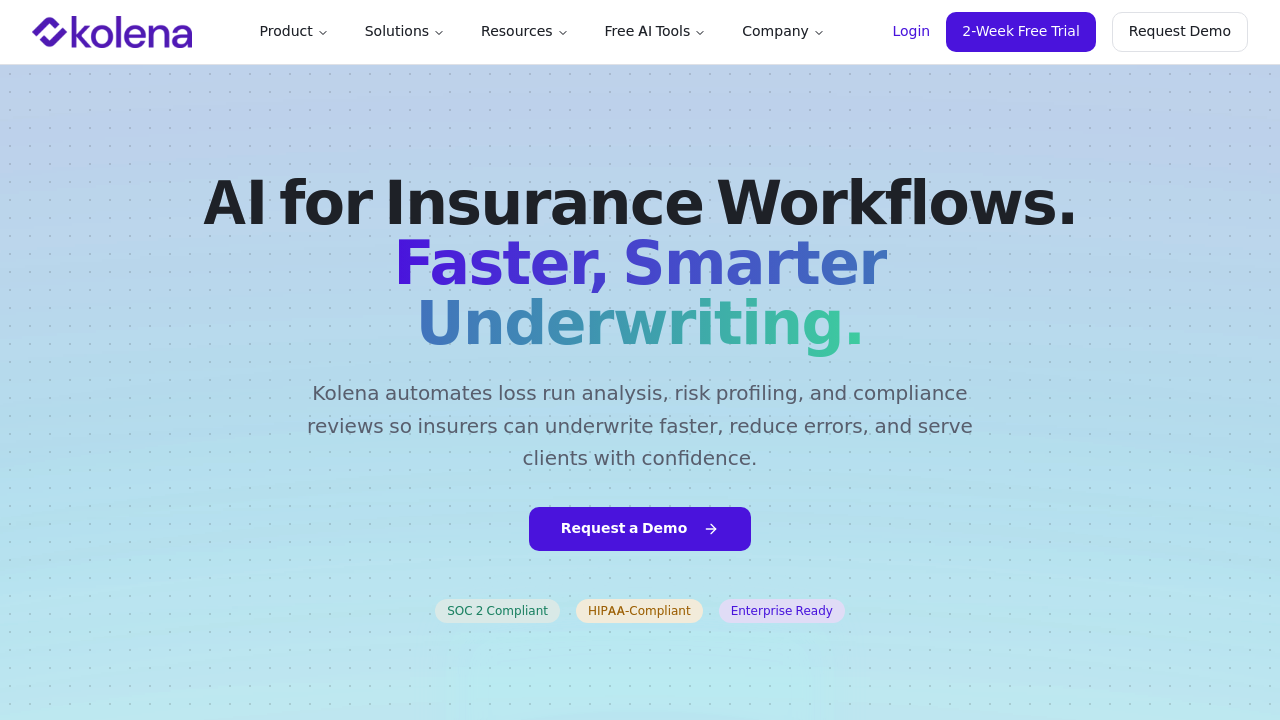
Kolena AI for Insurance screenshot

Insurance underwriters typically spend weeks reviewing loss runs, policy documents, and risk factors before making coverage decisions. Kolena AI compresses that timeline to minutes by automating the document analysis, data extraction, and risk assessment steps that consume most underwriting hours.

This system tackles loss run analysis by ingesting reports from different carriers and standardizing their formats automatically. Claims from one carrier might show dollar amounts in column C while another puts them in column F, but Kolena normalizes these variations so underwriters can compare trends across multiple carriers without manual reformatting. The system extracts values with over 99% accuracy according to the company's performance data. One regional insurance carrier reported their underwriting review time dropped from two weeks to two minutes per file after implementation.

Risk profiling pulls together underwriting factors, claim history, and safety protocols into structured assessments. Instead of reading through pages of narrative text to find relevant exposure information, underwriters get standardized risk scores that highlight the factors driving each rating. The fraud and compliance monitoring module scans policy applications and applicant data for anomalies that might indicate misrepresentation or regulatory issues. This catches discrepancies human reviewers might miss when processing high volumes of applications.

Document extraction handles the tedious work of pulling specific data points from PDFs and scanned images. The validation layer checks extracted values against expected ranges and flags outliers for manual review. Operational insights let underwriters search company operations data, cross-reference sanctioned-party lists, or look up hazard grades without leaving the interface.

All outputs meet audit requirements. The system maintains SOC 2 and HIPAA compliance, which matters for carriers handling sensitive medical information or working with enterprise clients who require security certifications. The audit-ready format means underwriters can justify decisions to regulators without rebuilding documentation from scratch.

Kolena offers a two-week free trial. Pricing details aren't publicly listed beyond that trial period.

Kolena targets insurance carriers and underwriting teams dealing with commercial lines where loss runs and risk assessments drive most decisions. It's built for teams processing enough volume that manual review creates bottlenecks. Small agencies writing a few policies monthly won't see the same efficiency gains as carriers handling hundreds of submissions weekly. The system works best when fed structured documents. Handwritten notes or heavily redacted files will likely require more manual intervention than clean digital submissions.


Kolena AI for Insurance alternatives

See all →

Frequently asked

6 questions
How much does Kolena AI for Insurance cost?
Kolena doesn't publish pricing tiers or subscription costs on their website. The company offers a two-week free trial that lets insurance teams test the platform with their actual underwriting workflows before committing to a paid plan. After the trial period, pricing appears to be custom-quoted, which is common for enterprise insurance software where costs scale with document volume and team size. Teams interested in cost details need to contact Kolena directly after evaluating the trial.
How accurate is Kolena AI at extracting data from insurance documents?
Kolena claims over 99% accuracy when extracting values from insurance documents like loss runs and policy applications. The system includes a validation layer that checks extracted data against expected ranges and flags outliers for manual review, which prevents obviously wrong values from flowing into underwriting decisions. One regional insurance carrier reported cutting their underwriting review time from two weeks to two minutes per file, suggesting the accuracy holds up well enough to eliminate most manual verification steps. The system performs best on clean digital documents rather than handwritten notes or heavily redacted files where extraction confidence drops.
What types of insurance companies should use Kolena AI?
Kolena works best for insurance carriers and underwriting teams processing high volumes of commercial lines where loss runs and risk assessments drive coverage decisions. The efficiency gains show up most clearly when teams handle hundreds of submissions weekly rather than a few policies monthly. Small independent agencies writing occasional policies won't benefit as much as regional or national carriers dealing with underwriting bottlenecks. The system targets teams spending significant hours on document review, data extraction, and risk profiling tasks that can be standardized across submissions.
Can Kolena AI detect insurance fraud?
Kolena includes fraud monitoring that analyzes policy applications and applicant data to flag anomalies suggesting misrepresentation or inconsistencies. The system cross-references information against sanctioned-party lists and checks for discrepancies that might slip past human reviewers processing high application volumes. This catches outliers and unusual patterns rather than definitively proving fraud, so flagged cases still require human investigation. The compliance monitoring component also identifies potential regulatory issues by scanning submissions for missing documentation or values outside acceptable ranges for specific policy types.
Does Kolena AI work with loss runs from different insurance carriers?
Kolena standardizes loss run reports from multiple carriers automatically, which solves a major pain point for underwriters comparing claims data. Different carriers format loss runs inconsistently, putting the same information in different columns or using varied terminology for identical claim types. Kolena normalizes these variations so underwriters can analyze trends across carriers without manually reformatting each report. The system also standardizes risk scoring formats, letting teams apply consistent evaluation criteria regardless of which carrier originally issued a policy being reviewed for renewal or transfer.
What happens to documents uploaded to Kolena AI?
Kolena maintains SOC 2 and HIPAA compliance, which means the platform meets security standards required for handling sensitive insurance and medical information. These certifications matter for carriers processing health-related claims or working with enterprise clients who audit vendor security practices. The audit-ready outputs Kolena generates maintain documentation trails that satisfy regulatory requirements without rebuilding justifications from scratch. However, the company doesn't publicly detail data retention policies, storage locations, or whether documents get permanently deleted after processing, so teams handling especially sensitive files should clarify these points during the trial period.

Traffic

Estimated monthly website visits · last 9 months

11.2K visits/mo
Monthly visits
11.2K
↓ 3.2% MoM
Global rank
#1,755,887
US #680,260
Category rank
#10
AI Document Extraction
22.5K 19.1K 15.6K 12.2K 8.8K Dec 2025: 8.9K visits Dec 2025 Jan 2026: 13.1K visits Jan 2026 Feb 2026: 14.5K visits Feb 2026 Mar 2026: 9.1K visits Mar 2026 Apr 2026: 8.8K visits Apr 2026 May 2026: 18.5K visits May 2026 Jun 2026: 22.5K visits Jun 2026 Jul 2026: 11.5K visits Jul 2026 Aug 2026: 11.2K visits Aug 2026

Reviews (0)

Write review

No reviews yet. Be the first to share your experience.