GripeLab logo

GripeLab

GripeLab mines complaints from social media, news sites, and review platforms to surface business opportunities

This system's Alchemist AI runs automated scans across these sources, aggregating user grievances into structured datasets that entrepreneurs can query through three research modes. The Market Research mode generates…

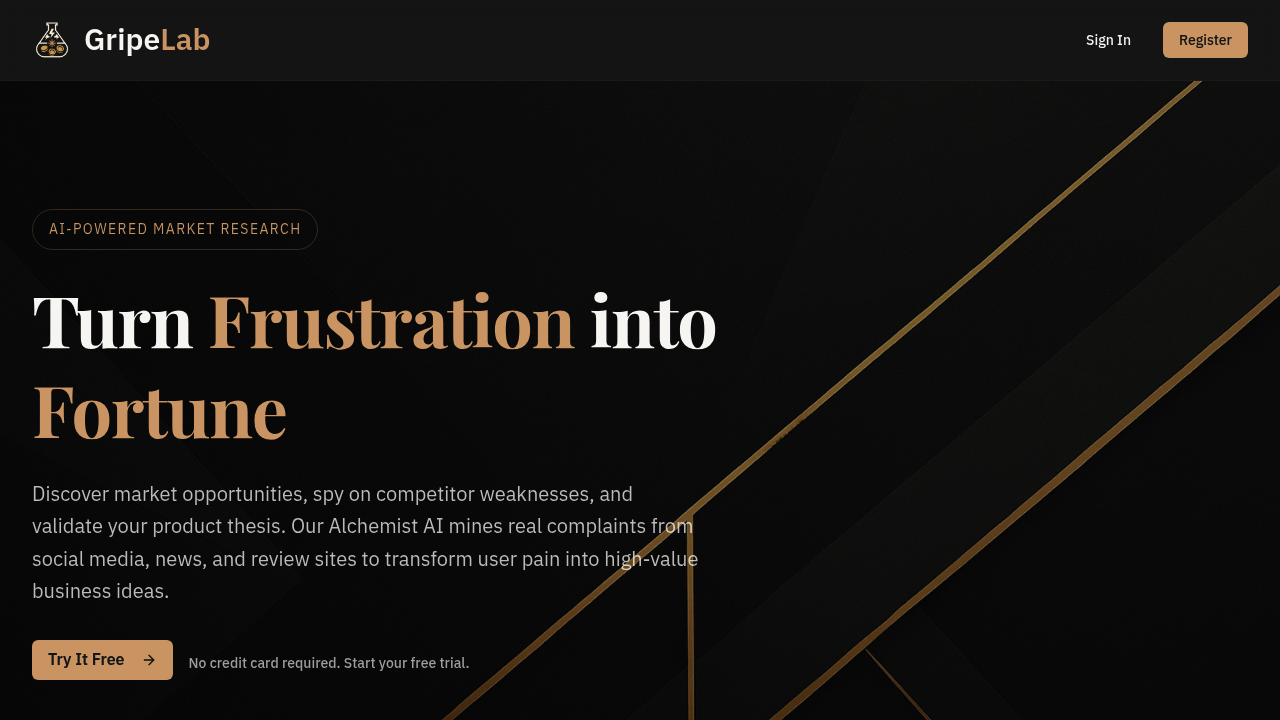
GripeLab screenshot

GripeLab mines complaints from social media, news sites, and review platforms to surface business opportunities. This system's Alchemist AI runs automated scans across these sources, aggregating user grievances into structured datasets that entrepreneurs can query through three research modes.

The Market Research mode generates business ideas by clustering complaint patterns and attaching total addressable market estimates alongside viability scores. These scores derive from analyzing complaint frequency, severity, and market gaps. The system does not just list problems. It quantifies opportunity size based on how many people express the same frustration and whether existing solutions fall short.

Competitor Spy mode focuses on weakness identification. It parses reviews and social mentions to map where competing products disappoint users. The output shows specific feature gaps, service failures, and pricing complaints that create openings for alternative offerings. This happens through natural language processing that categorizes negative sentiment into actionable insight categories.

Thesis Validation operates differently. You submit a product hypothesis and the system searches its aggregated data for supporting or contradicting evidence. It returns real user complaints that either validate your assumption or reveal why the market might not care about your proposed solution.

The Pain Index Leaderboard tracks trending complaint categories in real time. Currently monitoring five active categories including Reliability, Support, UX, Pricing, and Features. The dashboard shows 49 searches analyzed from other users, creating a live intelligence layer. When someone runs a search, that data flows into the aggregate pool, making the system smarter as usage grows.

Data freshness matters here. The system continuously pulls new complaints rather than working from static datasets. This means opportunity identification reflects current market sentiment, not months-old feedback. The technical architecture prioritizes recency over historical depth.

GripeLab includes API access, letting developers pipe complaint data into their own analysis tools or product workflows. This matters for teams that want to automate opportunity scanning or feed market intelligence into existing dashboards.

Free trial includes six credits. No credit card required upfront. Each credit corresponds to one research query across any of the three modes.

Technical constraints aren't explicitly documented. The system depends on public data sources, so it cannot access private customer feedback channels or internal company data. Complaint quality varies based on how users express frustration online. Vague complaints produce less actionable insights than specific feature requests or detailed service failures. The viability scoring uses algorithmic estimates, not human market validation.


GripeLab alternatives

See all →

Frequently asked

7 questions
How does GripeLab find business opportunities from complaints?
GripeLab's Alchemist AI continuously scans social media platforms, news sites, and review aggregators to extract user complaints in real time. The system clusters these grievances by pattern similarity and runs frequency analysis to identify which problems affect the most people. It then generates business ideas with total addressable market estimates and viability scores based on complaint volume, severity metrics, and existing solution gaps. The data pipeline prioritizes recent complaints over historical feedback, so opportunity recommendations reflect current market sentiment rather than outdated frustrations.
Is GripeLab free to use?
GripeLab offers a free trial with six credits and doesn't require a credit card to start. Each credit covers one research query across any of the three modes: Market Research, Competitor Spy, or Thesis Validation. The platform hasn't published pricing for paid plans beyond the trial period.
What can you do with GripeLab's Competitor Spy mode?
Competitor Spy mode parses reviews and social mentions to map specific weaknesses in competing products. The system uses natural language processing to categorize negative sentiment into actionable categories like feature gaps, service failures, and pricing complaints. Instead of general sentiment scores, you get structured data showing exactly where competitors disappoint users and what alternative solutions the market wants. This analysis pulls from the same real-time complaint feeds that power the other research modes.
How does GripeLab validate product ideas?
Thesis Validation mode lets you submit a product hypothesis and searches aggregated complaint data for supporting or contradicting evidence. The system returns real user complaints that either confirm your assumption or reveal why the market might not prioritize your proposed solution. This differs from the other modes because you're testing a specific idea against existing market data rather than discovering opportunities from scratch. The validation relies entirely on complaints GripeLab has already indexed from public sources.
What's the Pain Index Leaderboard in GripeLab?
The Pain Index Leaderboard tracks trending complaint categories across five active areas: Reliability, Support, UX, Pricing, and Features. It aggregates data from all user searches on the platform, currently showing insights from 49 analyzed queries. When someone runs a search, their results feed into this shared intelligence layer, making trend detection more accurate as platform usage grows. The leaderboard updates in real time to reflect which complaint types are spiking across the dataset.
Does GripeLab have an API?
GripeLab includes API access that lets developers pull complaint data into their own analysis tools or product workflows. This matters for teams automating opportunity scanning or feeding market intelligence into existing dashboards. The API documentation and authentication requirements aren't detailed in available materials, but access appears included rather than gated behind higher pricing tiers.
What are GripeLab's limitations for market research?
GripeLab only accesses publicly available complaints from social media, news sites, and review platforms, so it can't analyze private customer feedback channels or internal company data. The quality of insights depends heavily on how specifically users articulate problems online. Vague complaints like 'this sucks' produce less actionable data than detailed feature requests or specific service failures. The viability scores use algorithmic estimates rather than human market validation, meaning they quantify complaint patterns but don't confirm whether a business built on that opportunity would actually succeed.

Traffic

Estimated monthly website visits · last 0 months

Not enough historical data for a chart yet.

Reviews (0)

Write review

No reviews yet. Be the first to share your experience.