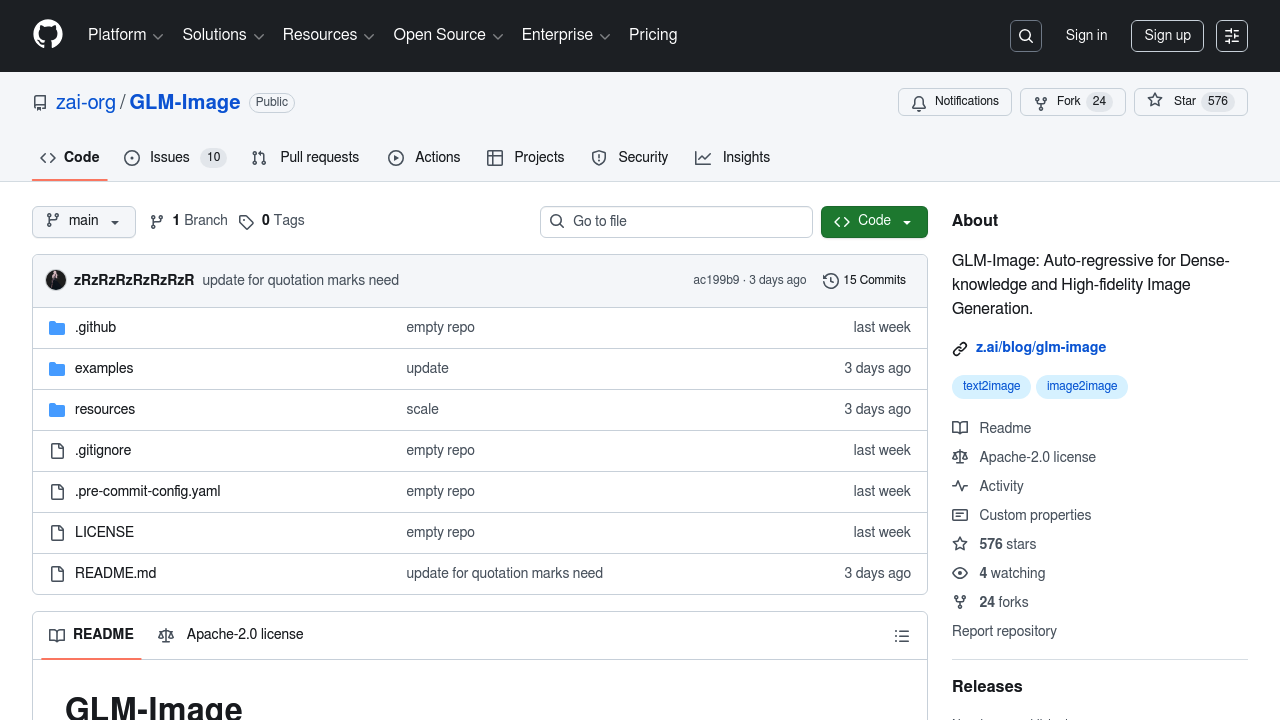
GLM-Image generates images from text prompts and handles image-to-image tasks with a focus on precise semantic understanding. It combines autoregressive and diffusion techniques to create high-fidelity visuals with fine-grained details. You'll get better results than standard diffusion models when your project involves text rendering or knowledge-intensive scenarios.
Computer vision researchers working on multimodal AI systems will find GLM-Image useful. It understands complex information well. Expresses it visually too. This makes it good for academic papers that need generated examples showing specific concepts or relationships.
Style transfer works well here.
Image editing capabilities let you modify existing visuals while maintaining semantic coherence. GLM-Image's hybrid architecture sets it apart from typical latent diffusion approaches. General image quality matches mainstream models — but text-rendering scenarios show significant improvements. A research team developing educational AI could use GLM-Image to generate diagrams that include both visual elements and readable text labels, something many models struggle with.
You won't find a hosted service or simple API. GLM-Image lives on GitHub with 781 stars and requires technical setup. It maintains active communities on WeChat and Discord. Plus integration with Hugging Face for model access. This isn't for casual users wanting quick image generation. Developers and researchers need coding skills to implement GLM-Image effectively.