
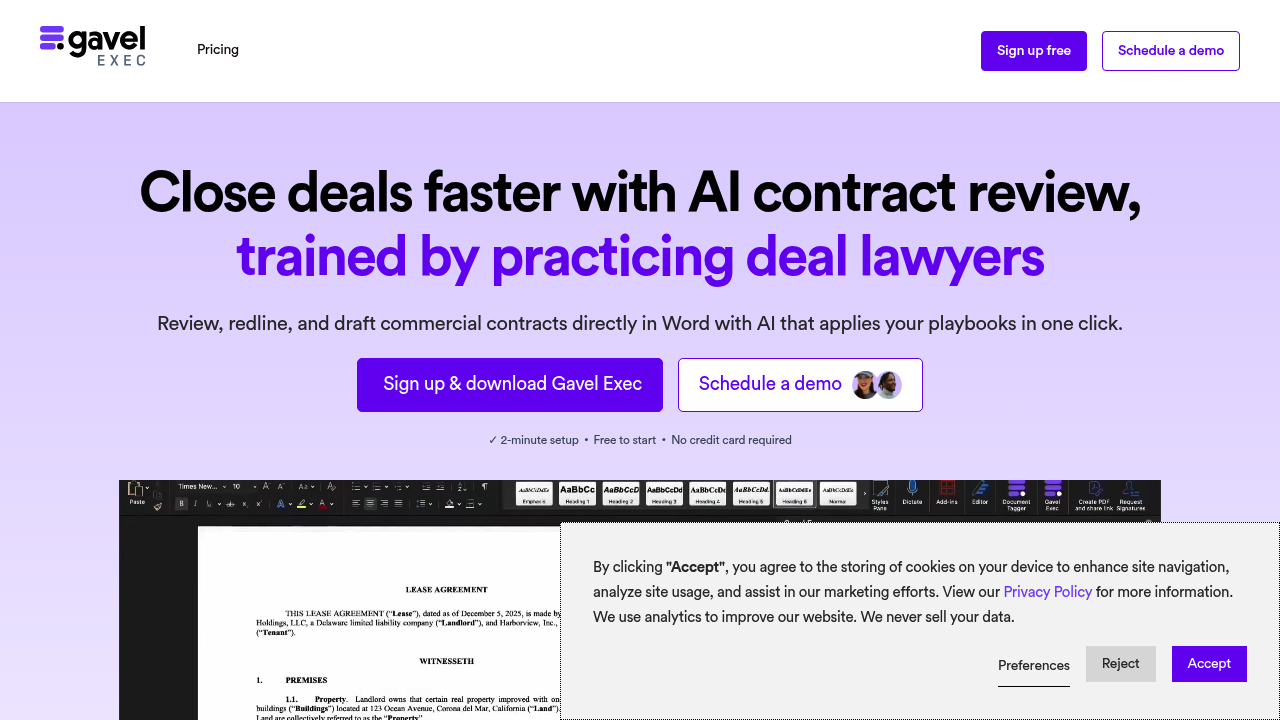
Contract review tools usually ask you to upload documents to a web platform. Gavel Exec takes the opposite approach. It runs inside Microsoft Word as an add-in, so you stay in the same environment where you already draft and redline agreements. The software uses your firm's deal history and playbooks to suggest edits, flag missing terms, and explain its reasoning with traceable sources.
The core workflow centers on redlining. You open a contract in Word, and Gavel Exec can automatically mark it up based on your negotiation stance and precedent language. It checks for inconsistencies and missing clauses, then adds comments explaining what needs attention. You can also draft new contracts or specific clauses from scratch using either guided Quick Actions or open-ended prompts. The benchmarking feature compares clause language to market data, which helps when you're evaluating whether standard terms are actually standard.
Security gets more attention than usual. Gavel Exec doesn't retain data with AI providers after processing. Documents get AES-256 encryption, and the underlying databases meet SOC II and HIPAA compliance standards. The company runs regular vulnerability testing and offers 24-hour security support. For legal teams handling sensitive commercial agreements, that matters.
Does it actually save time? Setup takes two minutes according to the company. The free trial includes 25 queries per user with shared Workspace collaboration, so you can test it without a credit card. But that query limit runs out fast if you're reviewing multiple agreements daily. Once you hit 25, you need to upgrade. The trial gives you enough rope to understand the system but not enough to handle a busy week.
The Word integration is both the strength and the constraint. You don't context-switch between platforms, and your existing Word-based workflow stays intact through signature via Docusign. But you're also locked into the Microsoft ecosystem. If your team works in Google Docs or other editors, this will not help. It connects to Clio for practice management and Zapier for broader automation, but the foundation is Word or nothing.
Who gets the most value? Transactional attorneys and in-house legal teams handling commercial contracts. Deal lawyers who already live in Word and have established playbooks to feed the system. The precedent-based approach assumes you have prior agreements worth learning from. If you're a solo practitioner without a deep deal history, the software has less to work with.
The explanations are traceable. that is critical. When Gavel Exec suggests a redline or flags a risk, it shows you why based on your precedent or playbook rules. You're not blindly accepting AI suggestions. For attorneys worried about accountability, that transparency helps.
Formerly called Documate before rebranding to Gavel. The name changed but the core idea stayed the same. Work where you already work. Use your own precedent. Don't upload contracts to yet another platform. For firms drowning in contract volume, that directness has appeal. Just know the free queries disappear quickly, and pricing details for paid plans aren't publicly listed. You'll need to reach out for team pricing once you cross 10 users.