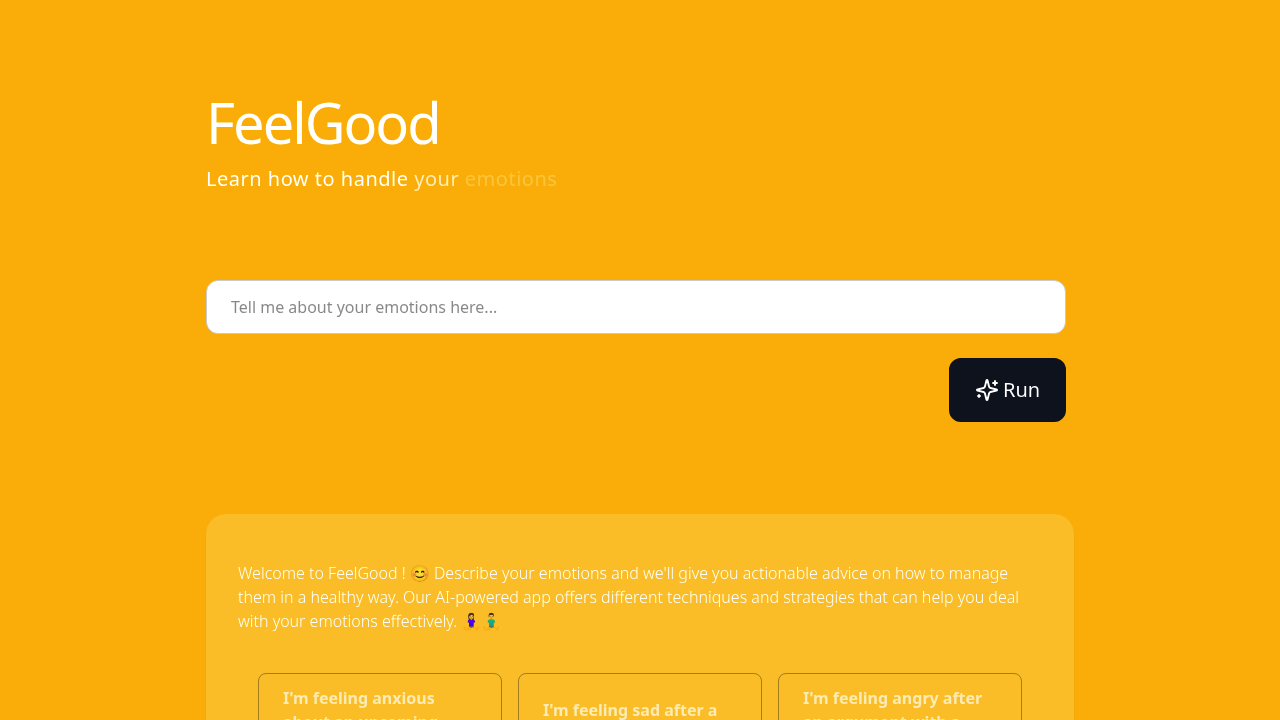
FeelGood delivers AI-powered emotional guidance through an interactive chat interface where users describe what they're feeling and receive actionable advice on processing those emotions in healthier ways. The app offers multiple techniques and strategies tailored to different emotional states, with pre-set scenarios covering common situations like interview anxiety, post-breakup sadness, or anger following arguments with friends. A free Discover plan provides access to one app with 20 monthly AI credits and 20 magic builder messages, while paid tiers start at $16 per month for the Rocket plan with 1,000 AI credits and scale up to the Galaxy plan at $159 per month offering 40,000 monthly AI credits and 1,200 magic builder messages.
This tool serves individuals actively working on their emotional intelligence and mental wellness who want immediate, private guidance without scheduling therapy appointments or waiting for support. It fits people navigating specific stressful periods—job seekers managing interview nerves, those processing relationship endings, or anyone dealing with recurring anger or anxiety patterns. The app works for users comfortable with text-based interaction who prefer self-directed emotional work over structured programs. It's particularly useful for those who need accessible coping strategies outside traditional business hours or in moments when talking to another person feels too vulnerable.
FeelGood slots into daily routines as a first-response tool when difficult emotions surface. Someone preparing for a high-stakes presentation can work through performance anxiety using the app's targeted techniques minutes before going on stage. After a difficult conversation at work, a user might process residual frustration during their commute home rather than carrying that tension into evening hours. The app handles moments when emotional overwhelm disrupts focus—helping someone recognize patterns in their stress responses and apply specific management strategies. Higher-tier plans include custom integrations, letting organizations incorporate emotional wellness tools into existing employee support platforms or wellness programs, though the core individual use case centers on personal emotional regulation in real-time situations.