
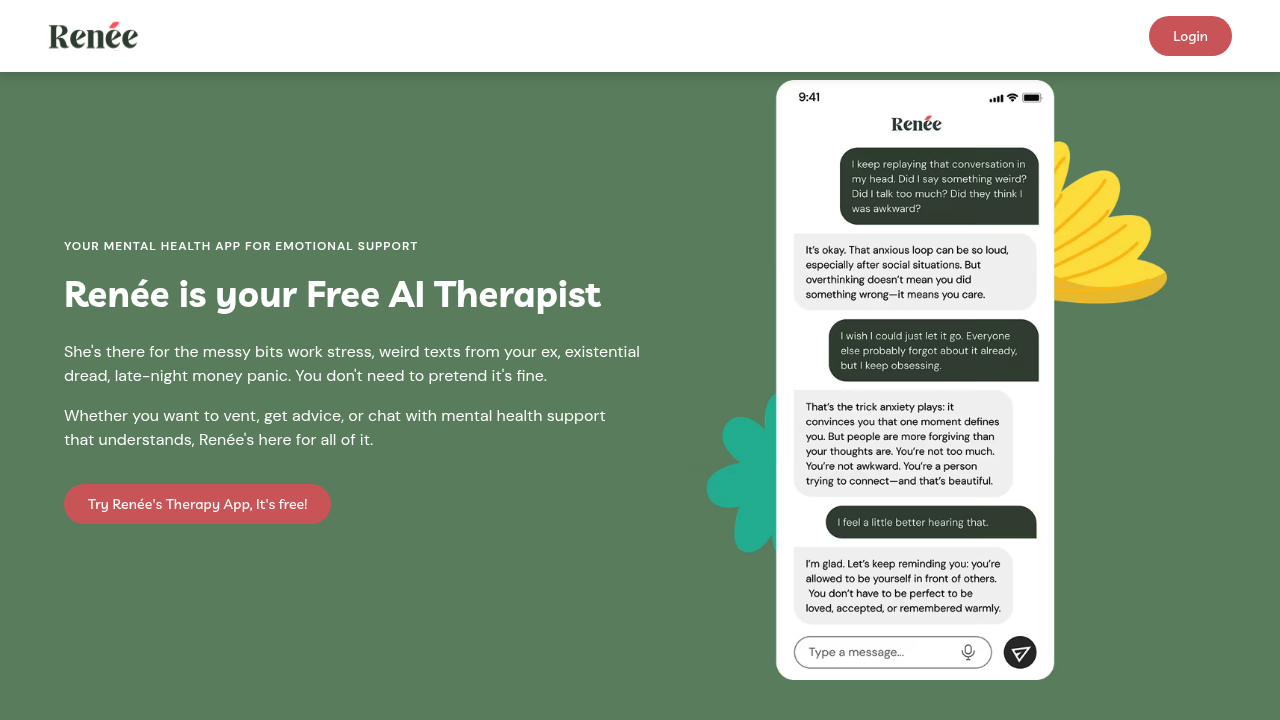
An AI therapist that remembers everything you've told it. That's the pitch here. Renée Space positions itself somewhere between professional therapy and self-help apps, offering anonymous conversations whenever stress hits at 3 AM or relationship drama needs sorting.
The memory feature is distinctive. This isn't a chatbot that forgets yesterday's crisis. It tracks your ongoing stories, remembers the people in your life, and picks up context from previous sessions. Tell it about your difficult coworker on Monday, and it'll remember that person's name when you vent again Thursday. That continuity matters when you're dealing with complex situations that unfold over weeks.
It adjusts tone based on what you need. Want calm reassurance? Direct honesty? Kind validation? The AI shifts accordingly. It asks reflective questions meant to push self-exploration deeper than just venting into the void. Works for everything from anxiety and depression to career burnout, breakups, financial stress, and body image struggles.
Full access costs nothing. Every feature — the memory, 24/7 availability, anonymous conversations, reflective questioning — comes free. No trial period needed because there's no paid tier to upgrade to. Unusual for mental health apps.
But here's what it isn't. Not traditional therapy. The app states this clearly. It won't replace a licensed professional, won't prescribe treatment, won't handle crisis intervention the way a real therapist would. That's a significant limitation for anyone dealing with serious mental health conditions requiring clinical care.
The "AI therapist" label creates confusion. Real therapists bring years of training, ethical oversight, and proven therapeutic frameworks. This provides emotional support and pattern recognition from past conversations. Those aren't the same thing. Someone in acute crisis needs human intervention, not an algorithm with good memory.
Privacy matters here too. Anonymous conversations mean less accountability than traditional therapy's documented sessions. That cuts both ways — easier to open up, but also no clinical record if you need continuity of care elsewhere.
Works best as a supplement. Daily check-ins when your actual therapist isn't available. Processing thoughts between sessions. Working through minor stressors that don't warrant professional help. Venting about workplace politics or relationship confusion without judgment.
Doesn't work for emergencies. Won't spot warning signs the way trained professionals do. Can't provide the specialized intervention complex trauma requires. The reflective questions help with self-awareness, but they won't replace evidence-based therapy techniques for treating diagnosed conditions.
Free access lowers barriers. That's truly useful. Just don't mistake convenient emotional support for clinical mental health treatment.