FastRouter logo
AI API FREEMIUM from $199/mo

FastRouter

This LLM gateway lets teams tap into over 100 AI models through one API endpoint

Instead of juggling separate integrations for different providers, developers get a single OpenAI-compatible connection that handles text generation, image creation, video processing, embeddings, and speech tasks. The…

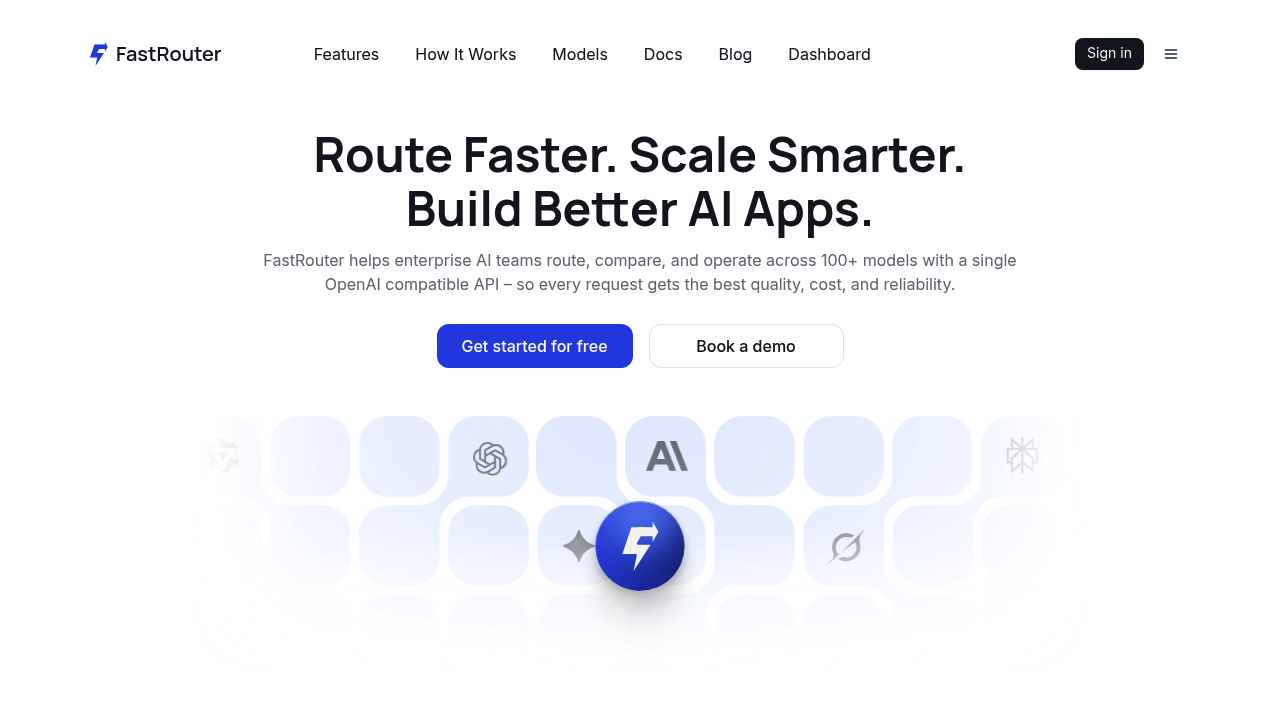
FastRouter screenshot

This LLM gateway lets teams tap into over 100 AI models through one API endpoint. Instead of juggling separate integrations for different providers, developers get a single OpenAI-compatible connection that handles text generation, image creation, video processing, embeddings, and speech tasks. The routing system picks models based on cost, speed, and output quality, switching automatically when one provider hits rate limits or goes down.

The smart routing sounds great in theory. Reality check needed: how well does it actually judge quality versus just defaulting to the cheapest option? This service aggregates capacity across providers to boost rate limits, which matters for teams hitting walls with individual services. Failover happens automatically with retry logic and backup model lists. When one model chokes, another takes over without code changes.

The governance layer adds project limits, API key controls, and role-based access. Teams can set spending caps and permission levels without building their own wrapper. The dashboard unifies metrics across all providers with filters for cost tracking, latency monitoring, and error spotting. Alerts trigger on usage spikes. Activity logs capture request details.

What's missing: no mention of response time overhead from the routing layer itself. Adding a gateway between your app and the actual models introduces latency. How much? Facts don't say. The batch processing feature handles high-volume jobs, but no details on throughput limits or queue times. The evaluation system monitors output quality over time, yet there's no specifics on what metrics it tracks or how teams configure quality thresholds.

The model comparison playground lets teams test outputs side-by-side. Multiple models can cross-check results, though this obviously multiplies costs. This service claims access to specific models including some that sound questionable (Nano Banana?), but without verification those names mean nothing.

Free tier exists. Includes millions of tokens and credits to start. No dollar amounts listed for paid plans, so can't gauge where costs land for production workloads.

Best for engineering teams already wrestling with multi-model setups who need consolidated billing and oversight. If you're running one model for one use case, this adds complexity you don't need. The value proposition scales with the number of models and providers you'd otherwise manage separately. Teams building agent systems or apps that need different models for different tasks get more benefit than single-model operations.

The unified API approach works. The routing intelligence needs testing against your actual workloads to verify it picks well.

FastRouter alternatives

See all →

Frequently asked

7 questions
Does FastRouter work with OpenAI API code?
FastRouter uses an OpenAI-compatible API, so existing code that calls OpenAI endpoints should work with minimal changes. Just swap the base URL and add your FastRouter API key. The compatibility extends across text, image, video, embeddings, and speech models. This means you don't rewrite integration logic for each new provider you want to test.
How much does FastRouter cost per month?
FastRouter offers a free plan with millions of tokens and credits to start testing. The facts don't list pricing for paid tiers, so no way to quote monthly costs for production use. The free tier gives enough runway to evaluate whether the routing logic actually saves money versus direct provider access. Teams need to contact FastRouter directly for enterprise pricing details.
What happens when an AI model goes down in FastRouter?
FastRouter automatically switches to backup models when a provider fails or hits rate limits. The system includes retry logic and fallback model lists that activate without code changes on your end. Teams set up virtual model lists that define which alternatives to use when the primary option fails. This aggregated approach to capacity means you're less likely to hit the rate walls that individual providers enforce.
Can FastRouter reduce AI costs compared to using providers directly?
FastRouter routes requests based on cost, latency, and quality, theoretically picking cheaper models when they meet requirements. The claim needs verification against your actual workloads since routing logic might prioritize other factors. Teams save on engineering time by avoiding separate integrations for each provider, which has real cost implications beyond per-token pricing. The unified billing and governance features prevent surprise overspending, but the routing layer itself adds latency that facts don't quantify.
Who should use FastRouter versus calling AI APIs directly?
FastRouter makes sense for teams juggling multiple AI models across different providers who need consolidated oversight and automatic failover. Enterprise AI teams building applications that require different models for different tasks get the most value from unified billing and governance controls. Single-model operations gain little since the gateway adds complexity without much benefit. Engineering leaders who spend time managing provider relationships, rate limits, and cost tracking across services see clearer ROI.
Does FastRouter add latency to AI requests?
FastRouter sits between your application and AI providers, which introduces routing overhead by design. The facts don't specify how much latency the gateway adds to request-response cycles. This matters for real-time applications where every millisecond counts. Teams should benchmark actual response times during the free tier evaluation since routing decisions, failover logic, and metric collection all take processing time before requests even reach the underlying model.
What team controls does FastRouter provide?
FastRouter includes project limits, API key restrictions, and member roles for access control. Teams can set spending caps and permission levels without building custom wrapper code. The governance layer lets engineering leaders enforce usage policies across different projects and team members. Activity logs track who made which requests, while alerts notify teams about usage spikes before bills explode.

Traffic

Estimated monthly website visits · last 7 months

15.5K visits/mo
Monthly visits
15.5K
↓ 62.7% MoM
Global rank
#1,733,591
ID #92,448
Category rank
#55
AI API
41.6K 32.4K 23.2K 14K 4.9K Jan 2026: 4.9K visits Jan 2026 Feb 2026: 14.8K visits Feb 2026 Mar 2026: 11K visits Mar 2026 Apr 2026: 10.2K visits Apr 2026 May 2026: 12.2K visits May 2026 Jun 2026: 41.6K visits Jun 2026 Jul 2026: 15.5K visits Jul 2026

Reviews (0)

Write review

No reviews yet. Be the first to share your experience.