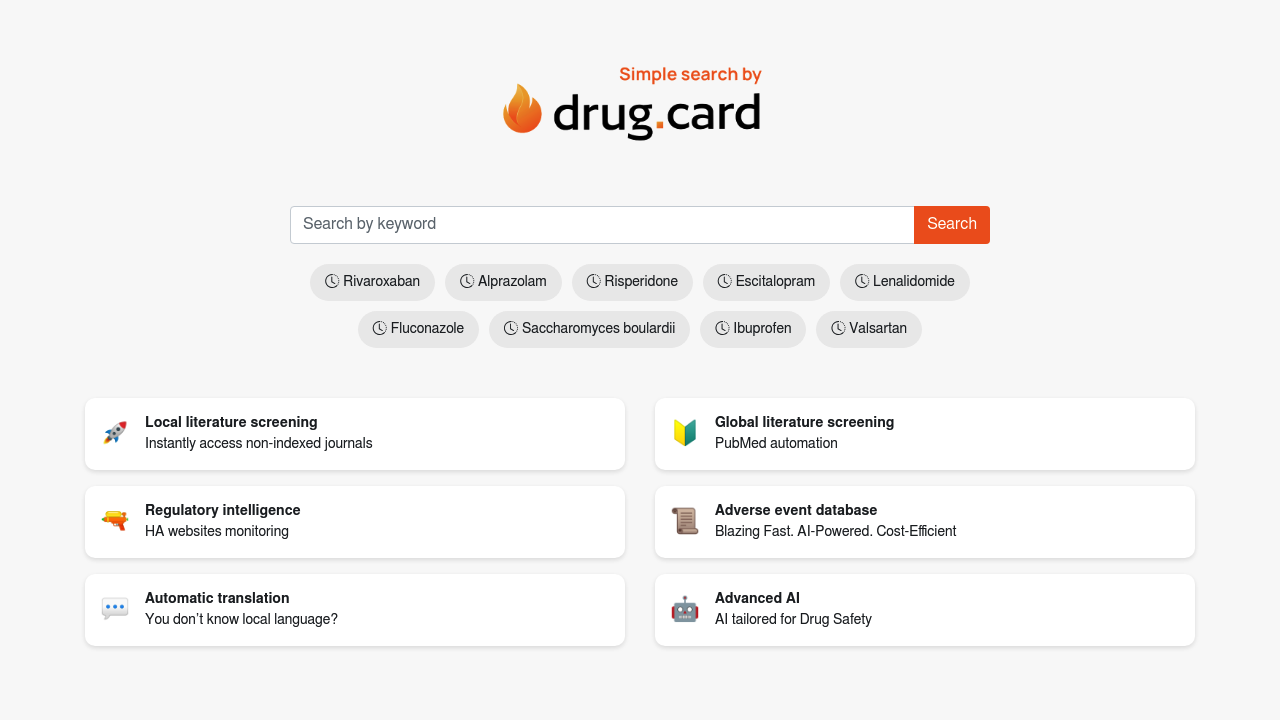
Most drug safety platforms expect you to work within PubMed's boundaries and call that enough. That leaves out local, non-indexed journals where critical adverse event reports often hide. DrugCard Simple Search starts where traditional databases end, pulling literature from sources that don't make it into the usual indexes.
This system automates pharmacovigilance workflows that typically eat up manual hours. It screens global literature through PubMed while simultaneously monitoring local publications. Regulatory intelligence gets built in through automated tracking of Health Authority websites, so compliance teams catch updates without constant manual checking. The adverse event database centralizes case management. Automatic translation handles local languages, which matters when safety signals appear in regional publications first.
The AI is purpose-built for drug safety contexts. It won't confuse pharmacological terms or miss adverse event language that general-purpose AI tools would skip over. The simple search interface gives quick access to drug cards without wrestling through complex query builders.
A free plan exists. You get drug card simple search, AI-powered monitoring, and literature screening capabilities without paying. That's unusual for specialized pharmacovigilance software, where even basic access often requires enterprise contracts.
This works best for pharmacovigilance teams tired of missing non-English or locally published case reports. Drug safety professionals who've been burned by incomplete literature reviews will find value in the broader coverage. It's built specifically for adverse event tracking and regulatory compliance workflows, not adapted from generic research tools. If your monitoring relies only on major indexed databases, you're leaving gaps. This fills them.