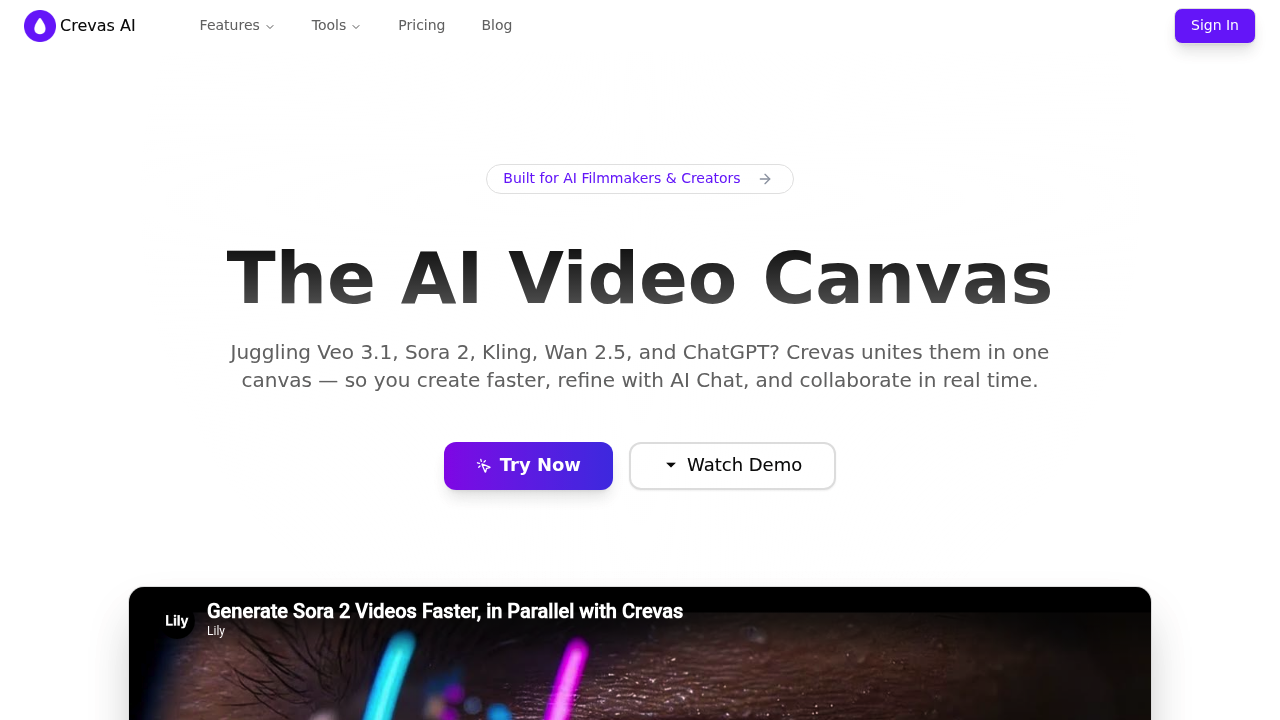
Video production teams can now test multiple AI video generators simultaneously instead of switching between platforms. Crevas AI consolidates over fifteen AI models—including Veo 3.1, Sora 2, Kling, Wan 2.5, Runway Gen-4, and Luma—into a single collaborative canvas where users generate cinematic footage from text prompts or images. This system converts scripts into shot lists, then transforms those shots into model-specific prompts through an AI assistant that reduces prompt-writing time from two hours to five minutes. Teams work together in real-time on visual projects, maintaining character consistency across shots and tracking versions as they iterate. Parallel generation cuts what traditionally takes three hours down to thirty minutes by running multiple models at once. Export options range from 720p to 4K upscaling. Pricing starts at twenty-nine dollars monthly for the Plus plan with 1,000 credits and three projects, while the Pro plan at one hundred ninety-nine dollars monthly includes 10,000 credits and unlimited projects. A free tier grants access to all models but limits users to preview-only with no export capability.
Filmmakers moving from traditional production pipelines find this approach particularly useful, as do creative directors at agencies managing multiple client campaigns simultaneously. Marketing teams producing social content at volume benefit from the multi-model approach, testing different aesthetic styles without learning separate platforms. Studios experimenting with AI-generated footage use it for pre-visualization and concept development. Crevas AI suits both solo storytellers prototyping narrative ideas and larger creative teams coordinating feedback across departments. Users comfortable with AI video tools but frustrated by platform-hopping adopt it to centralize their workflow, while those new to AI generation rely on the prompt assistant to bridge their initial adjustment period.
Day-to-day applications include converting YouTube videos into transcripts for repurposing content, then generating new visual interpretations through different AI models to see which style fits best. A marketing team might upload a campaign script, generate a shot list automatically, and produce multiple video variations for A/B testing—all within the same canvas where stakeholders leave feedback instantly instead of waiting days for email rounds. Character-driven projects maintain visual continuity across scenes by locking consistent character parameters while varying backgrounds and actions. The version control system lets teams revert to earlier iterations when a creative direction shifts, and the credit-based structure scales from small projects testing three concepts on the Plus plan to production houses running unlimited simultaneous projects on Pro.