
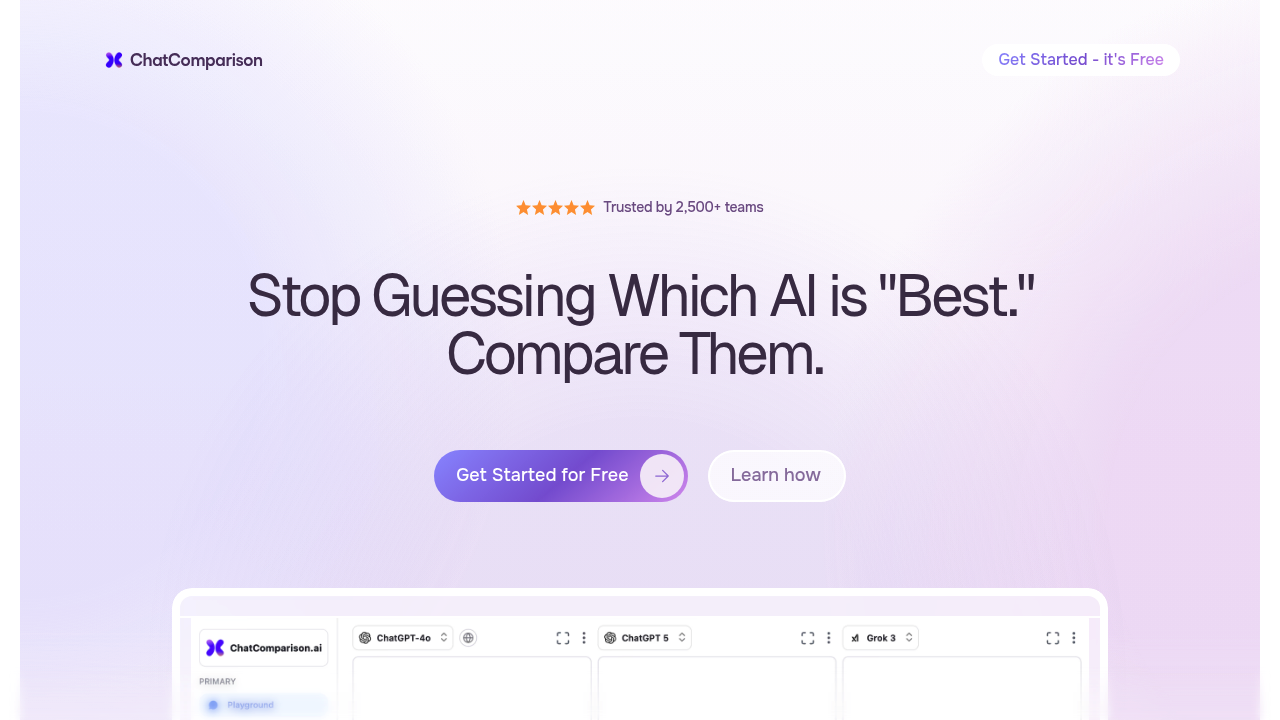
ChatComparison AI runs a side-by-side testing environment where users submit identical queries to more than 40 different language models simultaneously. This system executes each request in parallel, capturing response time, token consumption, and output quality for direct comparison.
The technical architecture measures latency in real-time, displaying millisecond-level differences between models handling the same prompt. It tracks price-per-token across providers, calculating actual cost differences based on input and output token counts. This matters when scaling to thousands of requests daily.
Performance benchmarks aren't static. The system runs continuous tests to update speed and quality metrics as model providers push updates or change infrastructure. Users see current data, not outdated snapshots from months ago.
The comparison view displays responses vertically, making differences in tone, detail level, and accuracy immediately visible. One model might return a concise technical answer while another provides extensive context. This system doesn't rate which is "better" universally but shows how each model interprets instructions differently.
Quality scores aggregate multiple factors including coherence, factual accuracy in known-answer tests, and consistency across similar prompts. Speed measurements account for both time-to-first-token and total completion time, which behave differently depending on model architecture.
Over 2,500 teams use this service, spanning CTOs evaluating infrastructure costs, machine learning engineers testing model behavior, and marketing agencies optimizing content generation workflows. The user base includes AI researchers, SaaS founders, and automation consultants who need empirical data rather than vendor claims.
This service doesn't execute the queries itself. It routes requests to each model's API, introducing network variability into latency measurements. Geographic distance from model servers affects speed comparisons, though the service doesn't currently factor in regional hosting differences.