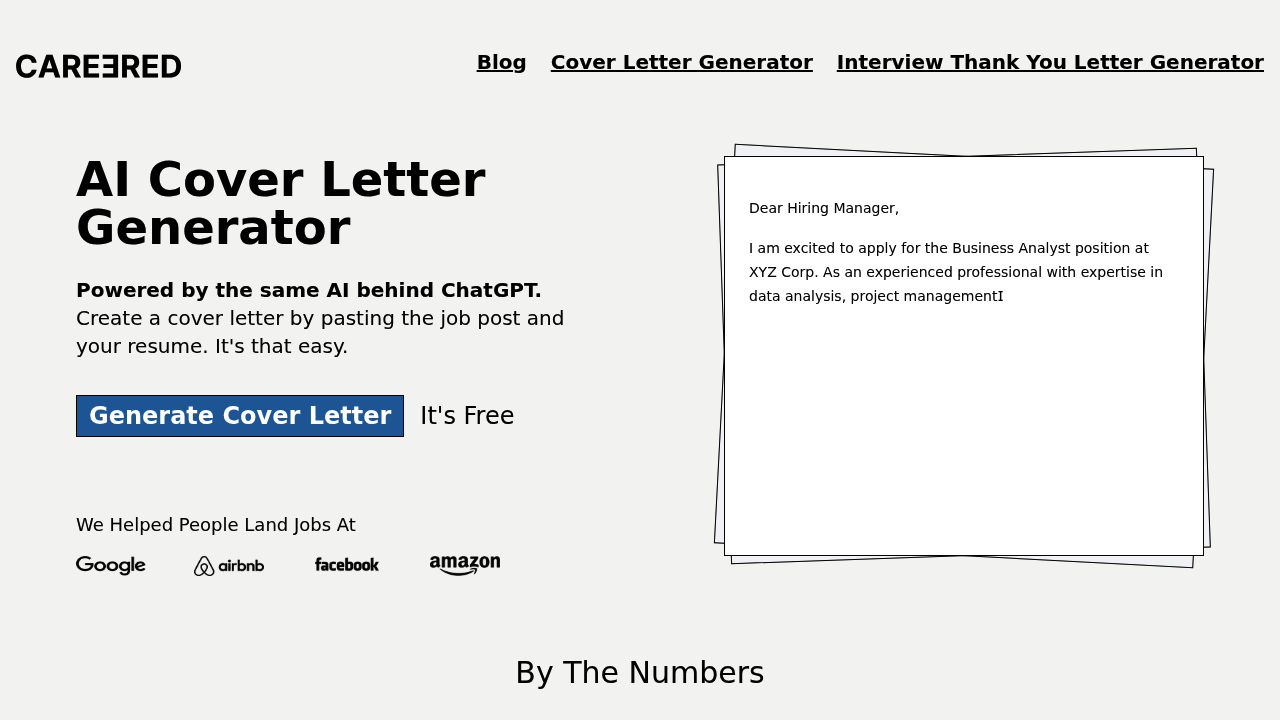
Job seekers face a recurring challenge: crafting tailored cover letters for every application without spending hours on each one. Careered addresses this by generating personalized cover letters in roughly 52 seconds. Users paste in their resume and the job posting, and Careered's AI produces a customized letter drawing on data-driven insights collected from resumes across the internet. The system analyzes what works and what doesn't in successful applications, applying those patterns to each generation. Beyond cover letters, Careered also creates interview thank-you letters and maintains a library of resume examples and educational articles about job applications. The service is free to use, with more than 422 cover letters generated in the past week alone.
This service serves job seekers at any career stage who apply to multiple positions and need to produce distinct, professional cover letters quickly. It's particularly valuable for active job hunters submitting dozens of applications monthly, where writing unique letters for each role becomes a bottleneck. Career changers trying to reframe their experience for new industries benefit from the AI's ability to reposition skills in fresh contexts. Recent graduates lacking application-writing experience can use Careered to learn effective formats while producing usable results. The 83 percent repeat usage rate suggests it appeals to people managing ongoing job searches rather than one-off applicants.
The primary workflow involves dropping a job description and resume into the generator, then reviewing and editing the output before submission. Job seekers can use it throughout the application cycle—creating initial cover letters when applying, then generating thank-you notes after interviews to maintain professional follow-through. The educational blog helps users understand why certain approaches work, turning Careered into a learning resource rather than just a generator. For those applying to similar roles across different companies, it speeds up customization by handling the structural work while users focus on company-specific details. The data-driven foundation means the output reflects actual hiring patterns rather than generic templates, making the letters more aligned with what recruiters encounter in successful applications.