
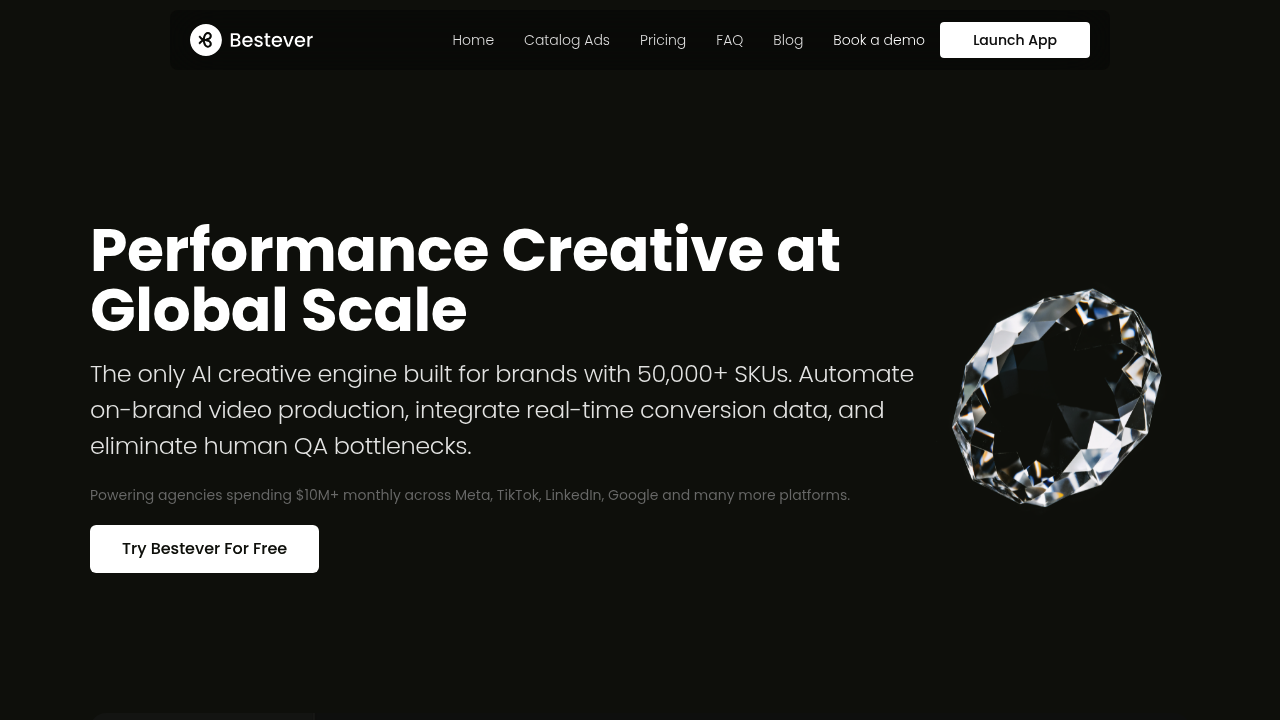
Brands drowning in SKUs get an AI creative engine built specifically for their scale problem. Bestever automates video and ad production when you're managing 50,000-plus products and need variants fast. Instead of generic AI models that spit out whatever looks plausible, you get industry-specific pipelines — apparel flat lays work differently than CPG product renders, and the system knows it.
The hallucination detection catches things most creative AI misses. Extra fingers — wrong logos. Inconsistent brand details. It's a built-in QA layer that spots the weird AI artifacts before they reach your ad account. For brands running thousands of creative tests monthly, that's not a nice-to-have.
Here's what makes the data loop interesting: it pulls performance metrics from Meta, TikTok, and Google automatically, then uses that conversion data to iterate on what's working. You're not manually tagging winners and losers. The system ingests the numbers and generates new variants based on actual results. The competitor ad analysis goes further — it reverse-engineers competitor creative and builds variations using your brand's look and feel. That's either incredibly useful or a bit unsettling depending on how you feel about systematic creative theft.
The white-label API matters for agencies managing multiple brands. You can plug this into your own workflow without clients knowing it's third-party AI. Over 300,000 users are already on it, and they claim agencies spending $10M-plus monthly use it as their creative backbone. Numbers show 80% production cost savings and 15 hours saved weekly for a five-person team. ROI supposedly doubles. Those are impressive claims but they're averages — your mileage will definitely vary.
Does it actually work at scale? The automatic ad tagging and analysis through a conversational interface makes sense when you're generating thousands of creative assets. You need searchable, queryable creative libraries or you drown in your own output. Dynamic creative generation for massive SKU counts is the core promise. If you're an apparel brand with seasonal collections or a CPG company with regional variants, this handles the combinatorial explosion better than manual workflows.
The weak spots aren't about features — they're about fit. If you're a small brand with 50 products, this is overkill. The system's built for volume. It assumes you have performance data flowing in constantly and enough ad spend to make algorithmic iteration meaningful. The integrations cover major platforms but niche channels aren't listed. And while hallucination detection exists, AI-generated creative still carries brand risk. You're trusting algorithms with your visual identity at scale.
There's a freemium model with a free trial, so you can test before committing budget. API access and team features are available, which matters for agencies and enterprise setups.
Who should actually use this? Performance marketers at brands where creative production is the bottleneck. Ecommerce companies launching hundreds of SKUs quarterly. Agencies managing multiple brands who need systematic creative output without hiring armies of designers. If you're spending seven figures monthly on paid social and your creative team can't keep up with testing velocity, this solves a real problem. If you're a startup testing product-market fit, save your money. This tool assumes you're already at scale and need AI to maintain creative velocity you can't staff your way out of.