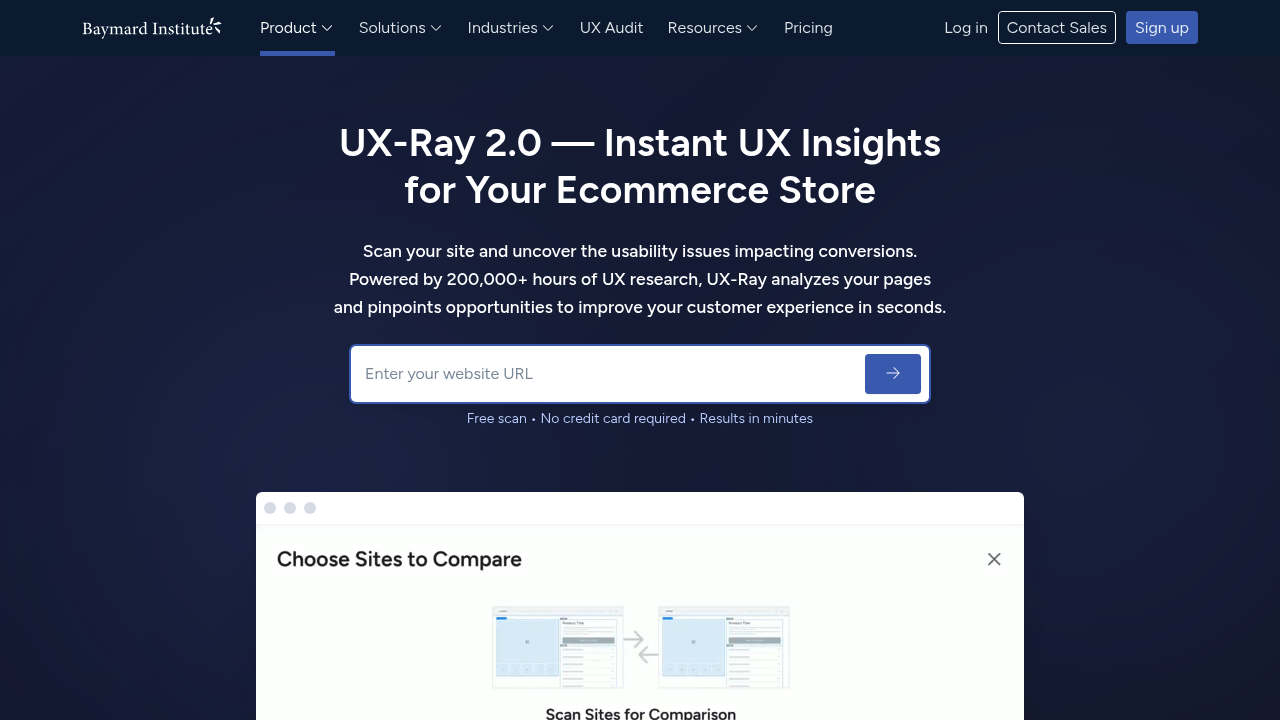
This AI scanner tears through ecommerce websites to surface usability problems that tank conversions. It works by analyzing every component type across a site against Baymard's database of UX best practice guidelines, flagging issues that frustrate customers and kill sales. The system draws from 200,000 hours of accumulated UX research to deliver recommendations grounded in observed user behavior rather than generic advice.
The analysis happens fast. You enter any ecommerce domain and get results within minutes. The scanner prioritizes discovered issues by severity, so teams know which problems to tackle first. Each flagged issue links back to specific research findings and UX guidelines, providing full citation transparency instead of black-box recommendations. This matters because teams can verify why something counts as a problem and see the evidence supporting each suggested fix.
Accuracy sits at 95% when measured against Baymard's own human UX auditors. That's human-level performance without the weeks-long timeline traditional audits require. The system benchmarks analyzed sites against best-in-class UX implementations, showing how current performance stacks up against top performers.
A free scan exists with no credit card required. Results arrive in minutes. The Max Plan adds competitor analysis capabilities that let teams scan rival sites and run head-to-head UX comparisons. This tier also tracks competitor UX changes over time, useful for monitoring how other brands evolve their customer experience. Competitor scanning doesn't exist outside the Max Plan.
The underlying research base serves 29,000 UX professionals across 80 countries. 71% of Fortune 500 ecommerce companies use Baymard's research, suggesting the guidelines reflect what large-scale operations have validated. The scanner translates this accumulated knowledge into automated scans instead of requiring teams to manually cross-reference their sites against thousands of research findings.
This works for UX professionals who need rapid site assessments, ecommerce companies evaluating their own properties, agencies running client audits, and researchers comparing implementations across brands. Fortune 500 ecommerce teams represent a significant user segment. The speed advantage matters most when timelines compress or when teams need to evaluate multiple sites quickly.
The system avoids inventing issues because recommendations trace back to documented research rather than generative predictions. Every suggestion connects to specific UX guidelines built from observed user testing. That research foundation separates this from general-purpose AI tools that might hallucinate problems or suggest fixes without empirical backing.