
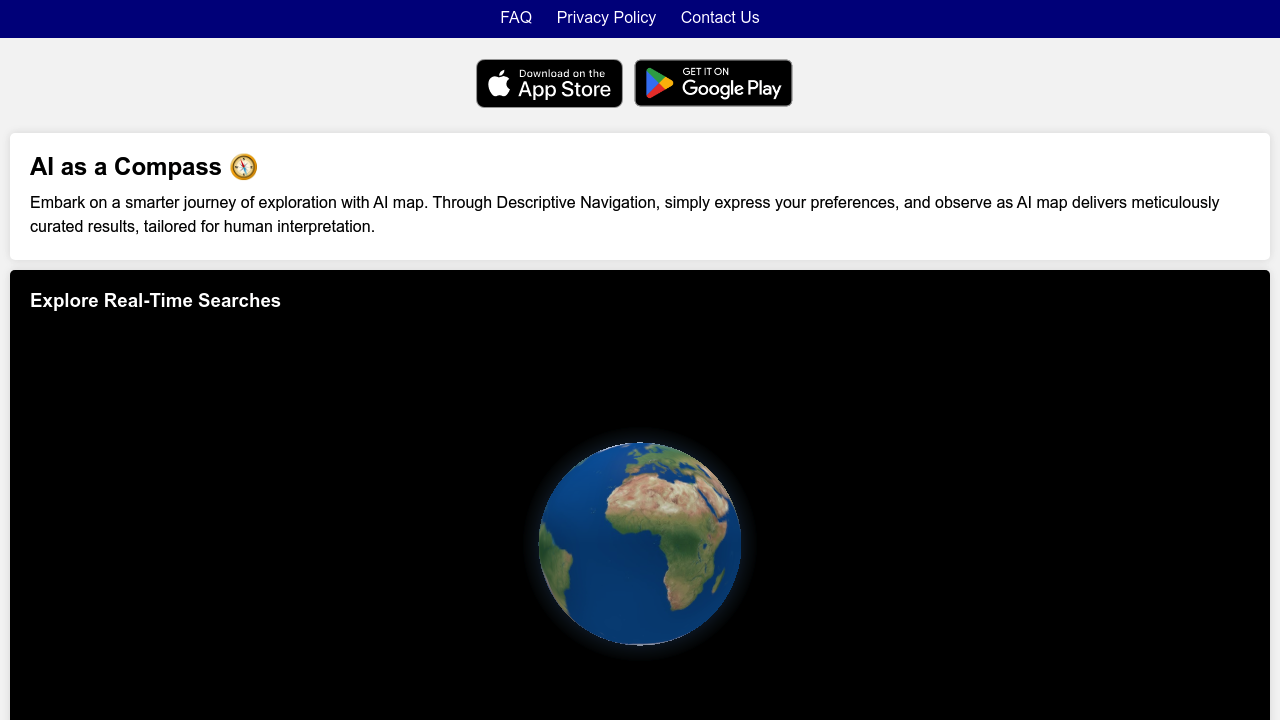
Your phone's map app doesn't get nuance. AI map changes that — you describe what you're actually looking for instead of typing exact business names or addresses.
Say you're wandering through a new city and want "a quiet coffee shop with outdoor seating near art galleries." Traditional maps force you to search for coffee shops. Then scroll through dozens of results. Hope to find the right vibe. AI map gets it. You describe your scene and it delivers ranked results that match what you had in mind.
Descriptive navigation works in real-time. Results get ranked for humans rather than algorithms.
A travel blogger researching authentic local experiences would find this useful. Instead of generic "restaurants near me" searches, they could ask for "family-run restaurants where locals actually eat" and get meaningful suggestions. It runs on three.js library and focuses on helping people explore places around them more intelligently.
This approach feels natural once you try it. Most mapping tools still think in terms of categories and keywords from the desktop era. AI map recognizes that when you're out exploring, you're often looking for a feeling or atmosphere rather than a specific establishment. Results won't always be perfect since descriptive searches can be subjective, but it's a step toward maps that actually understand what you want to find.