
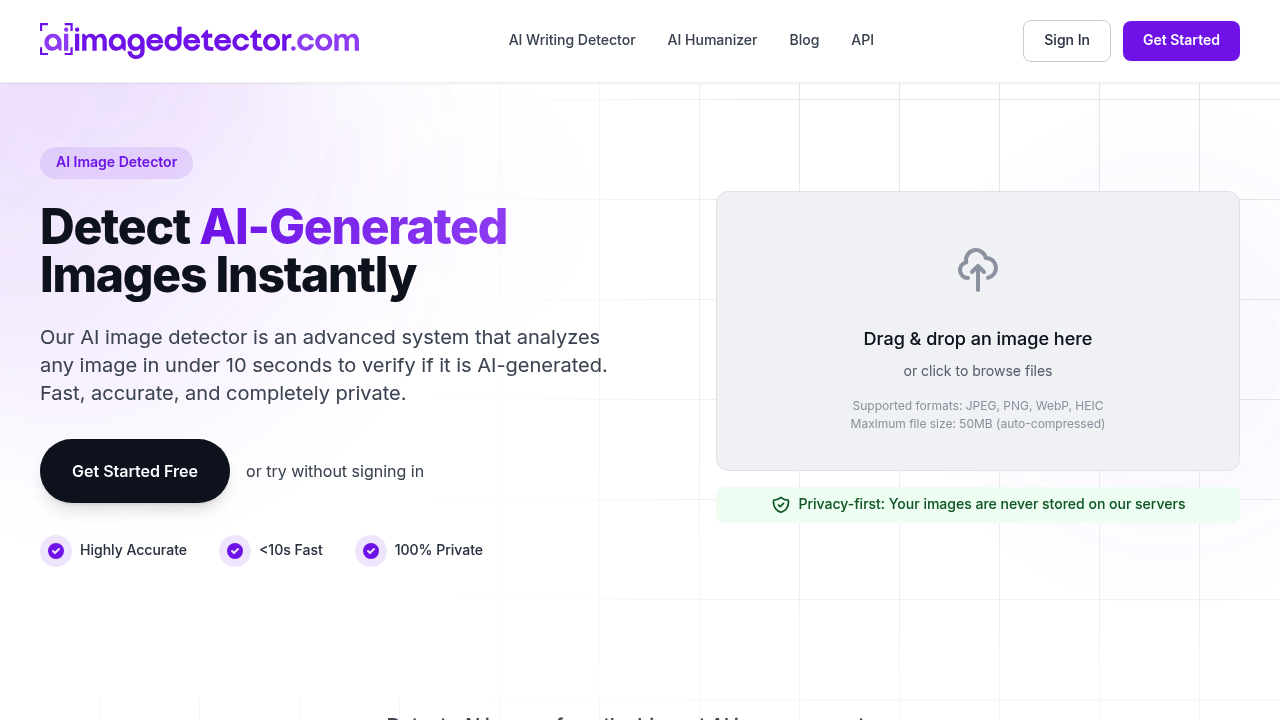
This tool verifies whether an image was created by artificial intelligence or a human, delivering a confidence score and detailed reasoning in under 10 seconds. It accepts JPEG, PNG, WebP, and HEIC files up to 50MB, automatically compressing larger uploads while maintaining analysis accuracy. This service detects output from major AI image generators and returns a three-tier confidence rating: 0-30% suggests human creation, 30-70% indicates mixed or unclear signals, and 70-100% points to AI generation. The free plan allows 10 analyses per hour with basic detection scores and analysis history for signed-in users, while a $19 monthly Pro tier is planned with unlimited analyses, advanced models, batch processing, and API access. No registration is required to start using the basic detection feature, and the service commits to never storing uploaded images on its servers.
Journalists fact-checking visual content, educators evaluating student submissions, and researchers verifying data integrity form the core user base. Media professionals working in newsrooms or digital publishing rely on quick authentication before distribution. Artists and content creators use it to protect original work or verify source material for projects. Legal professionals handling cases involving image evidence or intellectual property disputes need rapid verification tools that provide documented confidence scores. Business teams managing brand assets or reviewing user-generated content benefit from the straightforward drag-and-drop interface that requires no technical expertise.
This service fits into editorial workflows where images arrive from uncertain sources and need immediate vetting before publication. Educational institutions can screen assignments to identify AI-generated submissions, particularly in visual arts or design courses where originality matters. Researchers collecting visual data for studies can filter datasets to separate synthetic images from authentic photographs. Legal teams preparing evidence or investigating fraud cases can document analysis results with timestamped confidence scores. Marketing departments reviewing influencer content or user submissions can quickly flag potentially synthetic material. The analysis history feature lets signed-in users track verification patterns over time, useful for organizations monitoring ongoing content streams or building authentication databases for internal reference.