
The Single-Stream Diffusion Transformer architecture sets Z-Image apart from typical image generation models. Where most AI image tools process text prompts separately from visual data, this system integrates text, semantic tokens, and VAE image tokens into one unified sequence. That approach delivers faster generation speeds while using parameters more efficiently. The result is a 6 billion parameter model that handles image synthesis with notable speed advantages.
Z-Image functions as both an open-source foundation model and a commercial service. Users can deploy the model locally without cost if they have the technical capability and hardware. The online service charges for compute resources and services, operating on a credit system that starts at 1 credit minimum per image. Video generation demands considerably more resources, requiring at least 30 credits per creation.
This service aggregates multiple AI models beyond its own foundation. Google Veo 3.1 handles certain video tasks. Flux 2 delivers additional image generation capabilities. GLM-Image adds another model option. LTX-2, described as a DiT-based audio-video foundation model, enables motion control features. Wan 2.2 and Nano Banana Pro round out the model selection. Users access all these through a single interface rather than subscribing to separate services.
Feature depth goes beyond basic text-to-image generation. The AI Face Swap tool works on both static images and videos separately. Image to Video converts stills into animated sequences. Video Extend lengthens existing clips. The Image Editor provides modification capabilities without regenerating from scratch. Image-to-Image transformations let users start with existing visuals rather than text descriptions alone.
Bilingual text rendering addresses a common AI image weakness. Many generation models struggle with text overlays or produce garbled characters. Z-Image specifically handles multiple languages within generated images, useful for creators making marketing materials or comics requiring readable text elements.
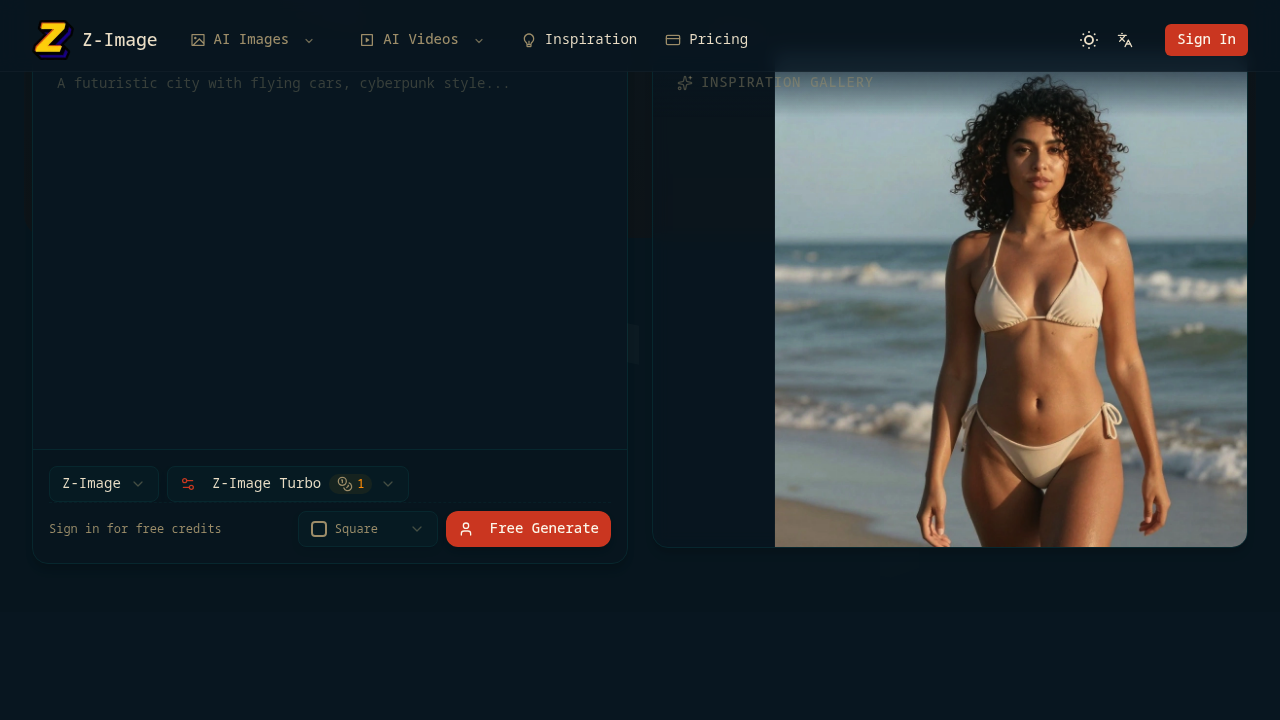
The Inspiration Gallery serves as both showcase and learning tool. Users can copy prompts from displayed images, reverse-engineering successful generations. The Secret Prompts feature and one-click design replication take this further, letting users recreate specific styles without manually analyzing what made them work.
Pricing splits into three tiers beyond free credits provided at sign-in. The Starter plan costs $9.9 monthly for 350 credits. Pro subscribers pay $49.9 monthly for 2000 credits. Ultimate runs $99.9 monthly with 4000 credits. All paid tiers remove watermarks and grant commercial use rights. Pro and Ultimate add early access to beta features plus lifetime updates. The credit costs mean Starter users can generate roughly 350 images or 11 videos monthly, assuming minimum credit usage. Pro allows about 2000 images or 66 videos. Ultimate supports 4000 images or 133 videos.
Video generation's 30-credit minimum creates a significant cost multiplier compared to images. A user burning through credits on video work will exhaust their monthly allocation much faster than someone focused on static images. This pricing structure clearly favors image generation workflows.
Content creators working across multiple formats get the broadest value. Designers needing both static assets and motion graphics can handle both without switching services. Game developers requiring character art and cutscene animations find the dual capability useful. Comic creators benefit specifically from the bilingual text rendering and style consistency features. Brands producing social media content across image and video formats can maintain visual coherence through the unified model access.
This service targets users who need professional-quality output with commercial licensing included. Hobbyists might find the credit consumption rate steep for casual experimentation.