VideoPoet by Google logo
AI Video Generator FREEMIUM from $7/mo

VideoPoet by Google

Traditional text-based AI models can't generate videos from text prompts

VideoPoet changes that by treating video creation like language generation. Google's research tool converts regular language models into video generators that produce high-quality clips without additional training.…

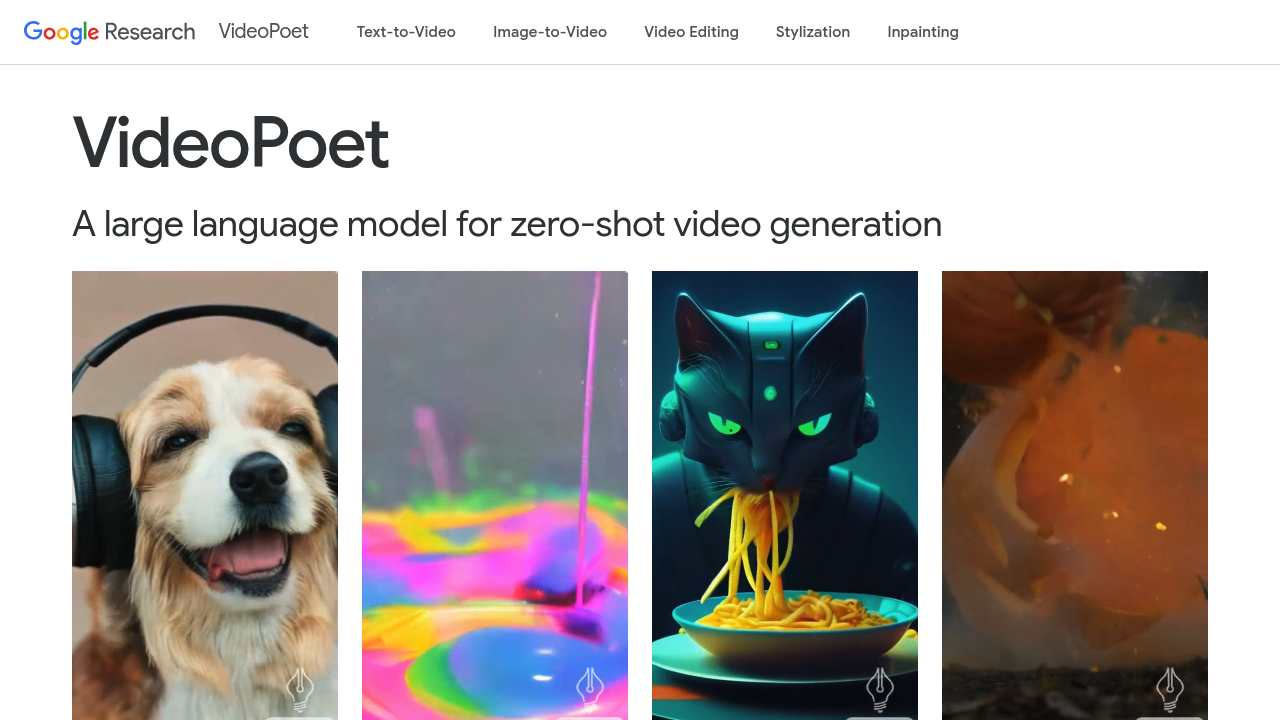
VideoPoet by Google screenshot

Traditional text-based AI models can't generate videos from text prompts. VideoPoet changes that by treating video creation like language generation. Google's research tool converts regular language models into video generators that produce high-quality clips without additional training.

VideoPoet works through tokenization. It translates video frames, images, and audio into discrete codes that language models can understand. This unified approach lets you generate text-to-video content. Convert still images into moving clips. Edit existing footage. You can even create audio tracks directly from video without any text guidance.

High-motion sequences shine here.

VideoPoet generates variable-length videos with complex movements that other tools struggle with. It handles video inpainting and outpainting too — frame continuation works smoothly.

A machine learning researcher developing multimodal AI applications could use VideoPoet to prototype video synthesis workflows. They might feed it a text description of a dancing figure and get back a fluid animation showing realistic movement patterns across multiple frames.

Video stylization and editing capabilities extend beyond basic generation. You can modify existing clips or apply different visual styles. The integration with MAGVIT V2 and SoundStream tokenizers provides the technical foundation. Bard handles script writing tasks.

VideoPoet remains a research project without public pricing or widespread availability. The state-of-the-art results come with typical research limitations around access and scalability. Google's approach to unified tokenization could influence how future video generation tools develop.

VideoPoet by Google alternatives

See all →

Frequently asked

7 questions
Can I actually use VideoPoet by Google right now?
Nope, VideoPoet's still just a Google research project. You can't sign up for it or get access anywhere. Google hasn't said when (or if) they'll release it to the public.
How does VideoPoet handle audio generation compared to other video AI tools?
VideoPoet creates audio tracks straight from the video -- no text prompts needed. Most other video AI tools either skip audio completely or make you write descriptions for it. The SoundStream tokenizer lets it match audio to video automatically.
What makes VideoPoet's tokenization approach different from traditional video generation?
It treats video like text generation. VideoPoet converts everything (video frames, images, audio) into codes that language models can understand. Traditional video AI uses specialized networks built just for visual stuff. This unified approach through MAGVIT V2 means one system handles multiple tasks without retraining.
Can VideoPoet extend videos beyond their original length?
Yeah, it does video outpainting and inpainting for extending frames. You can stretch videos in time or fill missing parts smoothly. Unlike some video AI systems that lock you into fixed durations, this one handles variable lengths.
What types of motion does VideoPoet handle best?
High-motion sequences are where it really shines. Complex movements that trip up other tools? VideoPoet handles them well. Google's examples show fluid animations like dancing figures with realistic movement patterns -- though simple content works fine too.
Does VideoPoet work with existing video footage or just generate from scratch?
It can edit and stylize existing clips, not just create new ones. You can modify footage or apply different visual styles to what you already have. The system treats video editing as another tokenization task (same as generation).
How does Bard fit into VideoPoet's workflow?
Bard writes the scripts when you need text content for videos. VideoPoet handles the actual video generation and editing, while Bard creates the narrative or descriptive text that feeds into the process. They're complementary tools in Google's research setup.

Traffic

Estimated monthly website visits · last 0 months

887.5K visits/mo
Monthly visits
887.5K

Not enough historical data for a chart yet.

Reviews (0)

Write review

No reviews yet. Be the first to share your experience.