
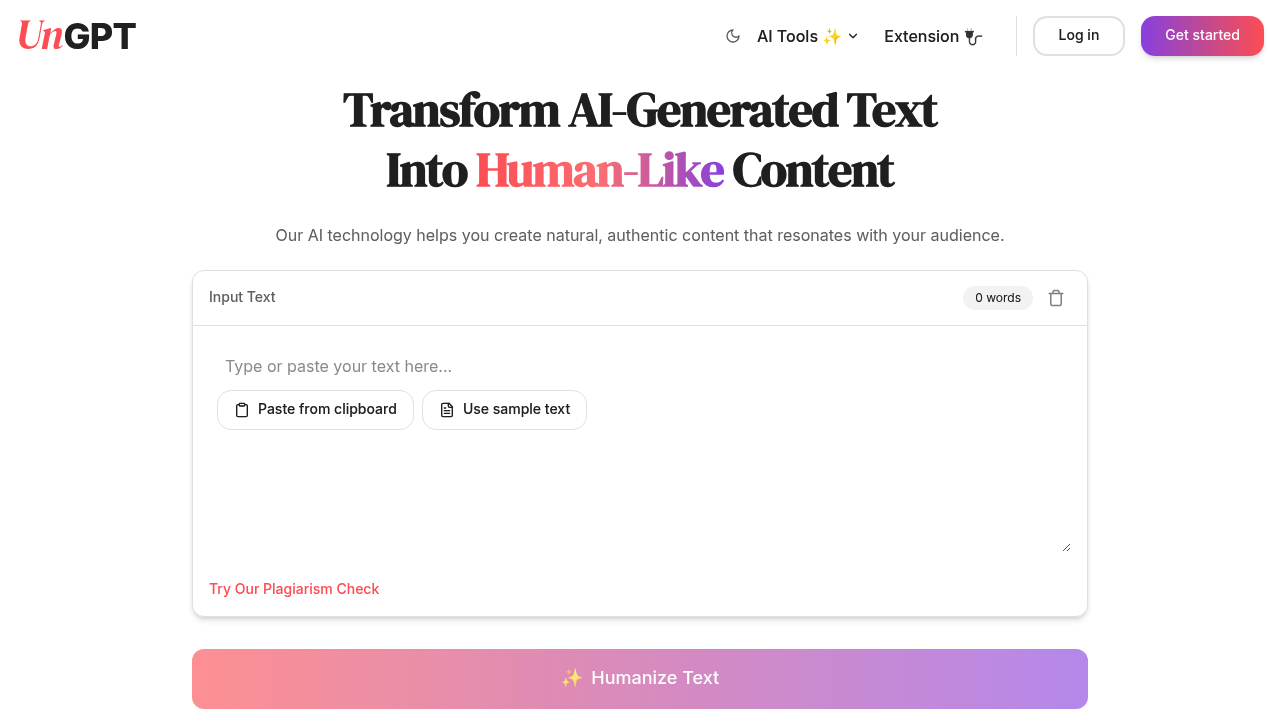
UnGPT takes AI-generated text and rewrites it to mimic natural human writing patterns that slip past detection algorithms. The system analyzes the syntactic and stylistic markers that flag content as machine-generated, then restructures sentences, adjusts word choice, and varies rhythm to match organic writing. It's built specifically to counter tools like Turnitin, Originality.AI, and GPTZero, which scan for the statistical fingerprints that large language models leave behind.
The technical approach centers on pattern disruption. AI-generated text typically shows predictable sentence structures, consistent vocabulary complexity, and uniform pacing. UnGPT's algorithm introduces variability in these areas while preserving the original meaning and key ideas. It doesn't just paraphrase. It rebuilds the text architecture from scratch based on how humans actually write, with natural inconsistencies and stylistic quirks that detection systems associate with human authorship.
Users report drops from 95% AI detection scores to 0% after processing. That's the core metric the system optimizes for. The transformation happens through multiple passes that adjust syntax, insert conversational elements, and break up mechanical patterns. The output maintains factual accuracy and argumentative structure from the source material.
The browser extension works directly in Gmail, Google Docs, and LinkedIn. Available for Chrome and Safari. You can highlight text in any web interface, trigger the transformation, and replace it inline without switching applications. This reduces friction for professionals who write across multiple platforms throughout the day.
The grammar checker runs parallel to the humanization process, catching errors that might slip through during rewriting. The SEO writer component optimizes for search visibility while maintaining that human-like quality. The plagiarism checker verifies uniqueness after transformation, since aggressive rewriting can sometimes produce text that overlaps with existing content.
Monthly word limits refresh each billing cycle. All plans include unlimited word count processing, but there's a monthly cap that resets. Priority support means faster response times for technical issues or questions about specific use cases.
The system targets students submitting academic papers, professionals drafting reports that'll be scrutinized, and marketing teams producing content at scale. Writers and authors use it to speed up first drafts without triggering automated review systems. The user base sits at over 10,000 people.
Pricing starts at $1.99 per week for seven-day access with full feature availability. The monthly unlimited plan costs $34.99. Annual pricing drops to $119, which breaks down to about $9.92 per month and represents a 50% discount compared to paying monthly. All tiers include the browser extension, grammar checking, SEO writing tools, plagiarism detection, and priority support.
The technical limitation nobody mentions is that this creates an arms race. Detection tools will adapt to recognize UnGPT's specific transformation patterns. The effectiveness depends on staying ahead of evolving detection algorithms. There's also the ethical consideration around academic integrity, though UnGPT itself is neutral technology that could serve legitimate purposes like avoiding false positives or improving drafts that started with AI assistance.
The data pipeline processes text locally through the browser extension before sending it to UnGPT's servers for transformation. This means there's a brief moment where your content exists on external infrastructure, which matters for sensitive or proprietary material.