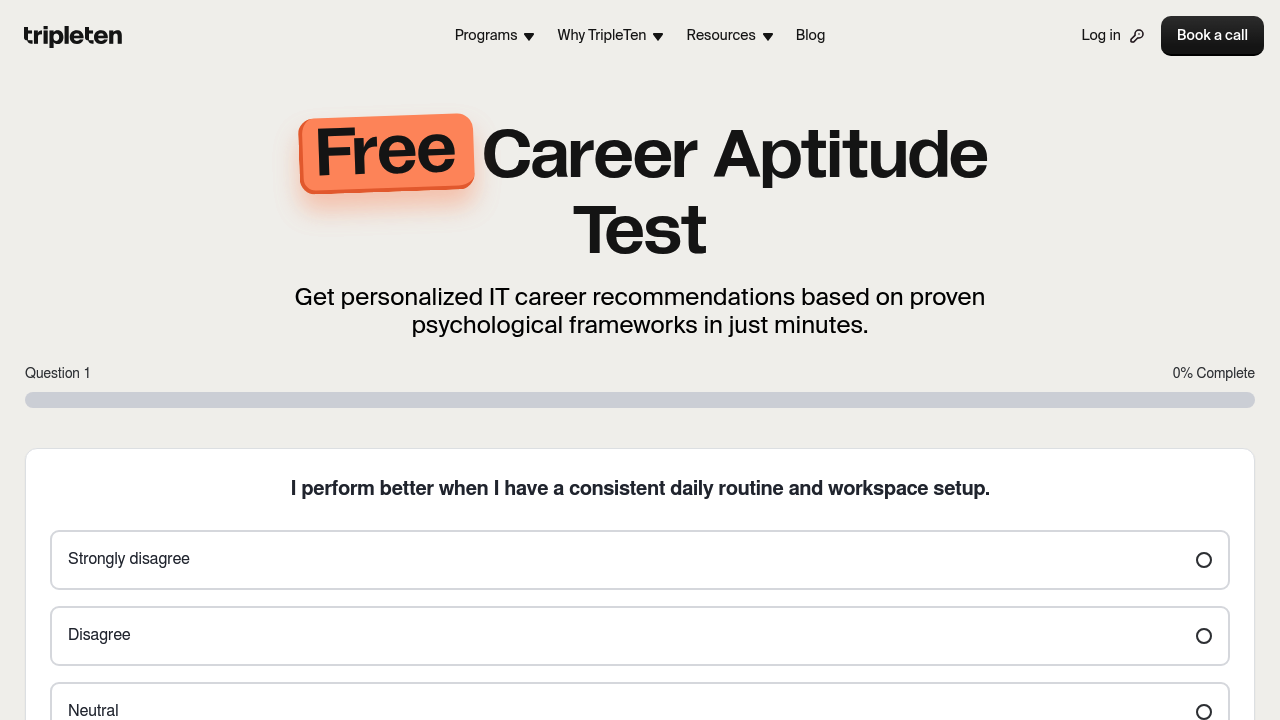
You answer some questions close to what you like doing and how you work, and this system spits out IT career suggestions tailored to your personality. TripleTen built their assessment around established psychological frameworks rather than just asking if you like computers. It analyzes your natural abilities, interests, and work preferences to figure out which tech roles might actually suit you.
The matching process goes deeper than surface-level quizzes. Advanced algorithms identify patterns in your responses and connect them to specific career paths. You get ranked recommendations with explanations for why each role made the list. The system maps what they call your "professional DNA" and shows how it aligns with different positions in tech. People earn about 20% more when their career matches their personality, which makes the assessment more than just interesting reading.
Does it actually work? The psychological framework backing gives it credibility, and the detailed insights go beyond generic advice. You're not just getting a list of jobs. You receive a personalized strategy for moving into IT, even if you've never touched code. The system specifically targets people with zero tech experience, fresh graduates, career switchers, and anyone trying to level up in their current track. That's a wide net but the average person switches careers five to seven times anyway, so casting wide makes sense.
What's missing here? The facts don't reveal how long the assessment takes or how many questions you'll answer. No integration with job boards or learning platforms that might turn insights into immediate action steps. You can't see examples of what the output looks like before investing time in the quiz. The ranked matches sound useful but there's no detail on how many careers you'll see or how granular the recommendations get.
It's free. No catch mentioned, no trial period needed. You take the test and get your results without pulling out a credit card. Hard to complain about that.
This works best for people who honestly don't know where they fit in tech. If you're already a developer debating between frontend and backend, you probably need something more specialized. But if you're teaching middle school and wondering whether UX design or data analysis suits your brain better, this gives you a starting point grounded in psychology rather than guesswork. Career changers with no technical background get the most value since the system doesn't assume existing knowledge.